
Sunday, November 15, 2026Nov 15

This story is exclusive to subscribers.

Times Opinion: There’s only one way to reduce traffic congestion

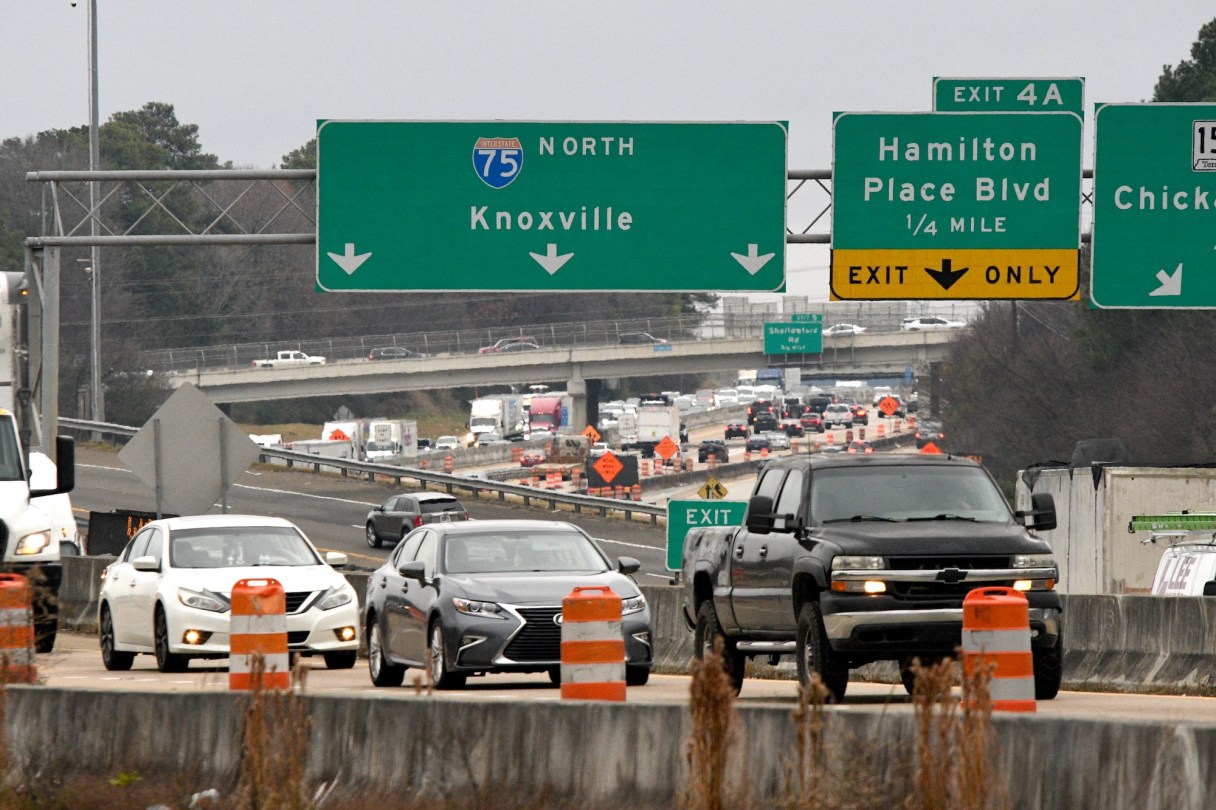
Staff Photo by Robin Rudd / In the foreground traffic from Highway 153 slows to merge onto I-75 southbound on Friday afternoon, Dec. 5, 2024. In the background I-75 is stacked up in the southbound lanes.  Commuters trundling through the Scenic City in 2024 each spent 51 hours sitting in interstate traffic, a 5% increase from 2023 as the city has climbed to 91st in the nation for traffic delays, according to the Texas A&M Transportation Institute's 2025 Urban Mobility Report.
Staff Photo by Robin Rudd / In the foreground traffic from Highway 153 slows to merge onto I-75 southbound on Friday afternoon, Dec. 5, 2024. In the background I-75 is stacked up in the southbound lanes. Commuters trundling through the Scenic City in 2024 each spent 51 hours sitting in interstate traffic, a 5% increase from 2023 as the city has climbed to 91st in the nation for traffic delays, according to the Texas A&M Transportation Institute's 2025 Urban Mobility Report.

For many Chattanoogans and other residents in our larger region, far too much precious free time is spent behind the wheel, idly sitting in five o’clock traffic.

As recently reported by the Chattanooga Times Free Press, Chattanooga commuters collectively wasted over 14 million hours in traffic in 2024 — the highest on record. Each spent an average of 51 hours in interstate traffic, a 5% increase from 2023.

Time wasted isn’t the only consequence of congestion. Burning an average of 11 gallons of gas in idle traffic, each commuter, on average, lost $861 on fuel costs last year.

The ostensibly pragmatic approach to reduce congestion, practiced by traffic engineers across the country for decades, is simply adding more lanes on the interstate to accommodate the influx of vehicles.

(IN THE NEWS: Chattanooga commuters wasted over 14M hours in traffic in 2024)