
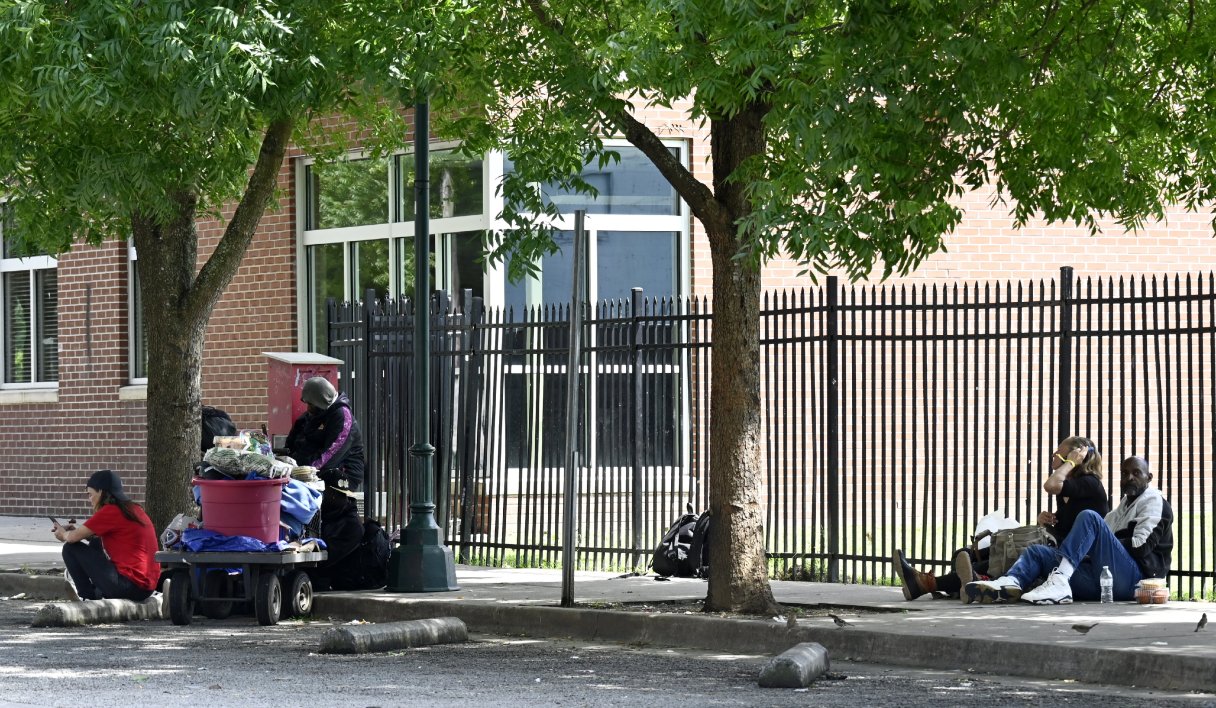
After years of talking about it, Gwinnett should finally stop leaving millions of federal dollars on the table to address its growing problem of homelessness, by establishing its own “Continuum of Care.”
It should not be surprising that Gwinnett — the state’s second most populous county, which just surpassed over 1 million people this year — has a homelessness problem.
While it is notoriously difficult to get an accurate count given different definitions of homelessness, in 2024, the Georgia Department of Education found that Gwinnett County Public Schools had the highest number of homeless students.
The county’s commissioned 2022 housing study identified homelessness — and the increased need for resources such as transitional housing — as a critical challenge.
This challenge is ever-present in the area I represent, unincorporated Norcross, where we see encampments popping up all the time. It’s an area with the highest housing cost burdens in Gwinnett — as well as the oldest housing stock, the highest concentration of rented single-family homes, the highest concentration of extended stays in Georgia and 11 of Gwinnett’s 14 Atlanta Journal-Constitution-designated “Dangerous Dwellings.”
My nonprofit does street outreach to meet people where they are and assist with service navigation, among many service providers in Gwinnett. We all face the same issue constantly: If there’s not enough safe and stable to house people, we will always struggle.
To address housing, Gwinnett chooses to rely overwhelmingly on federal dollars. In 2024, Gwinnett County provided $18 million for affordable housing, but it was pass-through federal money from the American Rescue Plan.
Of the county’s proposed $409 million capital budget for 2026, just 0.1% is dedicated to “housing and development.”
Given its choice to rely primarily on federal dollars, it is puzzling that Gwinnett is leaving federal money on the table to address the problem of homelessness — approximately $6.9 million, if not more, every year.
This should be concerning, too, whether one is Democrat or Republican, because Gwinnett is going a step further: It is ceding not just actual money to other, smaller jurisdictions but also local control.
How? By failing to establish its own so-called “Continuum of Care” — a federal designation where jurisdictions receive formula funding to create and run a true, united, multi-agency effort in a local jurisdiction to address homelessness.
Were it to establish its own continuum, Gwinnett would receive — and directly control — an estimated $6.9 million, measuring by 2024 numbers. That can be used to help build transitional housing, permanent supportive housing and other housing programs with much-needed wraparound services.
Instead, by participating in the larger state continuum — along with 151 counties — in 2024, Gwinnett received about $1.4 million.
Not surprisingly, the surrounding large areas — namely, Cobb, DeKalb, Fulton and the city of Atlanta — have their own continuums.
In 2024, the city of Atlanta and DeKalb received $14.5 million and $8.5 million, respectively. Other jurisdictions in Georgia — Athens, Augusta, Columbus and Chatham County — also assert local control through their own CoC.
The push for CoC in Gwinnett is at least 10 years old. In 2026, Gwinnett can finally grab one of the lowest-hanging fruits to address our housing problem, by establishing its own Continuum of Care.
Marvin Lim, D-Norcross, is state representative for House District 98 and an attorney. He is also the CEO and founder of the nonprofit Lucky Shoals Community Association Inc.