
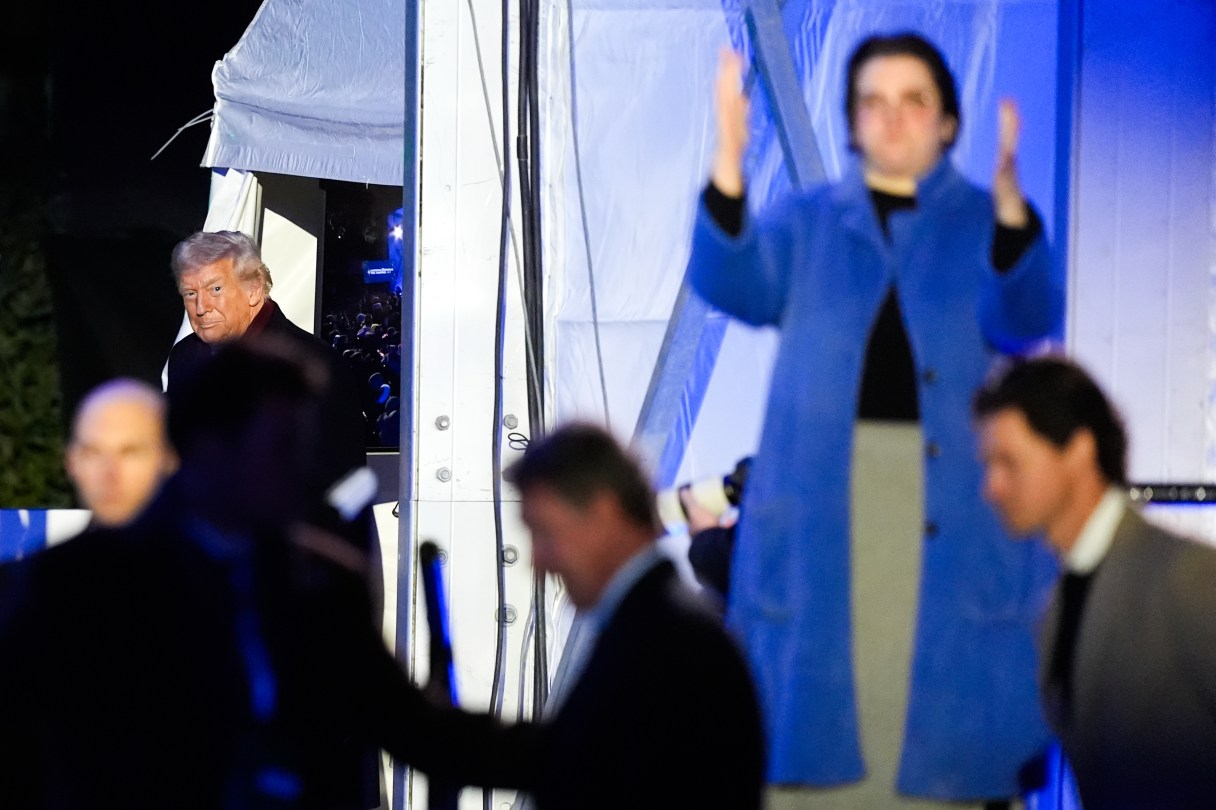
The Trump administration is arguing that requiring real-time American Sign Language interpretation of events like White House press briefings “would severely intrude on the President’s prerogative to control the image he presents to the public,” part of a lawsuit seeking to require the White House to provide the services.
Department of Justice attorneys haven’t elaborated on how doing so might hamper the portrayal President Donald Trump seeks to present to the public. But overturning policies encompassing diversity, equity and inclusion have become a hallmark of his second administration, starting with his very first week back in the White House.
The National Association for the Deaf sued the Trump administration in May, arguing that the cessation of American Sign Language interpretation — which the Biden administration had used regularly — represented “denying hundreds of thousands of deaf Americans meaningful access to the White House’s real-time communications on various issues of national and international import.” The group also sued during Trump’s first administration, seeking ASL interpretation for briefings related to the COVID-19 pandemic.
In a June court filing opposing the association’s request for a preliminary injunction, reported Thursday by Politico, attorneys for the Justice Department argued that being required to provide sign language interpretation for news conferences “would severely intrude on the President’s prerogative to control the image he presents to the public,” also writing that the president has “the prerogative to shape his Administration’s image and messaging as he sees fit.”
Government attorneys also argued that it provides the hard of hearing or Deaf community with other ways to access the president’s statements, like online transcripts of events, or closed captioning. The administration has also argued that it would be difficult to wrangle such services in the event that Trump spontaneously took questions from the press, rather than at a formal briefing.