
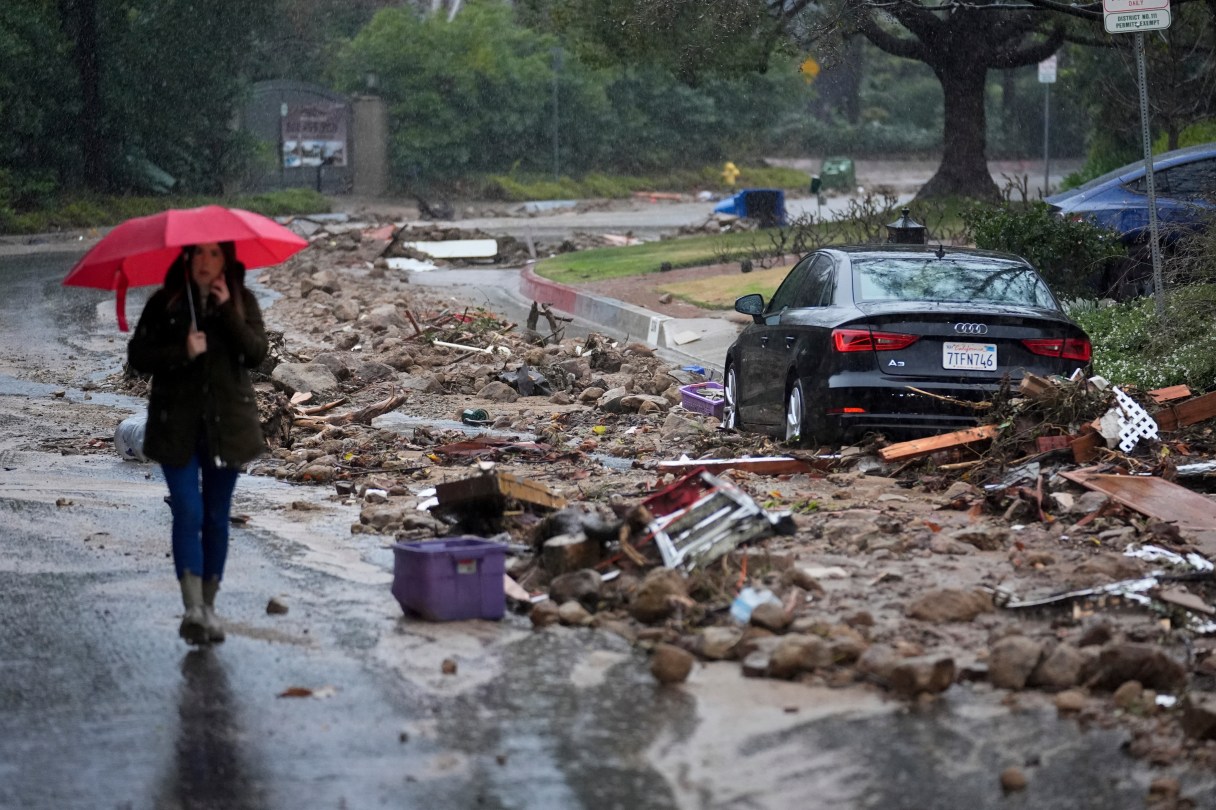
Atmospheric rivers are massive plumes of moisture carried across the sky that can dump heavy rains or snow over land.
Here’s a look at the phenomenon:
Where do atmospheric rivers come from?
Atmospheric rivers generally form in tropical regions, where warm temperatures can cause water vapor to rise into the atmosphere, according to the National Oceanic and Atmospheric Administration. The winds aloft then carry that moisture to northern and southern latitudes.
They occur globally but are especially significant on the West Coast of the United States, where they create 30% to 50% of annual precipitation and are vital to water supplies but also can cause storms that produce flooding and mudslides, according to NOAA.