
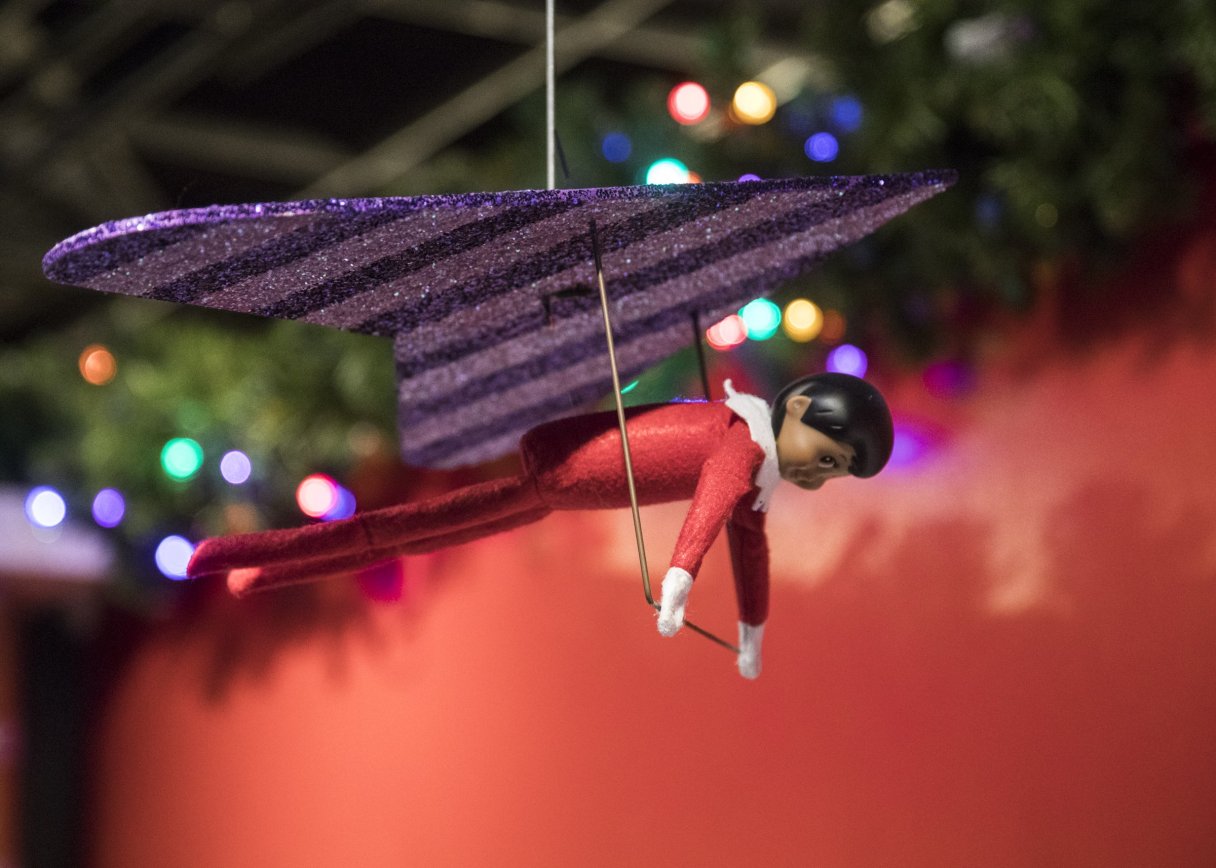
I got my son an Elf on the Shelf this year. Do I regret it? Absolutely. But it reminded me of something this holiday season, something too easy to forget in our modern age.
For an otherwise bright child, my son is convinced that the elf is real in the sense that he moves himself around the house at night and ends up in all sorts of compromising positions by morning. The elf can even help with various tasks during the wee morning hours. (Unfortunately, I got blank stares when I asked Tinsel to write this column.)
My son believes that the elf is, in a word, enchanted. I never knew this about my child before getting the elf. I wonder how many other things he believes to be enchanted, too.
It’s what so many of us crave this darkest time of year. The presents, the twinkle lights, the feasts, the songs, long evenings around fireplaces with loved ones. The hope is that it will all add up to more than the sum of the parts. And maybe if the parts are big enough, we might well summon the Christmas spirit.
Not so long ago, humans believed that everything was enchanted. Not in a temporary, seasonal way, but in a the-whole-Earth-is-filled-with-it way. The story of a guiding star, a host of angels and a virgin birth? That fit right in. Everyday magic was the way of the world until the latest 1% of history, depending on how you measure it. Things seemingly stopped becoming enchanted sometime around the Enlightenment, according to scholar Charles Taylor. That’s when we moved into our Western, modern and materialist age, and when only the things that could be measured, bought and logically understood were of value.