
TIJUANA, Mexico (AP) — Margelis Rodriguez and her two children took selfies on their flight to Tijuana, showing off the T-shirts she had custom-made to mark what she expected to be her family’s life-changing moment.
On the back of the shirts were their names and the flags of the six countries they passed through in 2024. On the front between the flags of her native Venezuela and the United States, was written in Spanish: “Yes it was possible, thank God. The wait was worth it. I made it!!”
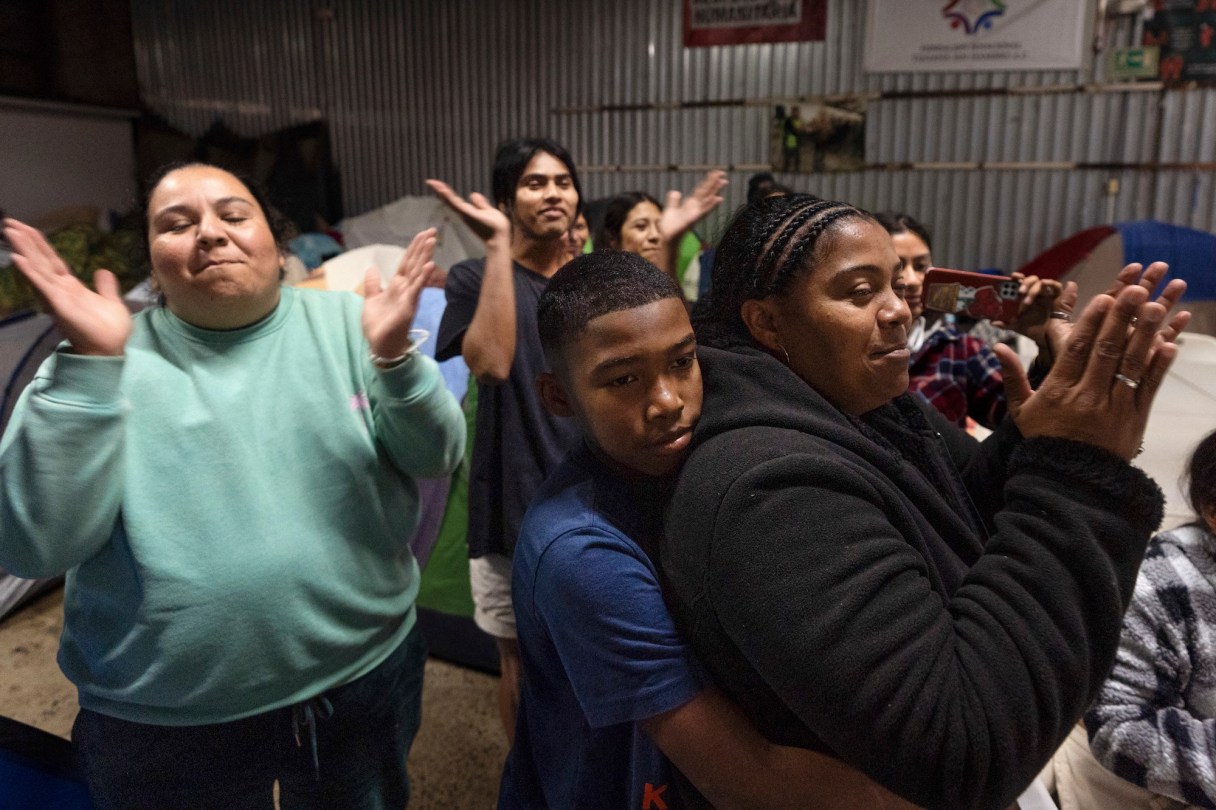
The celebratory words now sting — driving home how close they came without making it and how precarious their lives are with their future more uncertain than ever, Rodriguez said while standing near the tent her family lives in at a shelter in Tijuana, a block from the towering wall marking the U.S. border.
The family is among tens of thousands of people who had appointments into February, many of them left stranded in Mexican border cities after President Donald Trump took office. As part of a broader immigration crackdown, his administration quickly canceled all appointments people had made through a U.S. government app. Under the Biden administration, the CBP One app facilitated the entry of nearly 1 million people since January 2023, and supporters say it helped bring order to the border and reduced illegal crossings.
U.S. Customs and Border Protection estimates about 280,000 people were trying to get appointments each day, many of them after traveling to Mexico, the only country where the app worked. Now they face the daunting question of what to do next.