
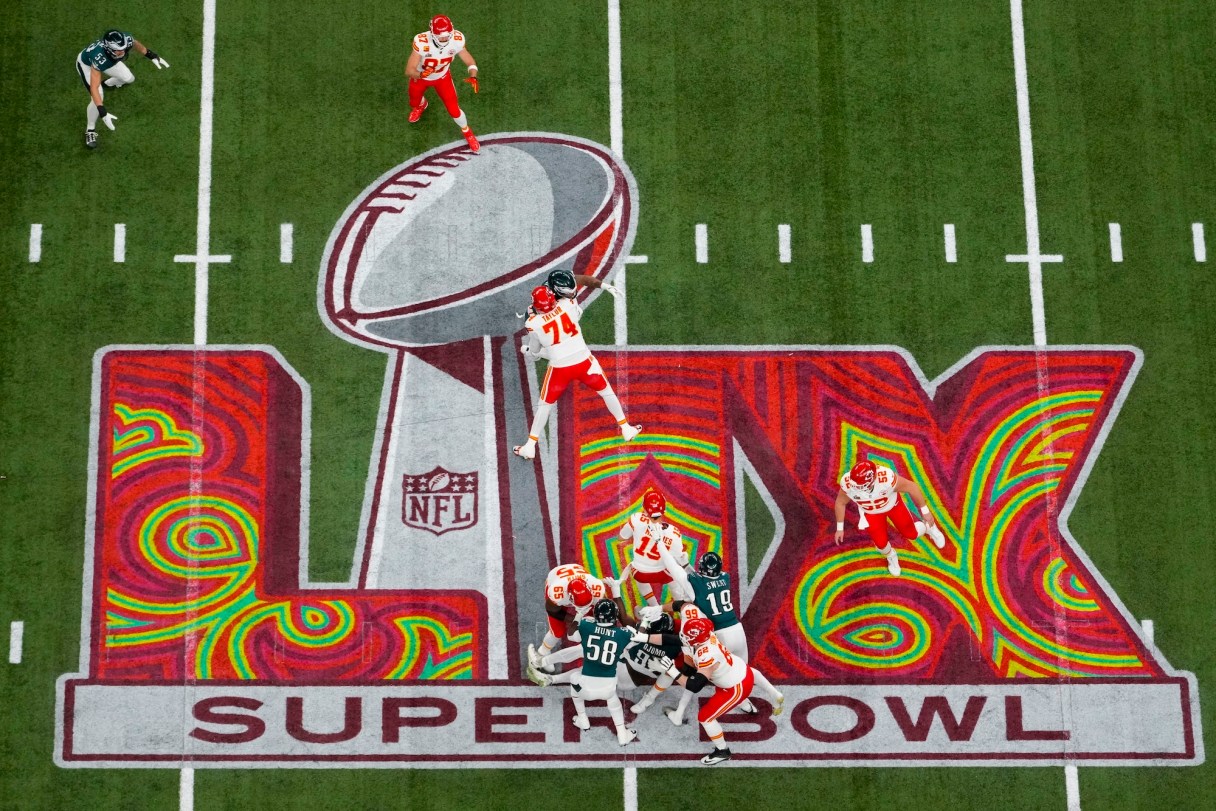
It’s been seven years since the Supreme Court deregulated sports gambling, and every year since, the amount of cash changing hands over games grows. A few days before last Sunday’s Super Bowl, the American Gaming Association predicted that about $1.39 billion dollars would be gambled on that single event. But for those who use any of the online platforms and apps to place bets, it’s not a single event. Gamblers can bet on almost any aspect of the game: score, score per quarter, first touchdown, who would be selected MVP, which team would win the coin toss, etc. One rather detailed New York Times article explained that one could even wager on the length of Jon Batiste’s rendition of “The Star-Spangled Banner.”
Sports gambling went from illegal to fully integrated at remarkable speed. Both ESPN and Sports Illustrated now have their own betting apps, and the different possible bets, missed spreads and predictions are now nightly features on SportsCenter and other programs. In other words, sports reporters now report on the odds as if they were describing the game itself. In every way possible, gambling is now “part of the game.”
And as every red-blooded male old enough to have a job can attest, logging on to any social-media platform such as X or YouTube means being bombarded with sports gambling ads, often featuring celebrities, top athletes and easy first steps for easy wins. The fact that so many gambling sites sound like drug dealers offering “first one for free” deals should tell us something.
Gambling corrupts pretty much everything it touches, and sports gambling is no different. A few days ago, a lawyer argued somewhat convincingly on X that the surprising trade of NBA superstar Luka Dončić to the Lakers may have had more to do with gambling calculations than basketball calculations. Given that no other explanation for that decision makes sense, the fact that the gambling conspiracy is at least believable should be noted. After all, the many apps and institutions profiting off of the legalization and widespread availability of sports gambling wouldn’t spend that much money on commercials, A-list celebrities and targeted social-media campaigns because they lose bets. Sports gambling is just like casinos and the lottery: The “house” always wins.
And like other forms of gambling, sports gambling is especially harmful to those least able to endure it. An article last year in The Atlantic stated the truth bluntly: “Legalizing Sports Gambling Was a Huge Mistake.” The author, Charles Fain Lehman, wrote that the return of sports gambling “has caused a wave of financial and familial misery” that “disproportionately falls on the most economically precarious households.” In other words, those who have the least money to lose do the vast majority of the losing. In fact, in addition to debt delinquency and bankruptcy, the data shows that there is a greater chance of domestic abuse in homes where gambling is common. One study even found that “an NFL home team’s upset loss causes a 10% increase in reported incidents of men being violent toward their partner.”