
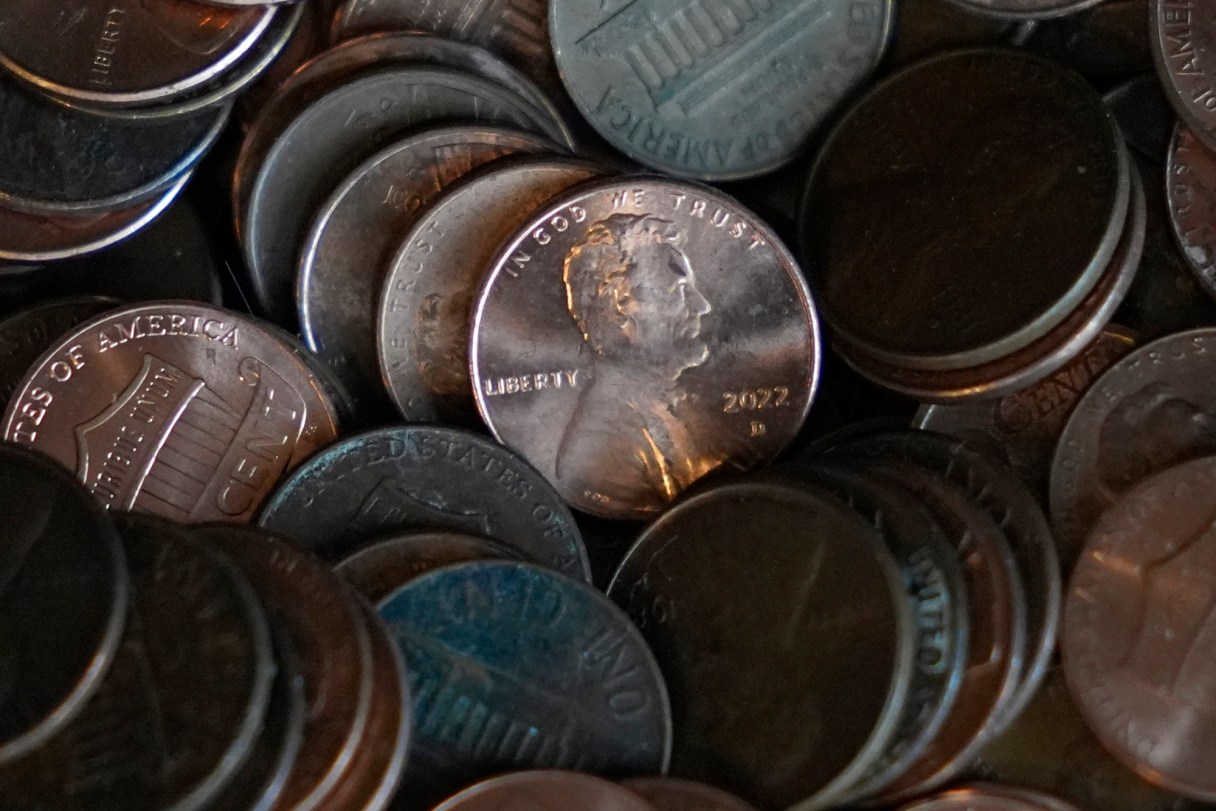
President Trump has ordered the Treasury Department to stop minting pennies to save money. It costs almost four cents to make one and as the president seeks to reduce federal spending, the penny is a good, if largely symbolic, target. The nickel is even more expensive. It costs nearly 14 cents to make. One doesn’t have to have studied Economics 101 to understand this is a complete waste of money and part of the inefficiency and overspending Trump is trying to expunge from government.
The U.S. Mint began full-time production of the penny in 1792. Then, the coins were the size of today’s half-dollar and called “large cents.” The penny also became embedded in popular culture, and its value endured until modern times. Older people will remember penny candy and slogans like “a penny for your thoughts” and “penny wise and pound foolish.” Songs about the penny inspired “Pennies from Heaven” and a road made famous by The Beatles, “Penny Lane.”
As for “a penny for your thoughts,” back then, thoughts and a penny were worth more than they are today. Just look at the misspending being revealed by DOGE and you’ll be shocked at the waste.
Though he never actually said it, Benjamin Franklin is often credited with “coining” the phrase “a penny saved is a penny earned.” He did, however, write in his “Poor Richard’s Almanac” (1737): “A penny saved is two pence clear.” The 1768 version of the Almanac revised the saying: “A penny saved is a penny got.”
Other coinage attracted slogans of their own, including “nickel and dime you to death,” “not a dime’s worth of difference” and two bits (a quarter). There are dozens of slang words for money.