
A few years back, the online right became enamored of a new epithet for liberals: “NPC,” short for “nonplayer character.” The term was lifted from video games, where “NPC” refers to the computer-controlled characters that populate the game while you, the live player, make decisions. NPCs don’t have minds of their own. They’re automatons. They do as they’re told.
“NPC” quickly became a favored dismissal for all those liberals with their Black Lives Matter and #MeToo hashtags, their Ukrainian flag icons, their “they/them” pronouns and antiracism reading groups. Liberals, in this story, thought what they were allowed to think, said what they were allowed to say.
Like any good insult, the NPC meme served a dual purpose. It contained a kernel of truth about its target. We liberals can be conformist. We can be too afraid to offend. We can be overly deferential to institutions. But the real purpose of the NPC insult was self-congratulation. The right was full of live players. You could see it in their willingness to offend, their mistrust of institutions, their eagerness to debate what liberals would not even say out loud.
The Trumpist right were the nonconformists, the coalition that wasn’t made up of automatons. That’s what America needed. Live players.
At this point, I’m willing to concede half the argument. American politics does have an NPC problem. Possibly a lethal one. But it’s not on the left.
Within the Trump administration’s acts of overreach are arguments that were worth taking seriously. The administrative state can be too hard to control. Government is too gummed up by process and protocol. It is too hard to hire and fire in the civil service. There is a good argument for converting more of what the U.S. Agency for International Development spends to cash grants and direct public health support. How the government manages software procurement and builds and maintains digital services is outdated. All of this was well known, including among liberals.
It’s a genuine failure of Democrats that they didn’t put more energy into making the government faster and better when they were in charge. How did the Biden administration pass $42 billion for broadband in 2021 and have basically nothing to show for it by November 2024? How did it get $7.5 billion for electric vehicle chargers but build only a few hundred chargers by the end of the term?
Democrats became champions of a government that didn’t work. I think that’s part of the reason Donald Trump won. Not the biggest reason he won, but when people feel that the government isn’t working, the party promising change beats the party rallying in defense. When Elon Musk says that Republicans have a mandate for governmental reform, I don’t think he’s totally wrong.
But even Musk has noted that the proof of the mandate is that Republicans control the House and Senate. So why not write some bills? Sure, Republican majorities are narrow, but bipartisanship wasn’t out of the question. Democrats were defeated and ready to deal. Their own voters wanted them to deal. A January poll by CBS and YouGov found that 54% of Democrats wanted their congressional representatives to work with the Trump administration and 46% wanted relentless opposition. One month later, only 35% of Democrats wanted cooperation, and 65% wanted all-out opposition. That’s a lot of political capital the Trump administration burned in just one month.
If this were about policy, Trump and his team would have tried to go through Congress. But they didn’t want policy. They didn’t want to go line by line through USAID and figure out what worked and what didn’t. They wanted power. They are trying to remake our system of government, not our laws. They have identified a weak point in that system, and they are driving a flaming Cybertruck through it.
That weak point is Congress. And the reason Trump and his administration might succeed in taking its power is that they have turned congressional Republicans into NPCs. The vulnerability here goes way back.
How does a government control itself? The founders’ idea was that it does so through internal competition among independent branches. The Constitution created three branches of government, each with some powers and some dependencies. It was the competition among them that would keep the system balanced.
But one branch was designed to be stronger than the others. Congress controls the money. Congress declares war. Congress can overturn presidential vetoes. Congress can impeach federal judges, Cabinet officers and the president.
Congress also reflects the second and, in some ways, more important form of fracture the founders imagined. Our political system was designed to fracture power by place. Senators are elected by states, not by a national vote; the House is sliced up into geographically bound districts.
Every member of Congress represents a place, and every place has its own interests and culture and politics. That, ultimately, is what members of Congress are supposed to represent: the particular needs of a particular group of voters in a particular place.
The framers of the Constitution got a lot right. But they got a lot wrong, and the biggest thing they got wrong was visible almost immediately: The founders imagined a political system free of political parties. Within a few years, they had formed their own political parties. For much of American history, though, the founders’ second assumption held. Geography kept American politics fractured because it kept America’s political parties fractured.
The two-party system of the 20th century was really a four-party system. The Democrats were split between the liberals we know today and the Dixiecrats, whose primary goal was upholding segregation; the Republicans were split between conservatives and Northern liberals. It is astonishing from our vantage point, but it was true for much of the 20th century: To say you were a Republican or a Democrat didn’t reveal whether you were a liberal or a conservative. As a senator, Joe Biden opposed the Roe v. Wade decision in 1973. President Richard Nixon proposed a universal health care bill and created the Environmental Protection Agency. George Wallace started out as a Democrat. Politics was different then.
Parties that contained so many different places and ideologies could not act in lockstep, and so bipartisanship was common. The Civil Rights Act of 1964 was pushed by a Democratic president, but congressional Republicans were crucial to its passage. When Nixon refused to spend the money Congress had appropriated, Congress acted to protect its power: The Congressional Budget and Impoundment Control Act of 1974 passed the House with only six “no” votes; it passed the Senate without a single vote in opposition.
That was then. In 2025, Trump is impounding money that Congress has appropriated, in clear defiance of that impoundment law. He is trying to erase agencies that Congress created. And while the courts are standing in his way, Congress is letting him do it.
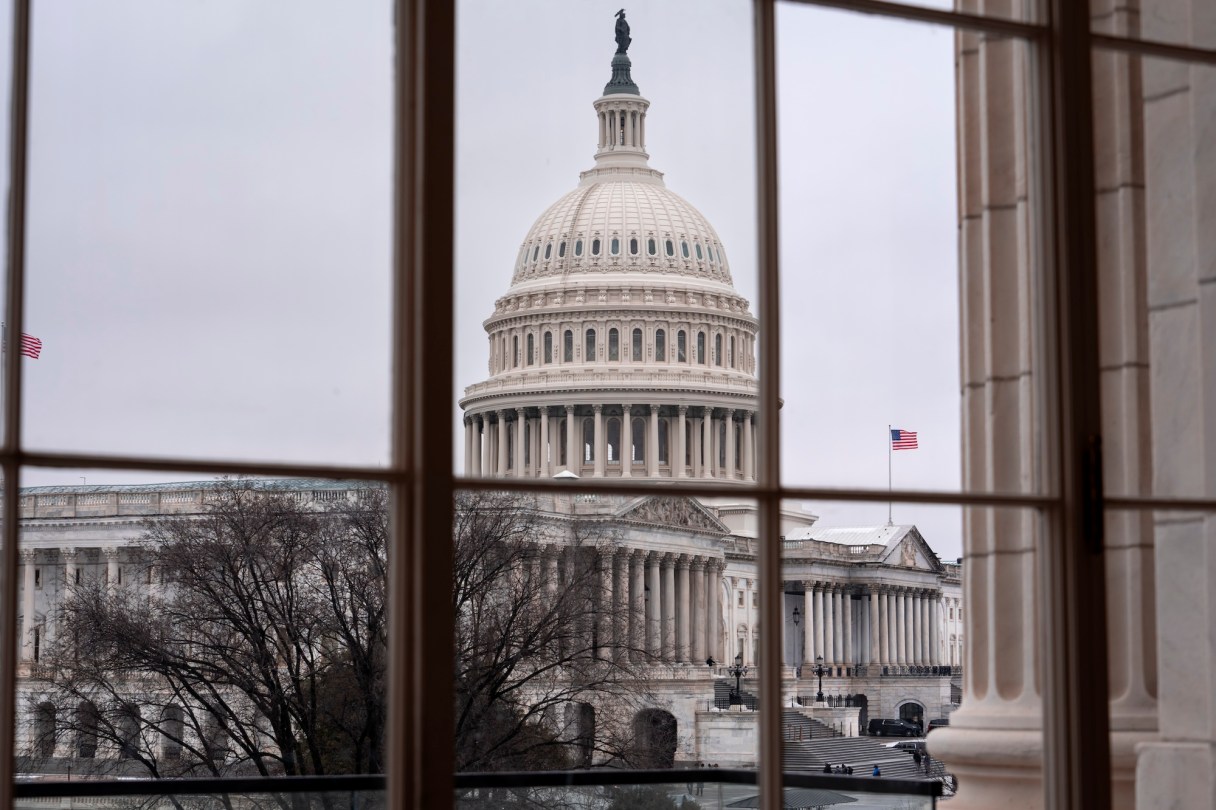
It’s astonishing. Republicans in Congress could demand that Trump cut them in. They won the election, too. It is their job to write these bills. Agreement with Trump’s policy aims need not mean agreement with his power grab. But the most powerful branch of government — the branch with the power to check the others — is supine. It is not that it can’t act to protect its power. It’s that it will not act to protect its power. This is a nonplayer Congress.
Behind it is the nationalization of the two parties. It’s parties that now compete with each other, not branches.
If Democrats controlled Congress right now, Congress would be a check on Trump. Since Republicans control it, it is not. To speak of Congress as an institution with ambition and will is to mislead yourself. Congress is a power center. What matters is which party controls it.
Parties can be more or less responsible. They can themselves be a check on abuses, even on their own side. But this Republican Party is no check on Trump. That has been the message of Trump’s nominations. Robert F. Kennedy Jr., Tulsi Gabbard, Kash Patel, Pete Hegseth — these were tests. Senate Republicans know these nominees are unqualified. You could see it in the hearings.
I suspect that Trump’s reliance on executive action and congressional Republicans’ acceptance of their own marginalization reflect internal divisions they do not know how to overcome. They agree on Trump — or are at least cowed by him. They disagree on taxes and spending cuts and defense policy. Their congressional majorities are slim and bipartisanship would require compromises they may not have the muscle to make. And Trump has little patience for congressional bargaining, but he will attack those he sees as holding up his agenda. If congressional Republicans cede power to Trump, at least they do not have to resolve their own disagreements or risk angering the MAGA base.
It would be good for the country and for the Republican Party if Republicans displayed the values they once claimed to prize — a willingness to offend their own side, a mistrust of institutional authority, an eagerness to debate the questions that those in power do not wish to see debated.
But we’re seeing none of that. This is the NPC problem we actually face: a nonplayer Congress, driven by Republicans who serve Trump’s ambitions first. We are left relying on the courts, and that may work. But this is not the system working. It is the system failing.