
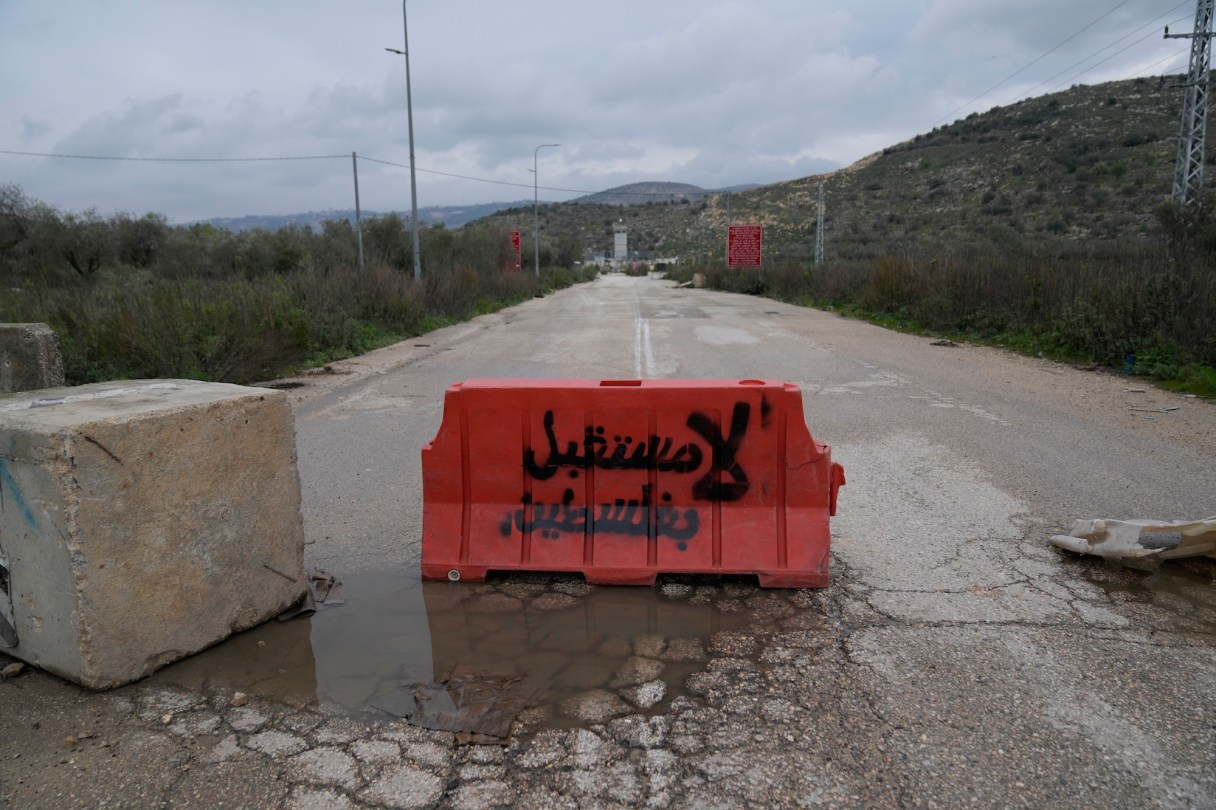
FAR’A REFUGEE CAMP, West Bank (AP) — By car and on foot, through muddy olive groves and snipers’ sight lines, tens of thousands of Palestinians in recent weeks have fled Israeli military operations across the northern West Bank — the largest displacement in the occupied territory since the 1967 Mideast war.
After announcing a widespread crackdown against West Bank militants on Jan. 21 — just two days after its ceasefire deal with Hamas in Gaza — Israeli forces descended on the restive city of Jenin, as they have dozens of times since Hamas’ Oct. 7, 2023, attack on Israel.
But unlike past operations, Israeli forces then pushed deeper and more forcefully into several other nearby towns, including Tulkarem, Far’a and Nur Shams, scattering families and stirring bitter memories of the 1948 war over Israel’s creation.
During that war, 700,000 Palestinians fled or were forced from their homes in what is now Israel. That Nakba, or “catastrophe,” as Palestinians call it, gave rise to the crowded West Bank towns now under assault and still known as refugee camps.
“This is our nakba,” said Abed Sabagh, 53, who bundled his seven children into the car on Feb. 9 as sound bombs blared in Nur Shams camp, where he was born to parents who fled the 1948 war.