
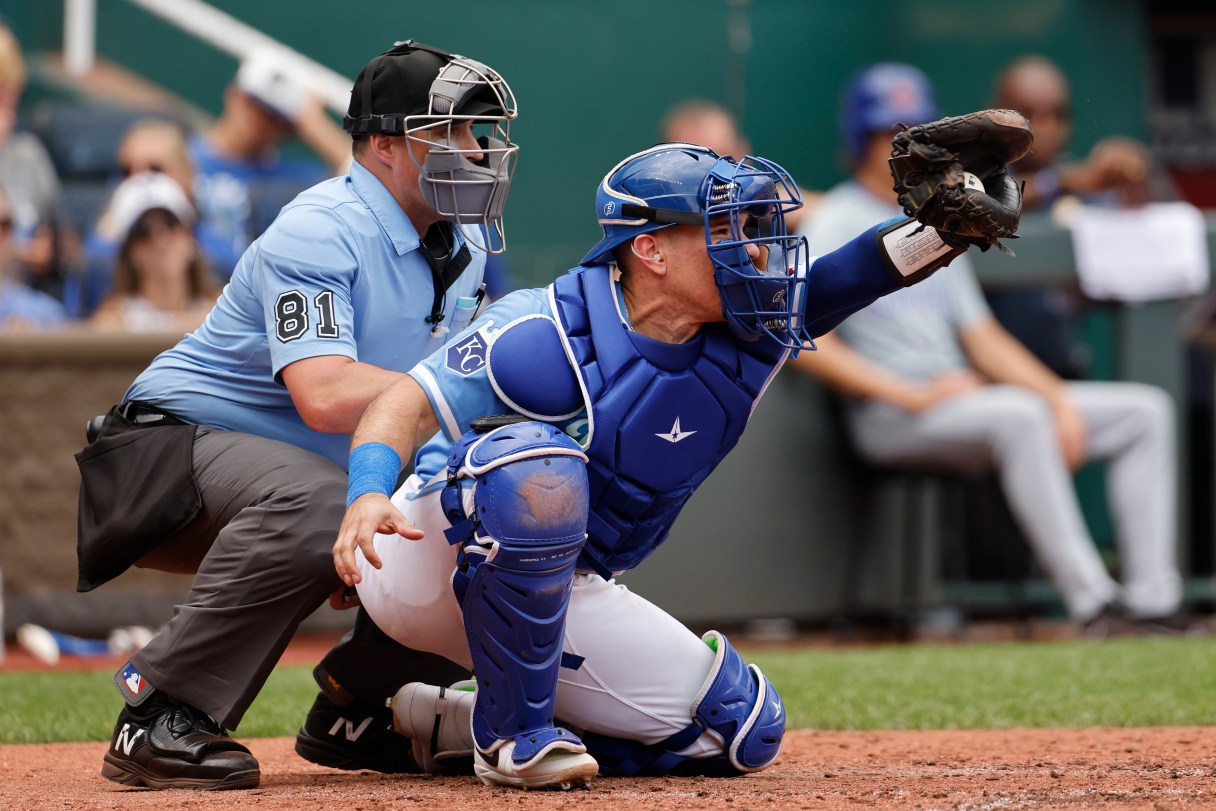
TAMPA, Fla. — A computerized system that calls balls and strikes is being tested during Major League Baseball spring training exhibition games after four years of experiments in the minor leagues.
The MLB test began Thursday, when the Los Angeles Dodgers hosted the Chicago Cubs in Phoenix in this year’s first exhibition. Other teams will open their schedule of spring training games in the coming days.
Rob Manfred, the commissioner of baseball since 2015, is an advocate of the Automated Ball-Strike System, which potentially as early as 2026 could be used to aid MLB home plate umpires, but not replace them.
Starting in 2024, MLB focused testing on a challenge system in which the human umpire makes each original call. Data from the spring training test could cause MLB to make alterations to the system for Triple-A games this season in the minor leagues.
How does the Automated Ball-Strike System work?
Stadiums are outfitted with cameras that track each pitch and judge whether it crossed home plate within the strike zone. In early testing, umpires wore ear buds and would hear “ball” or “strike,” then relay that to players and fans with traditional hand signals.
The challenge system adds a wrinkle. During spring training, human umps will call every pitch, but each team will have the ability to challenge two calls per game, with no additions for extra innings. A team retains its challenge if successful, similar to the regulations for big league teams with video reviews, which were first used for home run calls in August 2008 and widely expanded to many calls for the 2014 season.
Only a batter, pitcher or catcher may challenge a call, signaling with the tap of a helmet or cap; and assistance from the dugout is not allowed. A challenge must be made within two seconds, and the graphic of the pitch and strike zone will be shown on the scoreboard and broadcast feed. The umpire then announces the updated count.
MLB estimates the process averages 17 seconds.
Where will ABS be tested?
MLB has installed the system in 13 spring training ballparks that are home to 19 teams.
The Florida stadiums are the spring homes of the Detroit Tigers, Miami Marlins, Minnesota Twins, New York Mets, New York Yankees, Philadelphia Phillies, Pittsburgh Pirates, St. Louis Cardinals and Toronto Blue Jays (the Cardinals and Marlins share their facility), and all of those venues are used by minor league teams that compete in the Single-A Florida State League.
Five test sites in Arizona all are shared: the stadiums for the Arizona Diamondbacks/Colorado Rockies, Chicago White Sox/Los Angeles Dodgers, Cincinnati Reds/Cleveland Guardians, Kansas City Royals/Texas Rangers and San Diego Padres/Seattle Mariners.
Close to 60% of spring training games are slated for trial, although teams could play vastly different numbers of games with ABS testing. The Diamondbacks are slated for 29 ABS games, while the Chicago Cubs have just seven.
What is the technology?
A Hawk-Eye pose-tracking system of cameras was installed and used to track pitches and whether they are within a strike zone based on the height of each batter, who is measured without shoes before a team’s first test game. MLB estimated the calibration process at less than one minute for each player.
There are eight cameras at most of the spring training ballparks in the test and 12 at the Diamondbacks/Rockies stadium.
While the strike zone actually called by MLB umpires tends to be oval in shape, the ABS strike zone is a rectangle, as in the rule book.
Developing a consensus on what a computer strike zone should be has been complicated.
When did MLB first start using ABS?
MLB started experimenting with ball/strike technology via the independent Atlantic League in 2019.
A challenge system was tried in 2021 at eight of nine ballparks that make up the Florida State League. ABS was promoted to five Triple-A parks in 2022 and expanded to all Triple-A stadiums in 2023, the robot alone for the first three games of each series and a human with a challenge system in the final three. That system was in place at the start of 2024, but MLB switched to an all-challenge system last June 25.
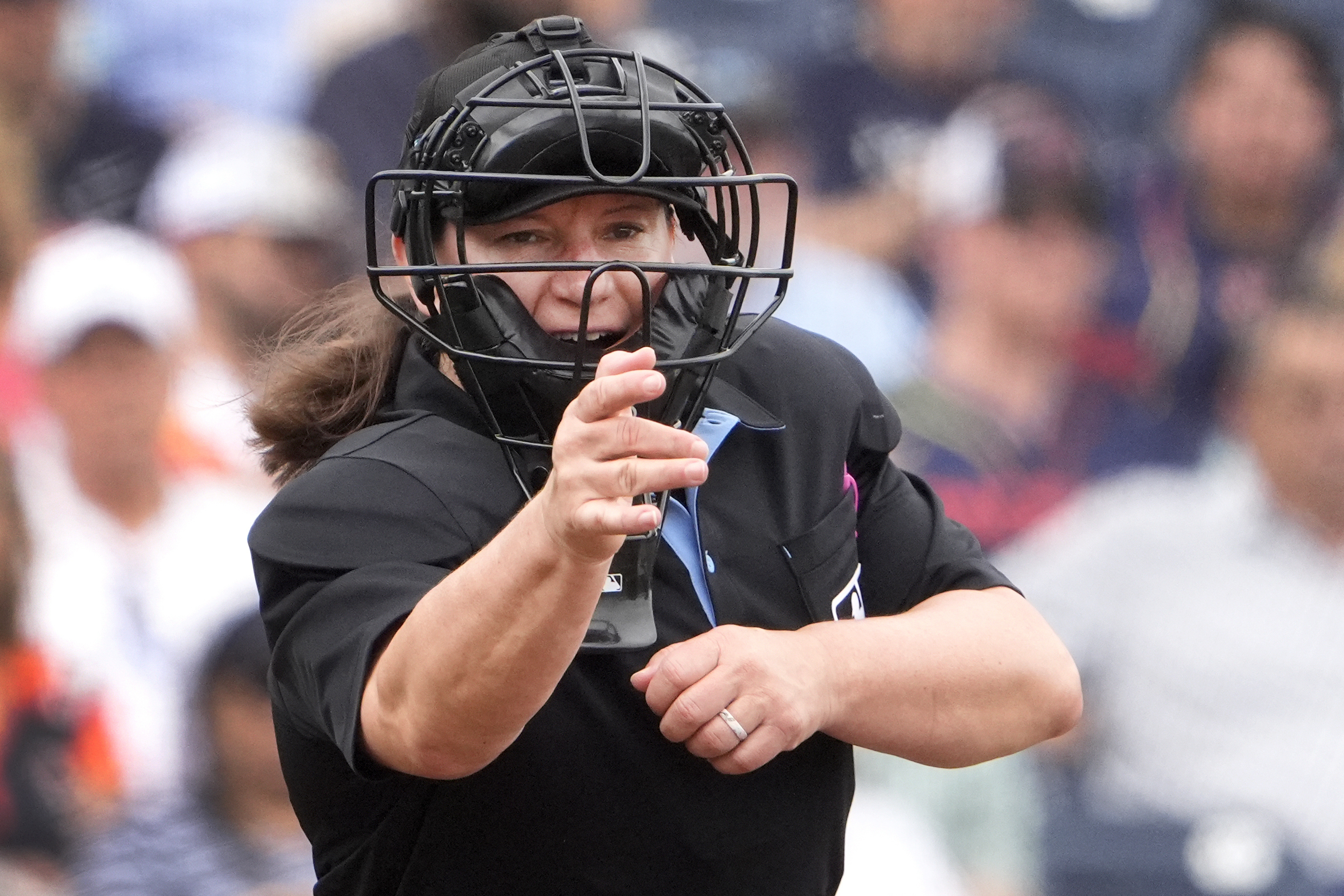 AP photo by Jeff Roberson / Home plate umpire Jen Pawol calls a strike during a spring training game between the Houston Astros and the Miami Marlins on March 10, 2024, in West Palm Beach, Fla.
How successful were teams with challenges last year?
Overall return rate over the full Triple-A season was 51%, with challenges by the defense winning 54% and by the offense winning 48%. Challenges with the two-challenge limit in place averaged 3.9 per game, including 2.2 by the offense.
The success percentage has been slightly better for video reviews in the major leagues. Teams increased their success rate on video reviews to 53.7% last season, led by the Boston Red Sox at 67.9%.
Just 1.6% of first pitches were challenges, but the figure increased to 3.9% for two-strike pitches, 5.2% for three-ball pitches and 8.2% for full counts.
Challenge percentages were more likely later in the game. While 1.9% of pitches were challenged in the first three innings, 2.5% were challenged from the fourth through the sixth, 2.8% in the seventh and eighth and 3.6% in the ninth.
How has the computer strike zone changed over time?
MLB has changed the shape of the ABS strike zone several times.
It started with a 19-inch width in 2022, then dropped it to 17 inches, matching the width of home plate. Narrowing the strike zone led to an increase in walks and only small changes in strikeout rates.
The top of the striker zone was 51% of a batter’s height in 2022 and 2023, then raised to 53.5% in 2024 after pitchers complained the top was too low. The bottom of the strike zone has been 27% since 2022 after initially being set at 28%.
A batter’s stance is not taken into account.
ABS makes the ball/strike decision at the midpoint of the plate, 8 1/2 inches from the front and 8 1/2 inches from the back. The contrasts with the rule book zone called by umpires, which says the zone is a cube, and a strike is a pitch that crosses any part.
Strikeout rates increased 0.5% and walk rates rose 1% in full ABS games and 0.8% in challenge games.
How will ABS impact broadcasts?
Concerned the strike zone box on broadcasts could tip whether to challenge and cause fans to yell at players to challenge, MLB plans to experiment with several broadcast alternatives. Among them: show the box but not the ball; show the ball but not the box; show only corners of the box.
How can players give feedback?
Dugout iPads available to all teams will have an application called ProTABS that allows players to check pitches against their individual strike zone. Information will update after every plate appearance and players can give MLB comment on single pitches and the overall system.