
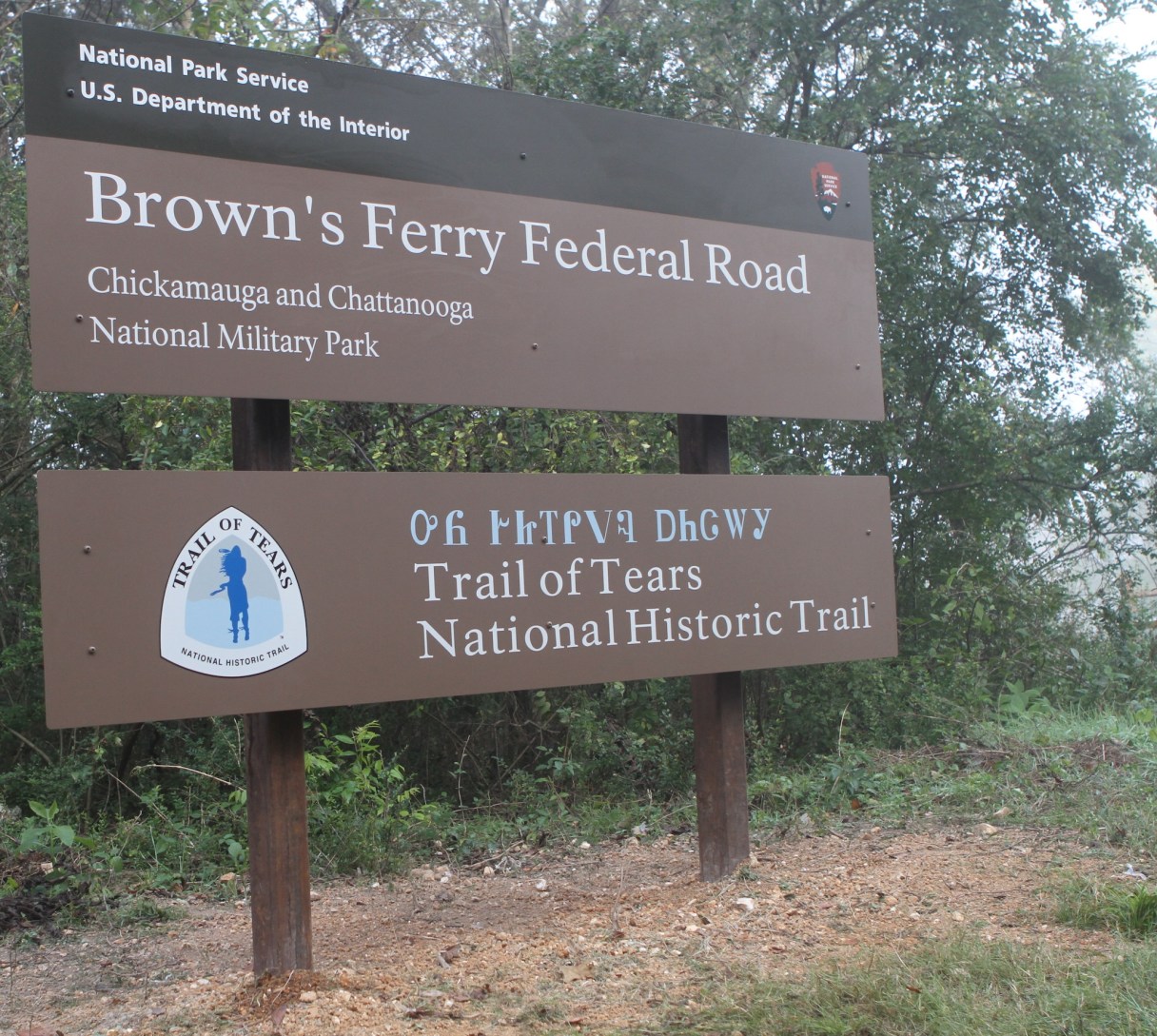
(Editor’s note: Last of three parts)
The late Dr. James Livingood, distinguished University of Tennessee at Chattanooga professor, discussed the Cherokee removal in excerpts from his “Chattanooga: Illustrated History”:
“The soldiers picked up Indians in the fields or in their kitchens or wherever they happened to find them. When a number of families were collected, the troops marched them to one of the three concentration sites. Livestock, poultry, and pets remained behind. A few days later wagons collected household goods that looters had passed over. Cattle and horses were driven off or bought by speculators at sacrificial prices. Graves were opened for possible plunder. By early June the disgraceful business was about over; the army had rounded up all except a few spirited natives who escaped into the deep mountains.
“Again, banished parties left the wharf at Ross’s Landing for the West. The son of the John P. Longs later recalled the sorrowful scene between his mother and the departing Cherokee:
“‘When these Indian women, many of whom were her friends, came to bid her goodbye, she said afterwards that she could not stand it and would cry as if her heart would break, but these people had a comforter among them in Miss Eliza Ross, sister of Chief John Ross, who was a regal beauty. She would ride amongst them, and stooping over the neck of her black charger would comfort a mother here and a daughter there, thus giving comforting words to all.