
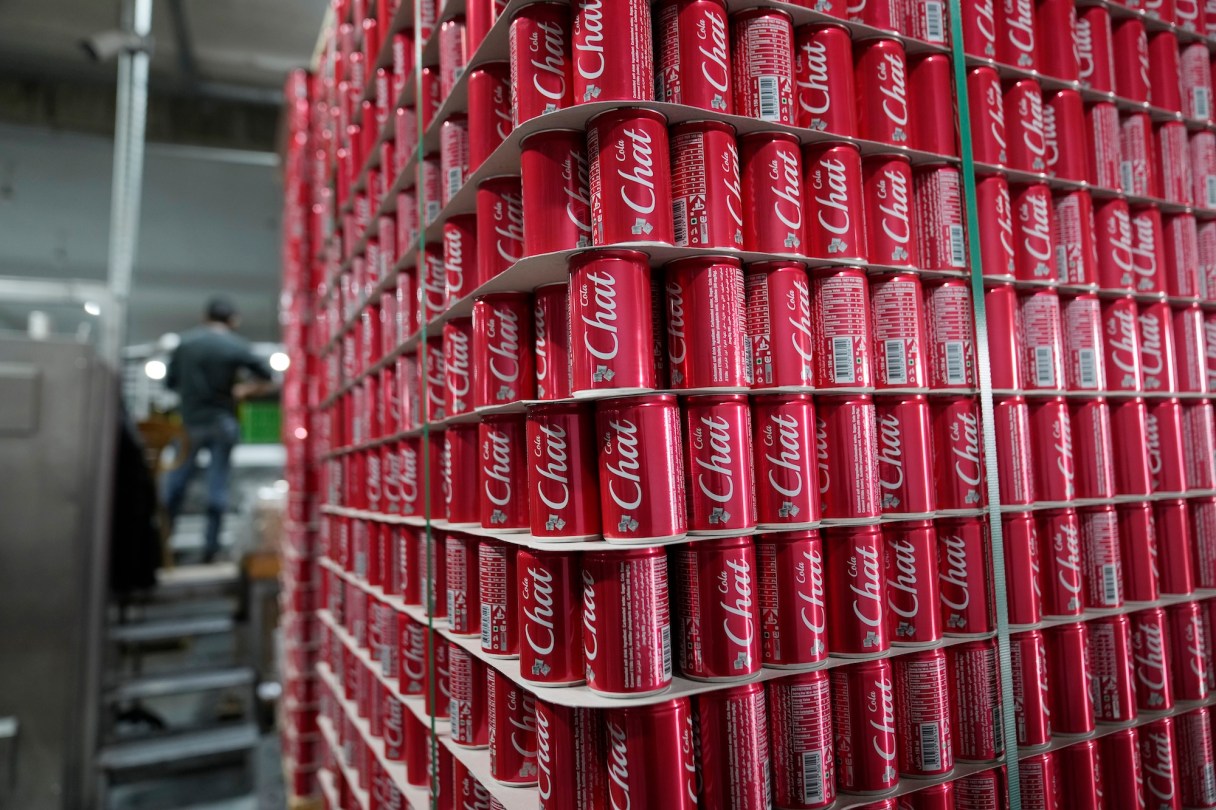
SALFIT, West Bank (AP) — Order a Coke to wash down some hummus in the Israeli-occupied West Bank these days and chances are the waiter will shake his head disapprovingly — or worse, mutter “shame, shame” in Arabic — before suggesting the popular local alternative: a can of Chat Cola.
Chat Cola — its red tin and sweeping white script bearing remarkable resemblance to the iconic American soft drink’s logo — has seen its products explode in popularity across the occupied West Bank in the past year as Palestinian consumers, angry at America’s steadfast support for Israel in its war against Hamas in Gaza, protest with their pocketbooks.
“No one wants to be caught drinking Coke,” said Mad Asaad, 21, a worker at the bakery-cafe chain Croissant House in the West Bank city of Ramallah, which stopped selling Coke after the war erupted. “Everyone drinks Chat now. It’s sending a message.”
Since Hamas’ Oct. 7, 2023, attack triggered Israel’s devastating military campaign in the Gaza Strip, the Palestinian-led boycott movement against companies perceived as supportive of Israel gained momentum across the Middle East, where the usual American corporate targets like McDonald’s, KFC and Starbucks saw sales slide last year.
Here in the West Bank, the boycott has shuttered two KFC branches in Ramallah. But the most noticeable expression of consumer outrage has been the sudden ubiquity of Chat Cola as shopkeepers relegate Coke cans to the bottom shelf — or pull them altogether.