
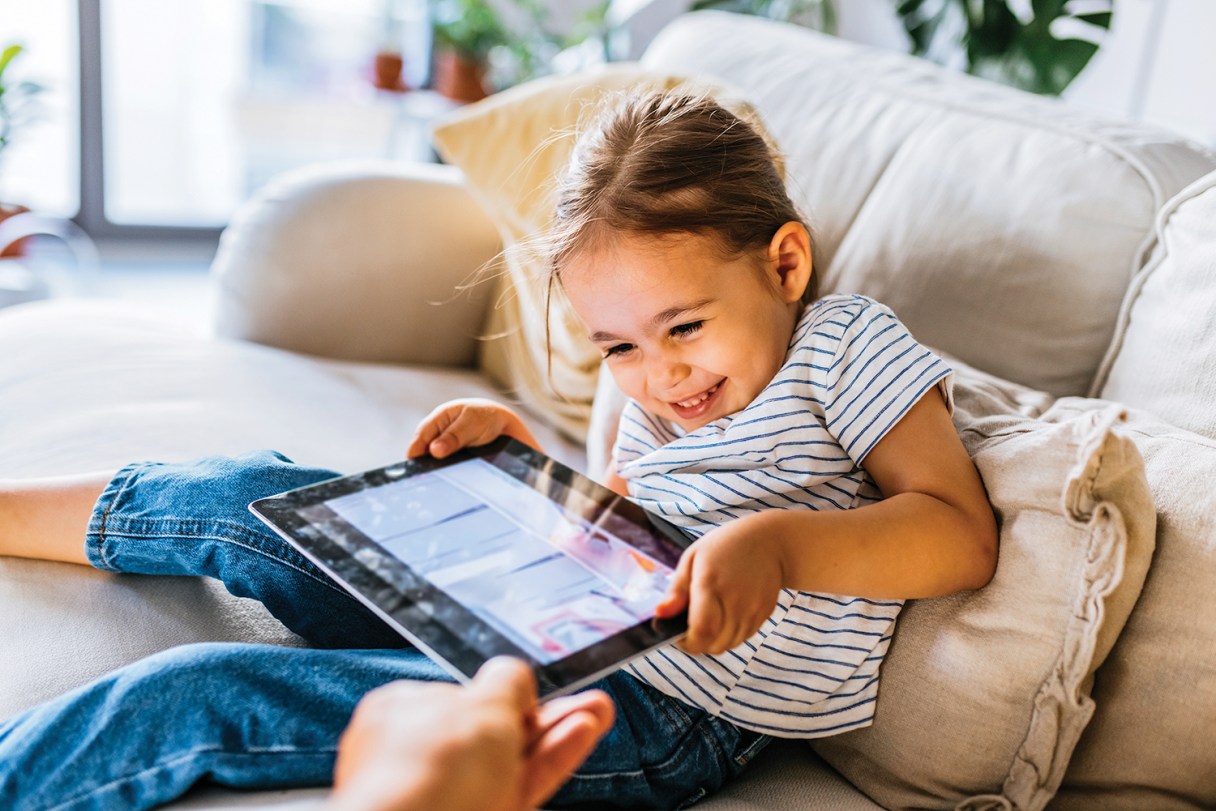
Toddlers are easily entertained, says Lauren Hall, president and CEO of First Things First. “Everything is novel to them,” say says, which is why screens work so well to distract them. “They’re attracted to all the new lights and sounds.”
But growing evidence suggests that too much time in front of tablets, televisions and gaming consoles can cause issues in young children, ranging from trouble sleeping to trouble focusing. One of the largest studies, conducted by the University of Michigan, showed a significant link between screen time in children under the age of 2 and delayed language development.
“Reading to babies is the No. 1 way they learn language,” Hall says. But more importantly, she adds, babies learn through having back-and-forth interactions with people. “A TV is just talking at you.”
But she stresses that not all screen time — nor programming — is created equal. There are beneficial ways to use the technology.
Screen Time That Helps
“If you’re just plopping your kid in front of a screen, that’s not good,” Hall says.
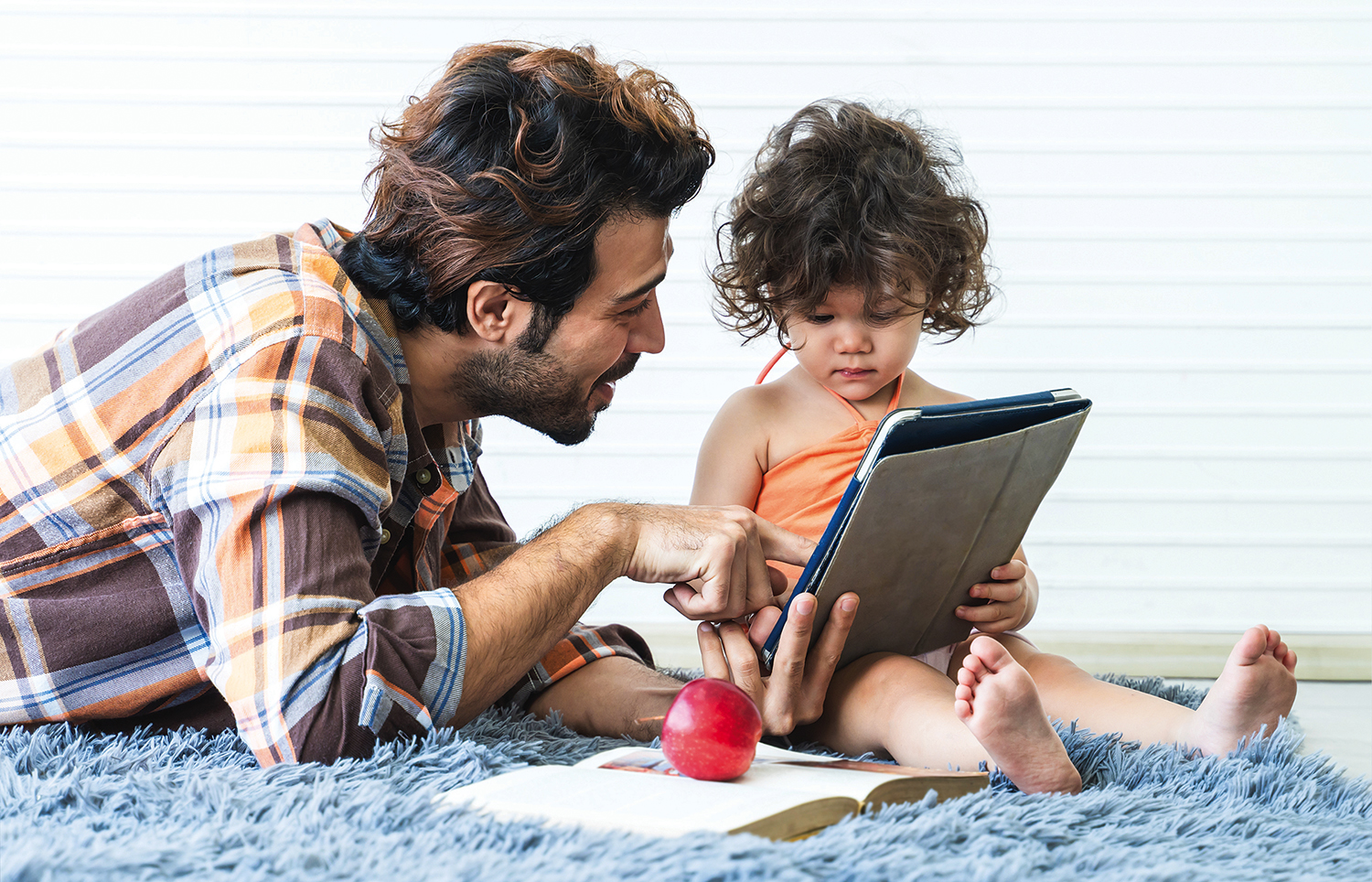
Unsupervised screen time has the most adverse effects according to research, she says. But when parents or caregivers watch certain programs alongside their children — “Ms. Rachel,” for example — it can provide a platform for teaching and bonding, giving adults an opportunity to ask and answer questions.
In fact, Hall says, many researchers, speech therapists and other experts agree that “Ms. Rachel,” the popular YouTube broadcast for toddlers, can help children hone their language skills when viewed with parents.
Such shows, she explains, are considered high-value slow programming, or slow TV, meaning that the plot moves in a slow, simplified way — with scenes changing about every nine seconds.
The best programs for children also incorporate calm music, muted colors, meaningful characters and low-stimulating storylines. In addition to “Ms. Rachel,” these include “Little Bear,” “Franklin,” “Sesame Street,” “Daniel Tiger’s Neighborhood” and “The New Adventures of Winnie the Pooh.”
 Getty Images
Screen Time That Hurts
On the other end of the spectrum, fast-paced children’s shows that change scenes every one to three seconds and often feature flashing lights and neon colors may contribute to sensory overload, according to some studies.
Cartoons such as “CoComelon” “are so good at attracting [a child’s] attention that they can create an addictive pattern,” Hall says.
But, she adds, “Most of these studies are new. Research changes. But one thing that remains the same is that children need their parents for interaction, and that helps their brains grow more than anything.”
The amount of time a young child spends engaging with adults should always outweigh screen time. And the amount of time spent with a device should be balanced with physical activity.
“If you’re on a road trip and need to give your toddler an iPad, that’s OK. Just know when you get to your destination that they’ll be wound up and will need to run around,” Hall says.
And at the end of the day, “if you need an hour, your child is not going to have brain damage from watching a screen. What matters most is that you are at your best,” she says.
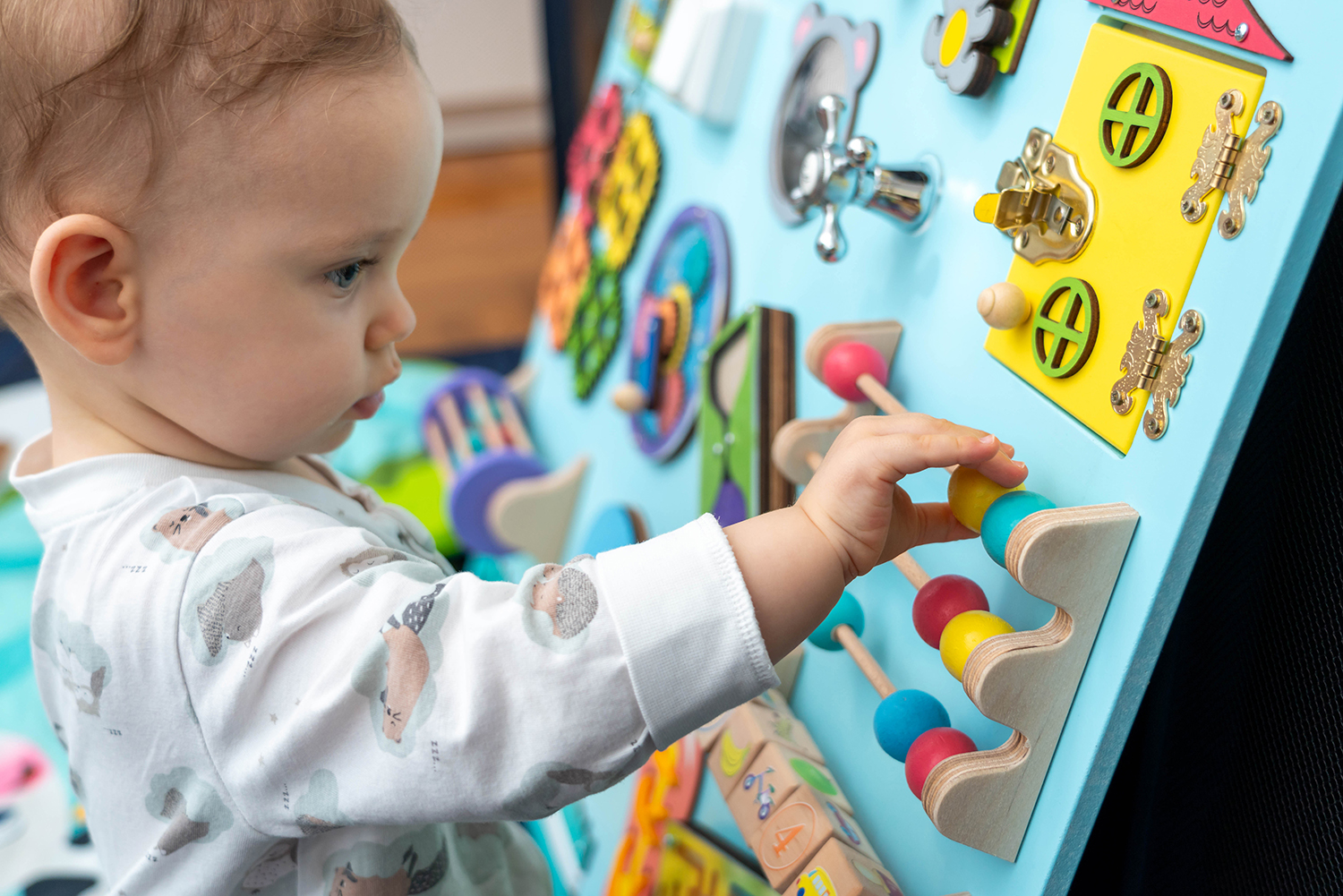 Getty Images / An example of a busy board
A DIY Alternative to Screen Time
Hall says she understands the impulse to hand a toddler a screen.
“It’s convenience,” she says. “I have a 1-year-old, and it can be a struggle getting her to be independent while I load the dishwasher. I think we go to the screen because it’s the easiest way to entertain them.”
For a more creative way to amuse your child, Hall suggests making a busy board. “You can take it out of the house with you, and it will keep their attention for hours.”
A busy board is an interactive toy consisting of a board fixed with a variety of tactile experiences — zippers, latches, mirrors and light switches, for example.
What you need:
> hammer
> hand drill
> screwdriver
> screws, nuts and bolts
> adhesive glue
> piece of plywood cut to any size
What you do:
1. Sand and paint the plywood. Apply two coats of acrylic gloss spray.
2. Gather the objects that you want to include on your board. For inspiration, search “busy board” on Pinterest or Etsy.
3. Plan the layout by arranging your items on the board to determine how they best fit together.
4. Attach the items using nuts and bolts for heavier items and glue for lighter ones.
5. Inspect the board thoroughly to ensure nothing can come loose or has sharp edges.
Learn more at joyberrystudios.com.
The American Academy of Pediatrics makes the following recommendations:
> Babies under 18 months: No screen time, with the exception of video chatting with family members.
> Children 18-24 months: Screen time should be limited to watching educational programming with a parent of caregiver.
> Children 2-5: Screen time should be limited to 1 hour per weekday and 3 hours on weekend days.