
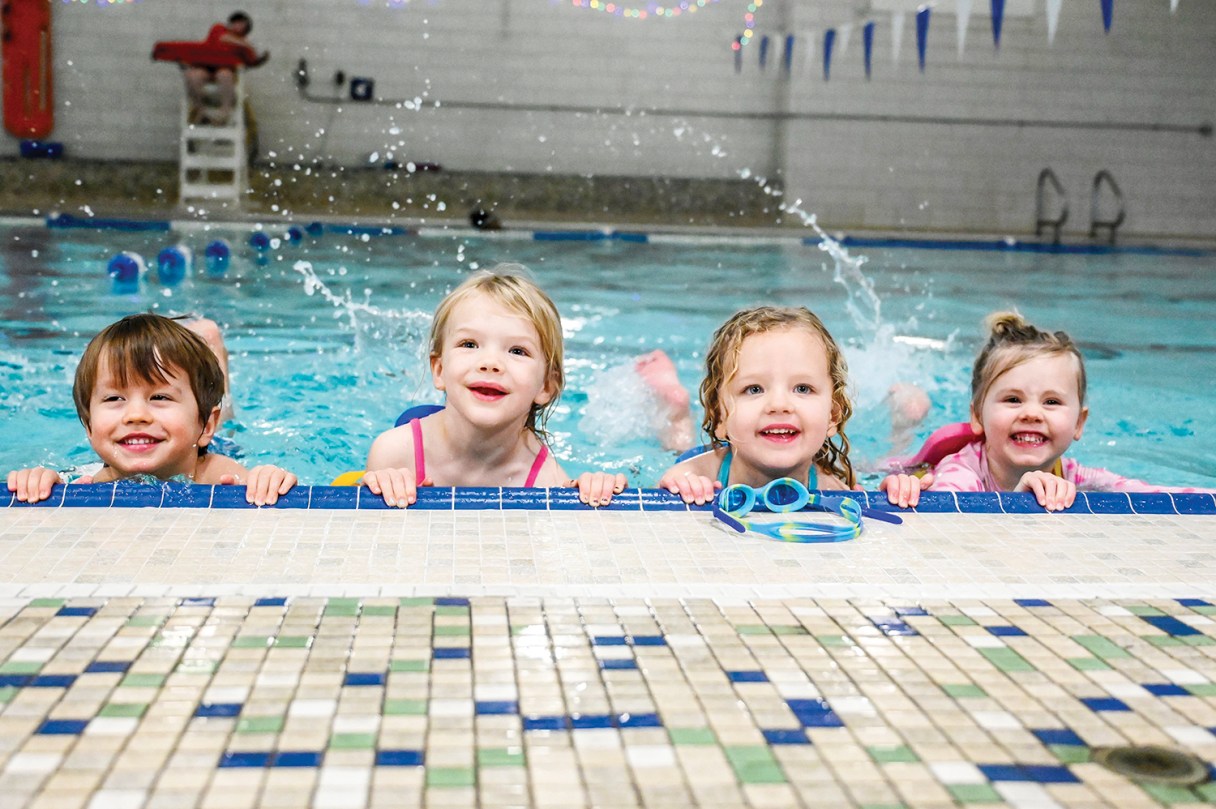
As a parent, you’re constantly mystified by what your little one can do. Every achievement is a source of pride and amazement: baby’s first time sitting up on his own. Baby’s first step. Baby’s first word. Well, just imagine how much you’d be beaming over baby’s first time underwater in the swimming pool.
It’s true that babies do have some natural tendencies when it comes to water — they will instinctively kick and roll over to try to get their face out of the water to breathe. And with a little guidance, coaching and practice, they can learn how to swim — even as young as a few months old.
Take, for instance, the iconic baby gracing the cover of Nirvana’s No.1-selling album, “Nevermind” – who is surely the world’s best-known swimming baby of all time. He was photographed without special effects or tricks – that baby is really swimming.
Come on in, the Water’s Fine
“Water is a very natural environment for babies to be in. Like in the womb, they’re in liquid. It’s just a comfort place for them,” says Elise Sprimont, the aquatics manager at the Hamilton Place location of the Aqua-Tots swim school.
But that doesn’t mean that you can just chuck your child in the pool and hope that they’ll become the next Michael Phelps — or even be able to float at all.
“We definitely don’t recommend just tossing your child in the water and praying that they’ll come up for air,” says Cassie Singleton, aquatics director at the Downtown YMCA in Chattanooga.
Back in the day, especially among families who embrace a little tough-love parenting, the baptism-by-fire style of swim instruction was more acceptable. “You hear all these stories of older generations being like, ‘Dad just threw me in the river and told me to figure it out, and I figured it out,'” says Singleton. In fact, Sprimont says that she learned to swim that exact way — her older brother threw her in the water and, not in so many words, told her to sink or swim.
“But we don’t do that now,” says Singleton.
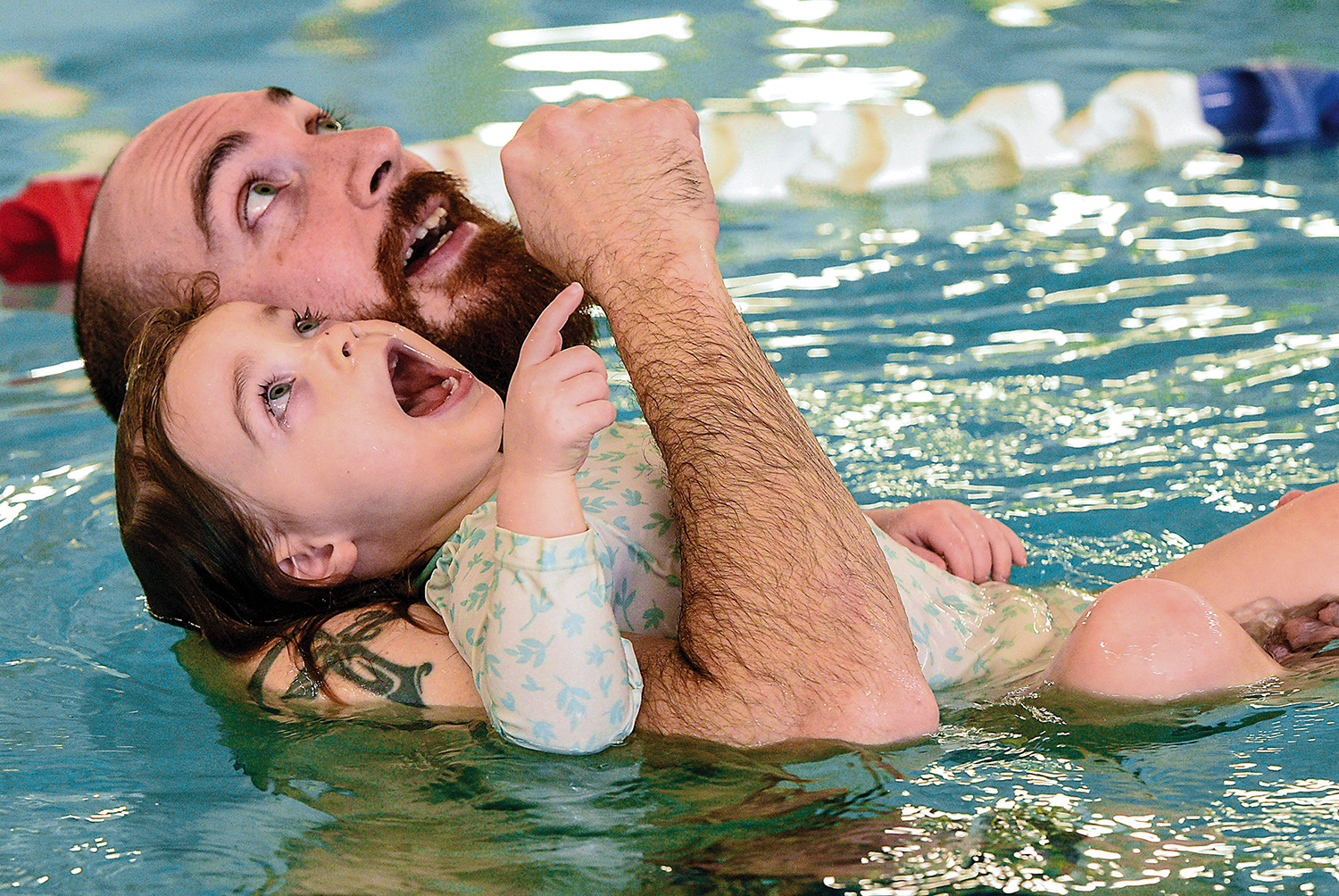 Staff photo by Matt Hamilton / Luke Reasons swims with his daughter, Roxie.
Save Your Breath
She notes that due to muscle and bone density, some kids are prone to sinking, so it’s important to introduce them — and all potential little swimmers — to the water safely.
For Aqua-Tots, that means doing what they call a safe submersion. The school deems itself a “pro-submersion” swim school, which means that baby’s definitely going under — but all while keeping the chlorinated kiddo safe and comfy. “We never want to just dump them underwater,” says Sprimont.
Probably the most common technique for submerging an infant — a method that’s used by both Aqua-Tots and the YMCA — is what’s known as the epiglottal reflex. The epiglottis is a flap of cartilage that closes off the windpipe so that food doesn’t go down it when we’re eating. If you blow in a baby’s face, it will startle the baby and cause them to gasp and take in air, explains Singleton. And, adds Sprimont, “it triggers the epiglottis to close the entryway to the lungs, and then they’re able to go underwater.”
Different Strokes for Baby Folks
Aqua-Tots has more than 130 locations worldwide, and instructs some 5 million lessons every year, teaching kids from 4 months to 12 years old how to swim. Classes are broken up into eight different levels based on age or ability. In the lower levels, babies begin by getting used to being in a pool and developing a relationship with the water. They’re taught that the pool can be dangerous for newbies — learning what Sprimont calls “healthy boundaries.”
“We really create a healthy understanding and respect for water, to be like, ‘wow, this is a really powerful substance,'” she says. “But we teach them to trust the water and to trust us coaches.”
From there, as they advance, children learn water survival skills and a primitive version of freestyle that Aqua-Tots refers to as “Chicken Star Rocket Push.” Eventually, kids move up to learning other swim strokes, breathing techniques, flip turns and so on.
At the Y, swim lessons start at 6 months and go up from there — until, before you know it, you’re an old pro doing butterfly on the Master’s swim team with swimmers in their 70s.
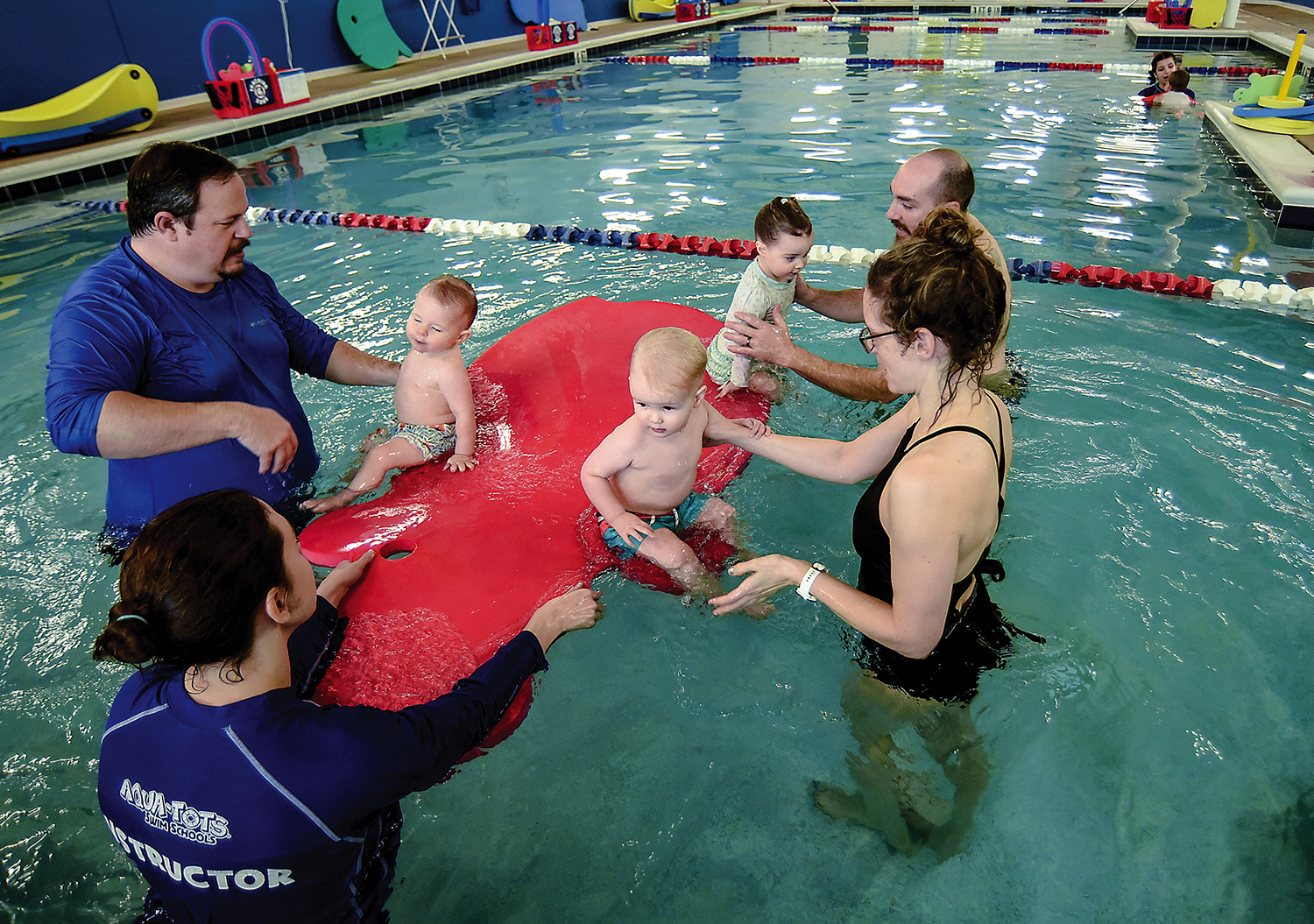 Staff photo by Matt Hamilton / Swim instructor Amy Shrader leads a class at Aqua-Tots.
Just Keep Swimming
Singleton, who had her own kids in the water when they were just 2 or 3 months old, recommends starting swim lessons for babies “as soon as you’re able to and feel comfortable.” “Get your kid in the water and get them acclimated to it — what it feels like to be splashed on the face and what it feels like to float,” she says. “It’s different from bathwater.”
She adds that if you wait until a child is 3 to 5 years old to get them to the pool, it gives them more of an opportunity to build up a fear or dread of swimming. Not to mention that as babies get older, they lose those innate instincts that they’re born with to kick and roll over for air when submerged.
“The sooner you can get a child into the water, the sooner they are able to be comfortable with it,” Singleton says. “You can tell children who’ve been introduced to water prior, because they come in, and they’re not terrified.”
But, say both Singleton and Sprimont, getting your kids wet early on is only half of the equation. They also need to stick with it. Both women advocate for regular classes multiple times per week over an extended period — and practicing the skills outside of class time — to see the most progress.
Getting Into the Swim of Things
There are many reasons to teach your baby to swim, the most obvious of which is safety — because babies are curious and seek out water. Because babies fall in. But Sprimont says that many of the babies she teaches come from parents who don’t know how to swim themselves or are even afraid of the water, and they want their children to have the chance to live a more aquatic existence.
“It’s worth it. It is the most beneficial thing you can do for your child,” says Sprimont. “It is a very rewarding experience to see kids enjoy those swim lessons eventually … to see their love for the water grow.”
But not every baby will take to the water easily, of course. Some infants put up a real good fight. Sprimont says she’s seen kids “crying, screaming, literally kicking,” but that, over time, “they turn out to be some of the best swimmers.”
“You’ve just got to take it slowly,” Singleton says, in order to help babies adjust to the concept of swimming. “Just take it in baby steps.”
For more information on swimming lessons for babies, go to aqua-tots.com or ymcachattanooga.org/downtown-family-ymca-aquatics.
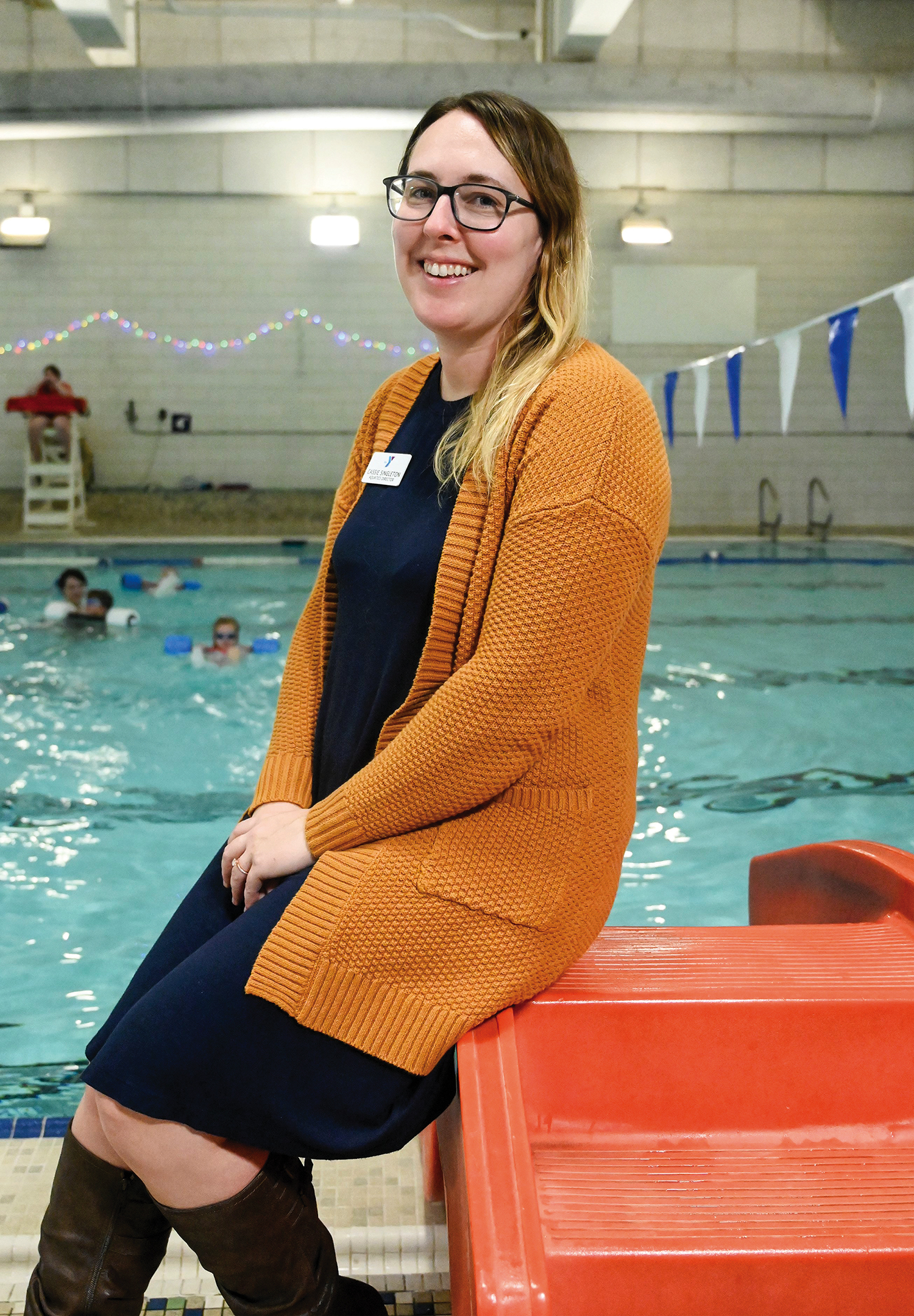 Staff photo by Abby White / Cassie Singleton, aquatics director at the Downtown Y in Chattanooga