
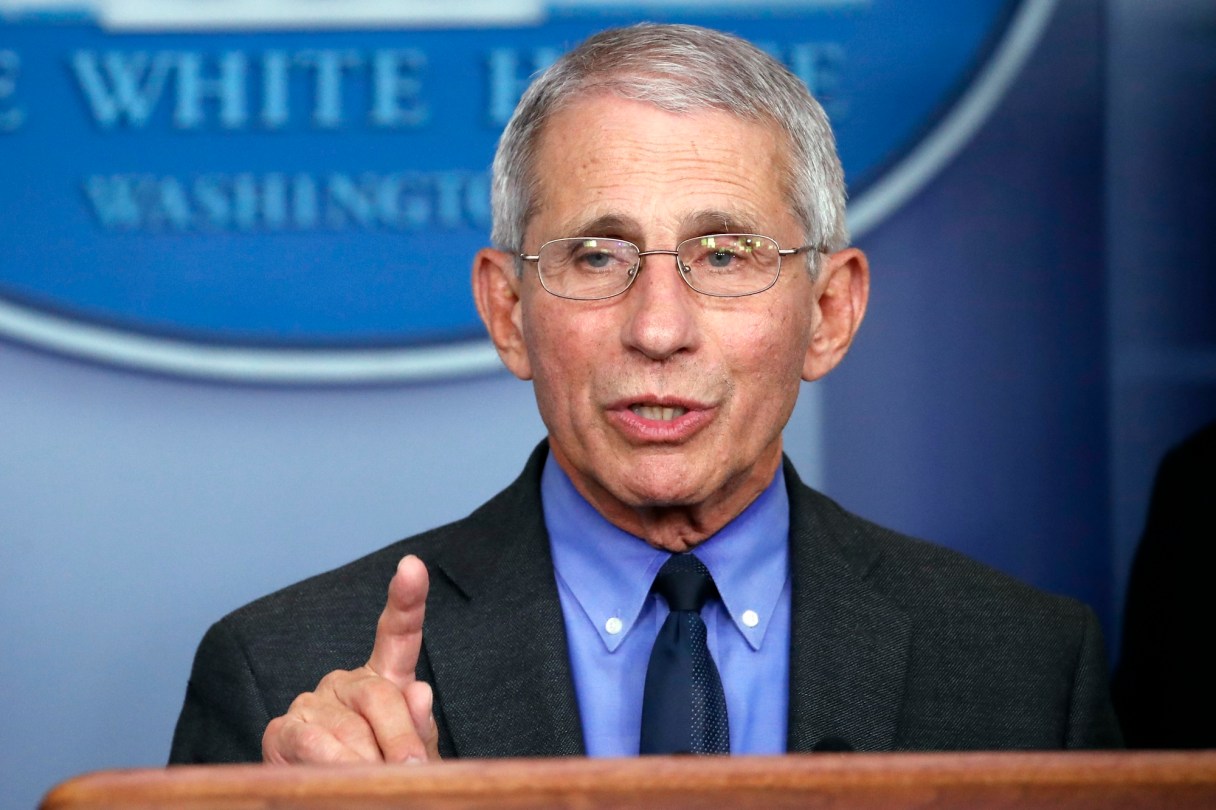
In the midst of a flurry of presidential pardons and commutations by President Joe Biden, there is talk in the White House of preemptive pardons for people who could be at risk of prosecution by the next administration.
One of the top names reportedly mentioned is former chief medical adviser to Biden during COVID-19, Dr. Anthony Fauci. Fauci’s “crime,” if there is one, was his disingenuous testimony before Congress on gain-of-function research.
It might not technically be perjury, but it may have created enough legal exposure for Fauci to consider retaining one of those notoriously high-priced D.C. criminal lawyers. Much of this might have been avoided, but for a worse crime, one that no presidential pardon can fix: the abject failure of America’s science journalists to do their jobs and ask questions.
During the pandemic, Fauci issued important opinions about issues including lockdowns, masking, school closures, vaccines, 6-foot separation and contact tracing. Some of what he said turned out to be correct, some was wrong and some is still controversial, especially about gain of function.
But more importantly, he was never seriously interrogated by science journalists, whose role it was to delve into his opinions. Your average NFL coach gets more probing questions Sunday afternoon after the game than Fauci got from the news media while millions were becoming ill and hundreds of thousands were dying.
Fauci was not alone in receiving gentle treatment by science journalists. Other members of Biden’s COVID-19 response team including Rochelle Walensky, Xavier Becerra and Vivek Murthy got little pushback from science writers after their public pronouncements.
But Fauci remained the touchstone of scientific journalism negligence. Science writers didn’t just fail to ask tough questions; they also sat on their hands while the nonscience media fawned over him, as deaths were still rising and schoolchildren were still falling behind. There were cover stories on him and obsequious profiles.
Fauci swam in personal glory while surreptitiously keeping the National Institutes of Health’s role in gain-of-function research away from the public and disparaging the Great Barrington scientists who questioned the lockdown approach.
Meanwhile, the silence from the science media writers was deafening — when they weren’t simply touting the party line.
Imagine how differently things might have gone if science journalists had done their due diligence and questioned the experts as they would a municipal official accused of graft. Would we have avoided 1.2 million COVID-19 deaths?
Doubtful — nature is going to do what nature is going to do — although closer attention earlier on to indoor ventilation in office buildings, nursing homes, meatpacking plants and prisons might have reduced that number. The information was out there; nobody asked.
Had there been more questions about the lockdown approach and social isolation strategy, the resulting excess death totals from deaths of despair and missed medical care might have been lower. If there had been more questions about school closures and the influence of teachers unions, perhaps children might be catching up sooner today. And we might have a better idea of whether our scientists contributed to reengineering the virus in Wuhan, China, possibly making it more contagious.
Counterfactuals all, but certainly worthy of more journalistic scrutiny than they received.
Dr. Cory Franklin is a retired intensive care physician and the author of “The COVID Diaries 2020-2024: Anatomy of a Contagion As It Happened.”