
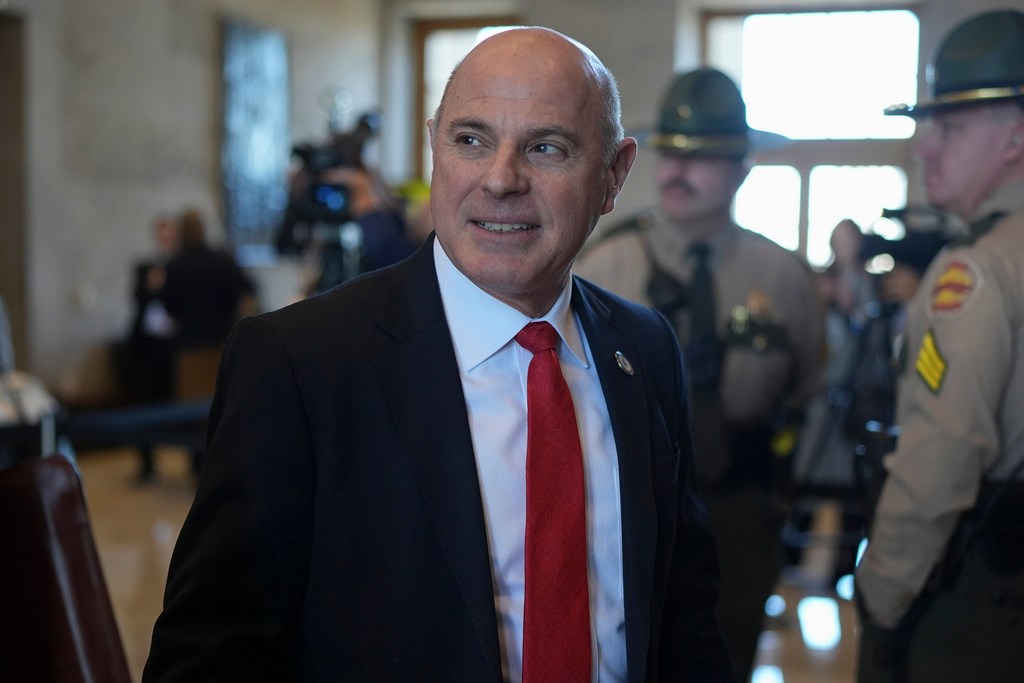
A Tennessee lawmaker wants to require unauthorized immigrant students to pay tuition to attend public schools – a move that would challenge a long-standing U.S. Supreme Court decision.
If approved by the Tennessee General Assembly, the bill would specify that public schools are free to those lawfully residing within the state. Parents or guardians of children who are unable to provide documentation proving their legal status would have to pay the same tuition school districts charge out-of-county students.
It’s one part of a bill the sponsor, state Rep. Gino Bulso, R-Brentwood, called a comprehensive approach to immigration reform that would demagnetize Tennessee as a destination for unauthorized immigrants, as well as ensure taxpayer funds are not used to provide benefits to those not here legally.
“This is not a question of not providing an education to any child,” Bulso said in a phone interview. “It’s just a question of who pays for it.”
Under state law, public schools are free to anyone residing in the state aged 5 or older.
Charging tuition is the same as denying enrollment, said Thomas A. Saenz, the president and general counsel at the Mexican American Legal Defense and Educational Fund, which represented the families in the original Supreme Court case.
The court recognized that, he said, when it ruled in Plyler v. Doe that all school-aged children, regardless of immigration status, have a right to a free public education.
LEGAL PRECEDENT
The 1982 Supreme Court case was based on a Texas law allowing school districts to charge tuition to students who were not “legally admitted” to the country. In a 5-4 vote, the court decided that unauthorized immigrant children were entitled to the 14th Amendment’s equal protection clause and could not be deprived of an education.
Bulso called the Supreme Court’s ruling in Plyler an inaccurate interpretation of the 14th Amendment.
“It’s something that needs to be challenged, and that’s why, in part, that provision is in there,” he said.
In the roughly four decades since, the ruling has seen two major challenges by states, Saenz said. Both were struck down by federal courts.
Conservative lawmakers nationally, though, have repeatedly questioned unauthorized immigration’s impact on schools. In February, the Heritage Foundation, a conservative think tank, published a brief calling on states to pass legislation requiring public schools to charge tuition to families not living in the country legally. That move, according to the brief, would cause a lawsuit that would likely lead the Supreme Court to reconsider Plyler.
“We and many others believe that that was a badly reasoned decision, and it needs to be revisited,” said Lora Ries, director of the foundation’s Border Security and Immigration Center. “There are various factors, circumstances that have changed since that decision, including the phenomenon of unaccompanied children crossing the border and frankly just sheer volume.”
Bulso said he was not familiar with the brief.
Saenz doesn’t believe the Supreme Court would want to overturn its previous ruling.
Plyler is incorporated into federal statute, he said, and unlike other long-standing precedents the court has overturned in recent years, like abortion rights and affirmative action in higher education, there hasn’t been the same kind of long-term sustained campaign against Plyler.
Imagine what would happen if a state implemented this kind of law, Saenz said.
“You would have hundreds, maybe thousands of kids, unable to attend school,” he said by phone. “What do kids do when they can’t attend school and their parents are working? They end up on street corners. Can you imagine what the constituents of the legislators would think if they started to drive through towns and cities and saw a bunch of middle school aged, high school aged kids just hanging out on the street corner?”
It wouldn’t just be unauthorized immigrant children out on the streets, he said. Children have a tendency to draw others with them, and those not at school would become a magnet for their U.S. citizen friends or younger siblings to get out of attending.
EDUCATION
Denying a public education to any child goes against Tennessee values, said Luis Mata, Tennessee Immigrant and Refugee Rights Coalition’s communications coordinator.
“Every child should have the opportunity to reach their full potential, and the foundation for that opportunity is education,” he said by phone. “This is nothing more than a blatant attempt to scapegoat immigrants, including immigrant children, to continue to divide and distract Tennesseans.”
(Subscribe to the weekly newsletter, “School Report,” at timesfreepress.com/schools.)
The proposed legislation is one of several immigration-related bills Tennessee lawmakers will consider this year. Lawmakers will meet next week in a special session to address immigration, as well as Gov. Bill Lee’s plan to provide families public funding for private school tuition and disaster relief for the eight East Tennessee counties hit by Hurricane Helene.
Bulso does not expect his bill to be taken up during the special session. It would also require financial institutions to verify immigration status before transferring money outside of the country, as well as define resident in Tennessee law as those who are U.S. citizens or legal immigrants.
The heightened focus on immigration policy comes as President Donald Trump takes steps to meet his pledge to deport a historic mass of unauthorized migrants.
As of Tuesday, schools are no longer off limits for immigration enforcement after Trump’s administration got rid of policies that told agents to avoid operations at or near “sensitive” locations. That federal guidance had been in place for more than a decade.
Although the exact number of unauthorized immigrant students is unclear – schools cannot ask about immigration status – the Migration Policy Institute estimates there are 12,000 unauthorized residents aged 3 to 17 in Tennessee.
If there are economic burdens placed on school systems by those not in the state lawfully, Bulso asked, is it fair to require that they contribute something in order to mitigate the burden on the school system to some extent?
To him, the answer to that question is clearly yes.
He pointed to English as a new language programs as an example of an economic burden.
(READ MORE: Gardenhire proposes changes to state’s immigration law)
While unauthorized immigrant students for the most part are English learners, the majority of students who receive those services were born in the United States, said Delia Pompa, a senior fellow for education policy at the Migration Policy Institute.
“You have to consider the cost benefit of investing in these children,” she said by phone. “The cost to this country and to communities of having children who are not educated, I think, far outweighs the amount we expend for English services.”
If children are not able to be educated, it not only impacts them and their families, she said, but there are downsides to the public who don’t get the advantage of their knowledge and skills. She said she takes all potential challenges to the Supreme Court’s ruling seriously.
The proposed legislation would affect families who disproportionately experience levels of marginalization and poverty, said Lily Sanchez, the communications and development manager at La Paz, a Highland Park-based nonprofit that serves the local Hispanic community.
It would also affect students’ sense of belonging, which is an increasingly important factor in Latino community members’ well-being, she said.
“Stripping away, not only the additional support that our school system has been able to provide for these students,” she said by phone, “but just general access to fundamental education is really harmful to the health of our local community, as well as the ways in which they are able to integrate into Chattanooga’s community and contribute to the fabric of our city.”
Contact Shannon Coan at scoan@timesfreepress.com or 423-757-6396.