
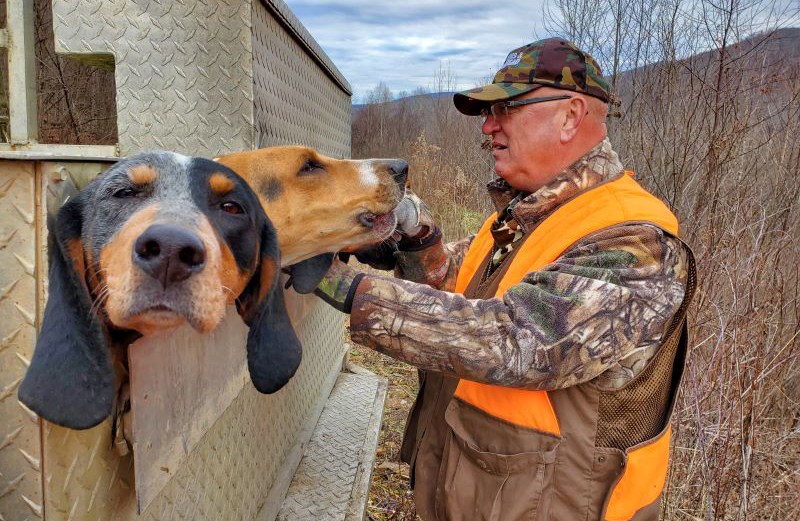
A bear hunter slams on the brakes of his four-wheel-drive pickup. The bed of the truck is covered with a large box made for transporting dogs — in this case, bear hounds. The driver of the truck and his son bounce out of the cab and start to open doors on the dog box. There are six hounds inside the box and two standing on top of it.
The hounds on top are the “rig dogs” or “strike dogs” that play lead roles, and they have smelled a bear track from their perch atop the box. The strike dogs immediately start baying to signal their find, and in two seconds every hound in the truck is likewise barking with all its might. The volume is almost deafening.
After ensuring every hound has a locator collar on and that it’s working, the hunters release the hounds, and they race up the hillside from this remote mountain road. The hunters stand and listen for a few minutes, soaking in the sounds of the chase. This is why they are here. Soon the pack will be too far away to track by sound, and the hunters will have to follow the hounds using the satellite-based tracking collars. It could be many hours before they see the dogs again, maybe longer.
(READ MORE: Bear hounds are brave, hard-working dogs)
In another part of the state, there is a hunter with his daughter and son standing quietly in a brushy field. They are spaced about 50 yards apart in a line, and each carries a shotgun. Across the field from them, their pack of five beagles are in full cry on the trail of a cottontail rabbit. The hunters wait for the rabbit to circle and run past them, hopefully giving them a shot.