
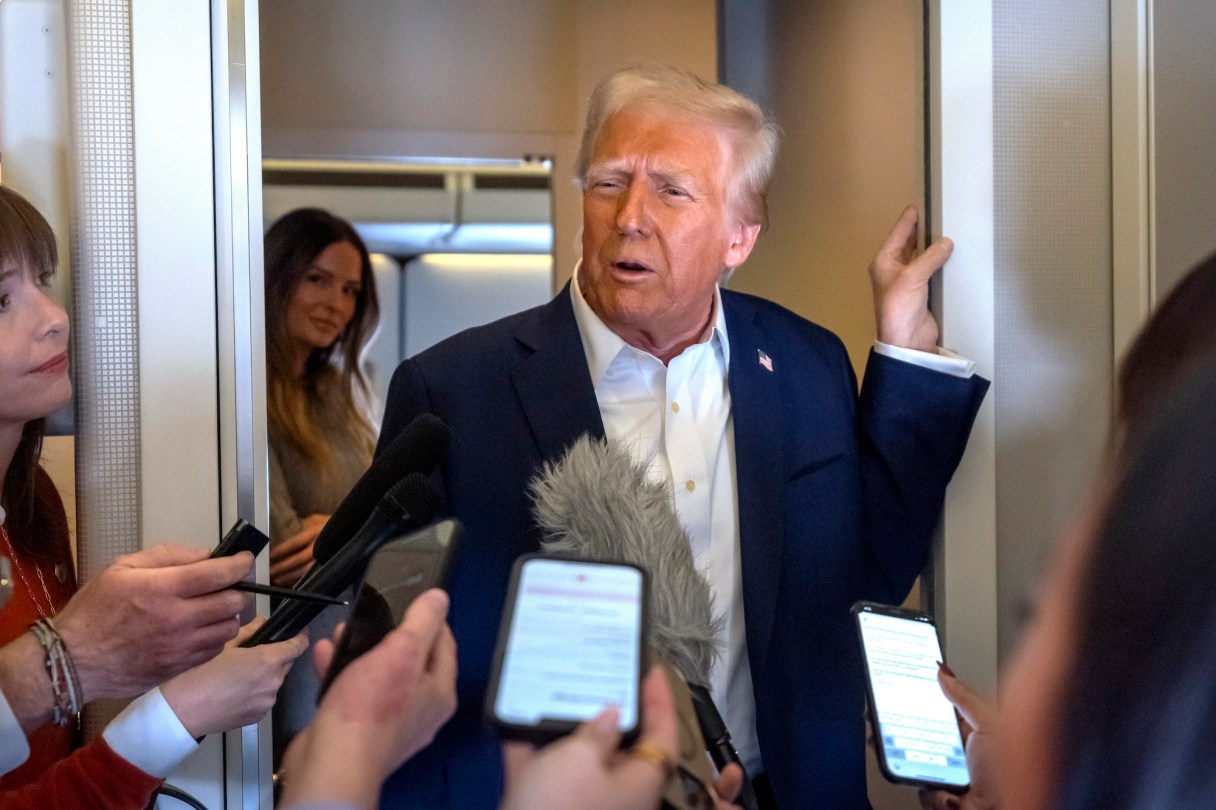
A scene from the first week of the second Trump administration: After the president held a White House event announcing a shared venture, with up to $500 billion of funding, among OpenAI, Oracle and SoftBank to build a vast new data center for the artificial intelligence future, Elon Musk sniped on his social platform X that the money for the venture wasn’t really there.
Asked if his billionaire ally’s snarking bothered him, the president shrugged it off: “No, it doesn’t. He hates one of the people in the deal.” This was a reference to Musk’s conflicts with Sam Altman, the quietly polarizing head of OpenAI. And, President Donald Trump added, “I have certain hatreds of people too.”
Every new administration has factions that end up hating one another despite being on the same official team. But the second Trump White House is starting out with a remarkable degree of open conflict among different individuals, constituencies and worldviews.
This is not, however, a sign of Trump’s weakness. In his first term, many people around him were just trying to drape some semblance of Washingtonian normalcy over presidential incapacity. The second time is different: Trump has set himself up as a king with a court where the main litmus test is personal loyalty. For the near term, this means the most important conflicts in American politics are happening within the court of Trump. Here are a few internal wars to watch:
Protectionists vs. Wall Street: Notably, Trump’s initial slew of executive actions did not include the big tariffs he has promised to impose on rivals and neighbors alike. His own protectionist desires are clear enough, but his court is full of financial elites whispering warnings about not going too far, not disturbing the stock market, finding a more modest way to play William McKinley.