
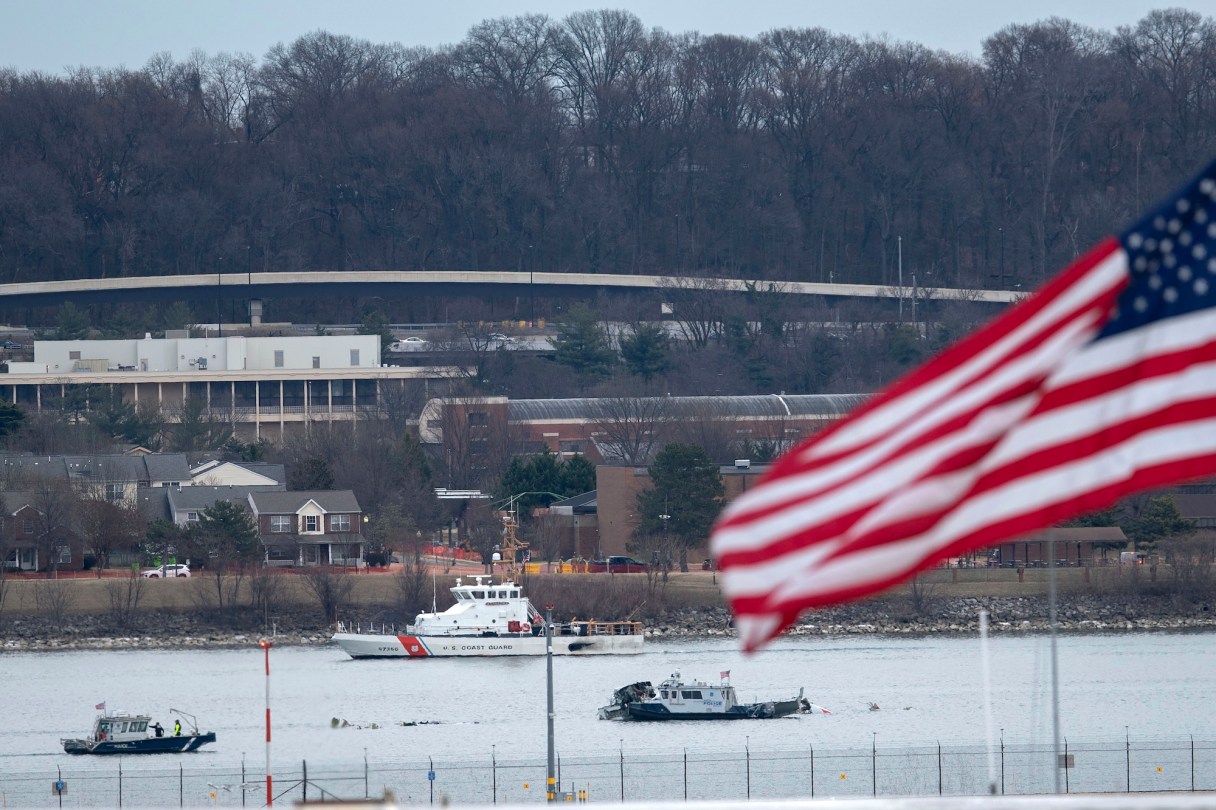
WASHINGTON (AP) — The airspace around Washington, D.C., is congested and complex — a combination aviation experts have long worried could lead to catastrophe.
Those fears materialized Wednesday night when an American Airlines plane collided with a military helicopter, taking the lives of 67 people, including three soldiers and more than a dozen figure skaters.
Even in peak flying conditions, experts said, the airspace around Reagan Washington National Airport can challenge the most experienced pilots, who must navigate hundreds of other commercial planes, military aircraft and restricted areas around sensitive sites.
“This was a disaster waiting to happen,” said Ross Aimer, a retired United Airlines captain and chief executive officer of Aero Consulting Experts. “Those of us who have been around a long time have been yelling into a vacuum that something like this would happen because our systems are stretched to extremes.”
There was no immediate word on the cause of the collision, but officials said flight conditions were clear as the jet arrived from Wichita, Kansas. Investigators have already begun examining every aspect of the crash, including questions about why the Army Black Hawk helicopter was 100 feet above its permitted altitude and whether the air traffic control tower was properly staffed. A Federal Aviation Administration report obtained by The Associated Press described staffing levels as “not normal for the time of day and volume of traffic.”