
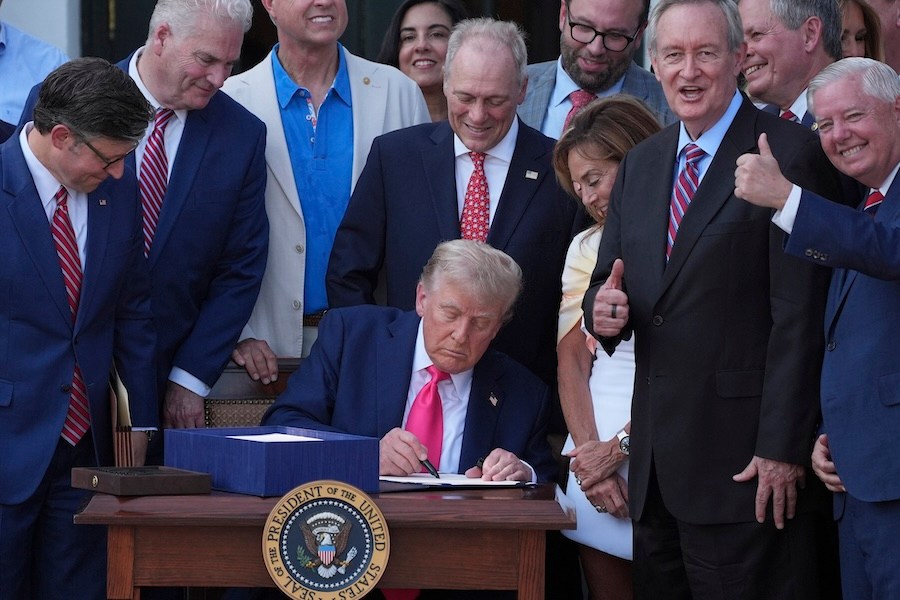
WASHINGTON (AP) — The impact of the massive spending bill that President Donald Trump signed into law on Independence Day is expected to filter down to infants and toddlers — a segment of the population that is particularly vulnerable to cuts to the federal social safety net.
Many middle-class and wealthy families will see benefits from the new legislation, but programs that help low-income families keep babies healthy have been cut back. While state money funds public schools and preschool in some cases, programs supporting the youngest children are largely backed by the federal government.
The law extends tax cuts that Trump passed during his first term in office and pours billions more into border security as the president seeks to broaden his crackdown on immigration. To pay for these initiatives, the law cuts Medicaid and food stamps — programs relied upon by poor households with children — by more than $1 trillion.
The legislation Republicans called Trump’s “big beautiful bill” is set to deliver some gains for families with children. It increases tax credits, including one that now allows parents to deduct up to $2,200 per child from their tax bills. And it introduces investment accounts for newborns dubbed “Trump Accounts,” each seeded with $1,000 from the government.
Still, advocates say they do not make up for what children are likely to lose under the new law. And they fear what comes next, as the next Trump budget proposes more cuts to programs that help parents and babies.