
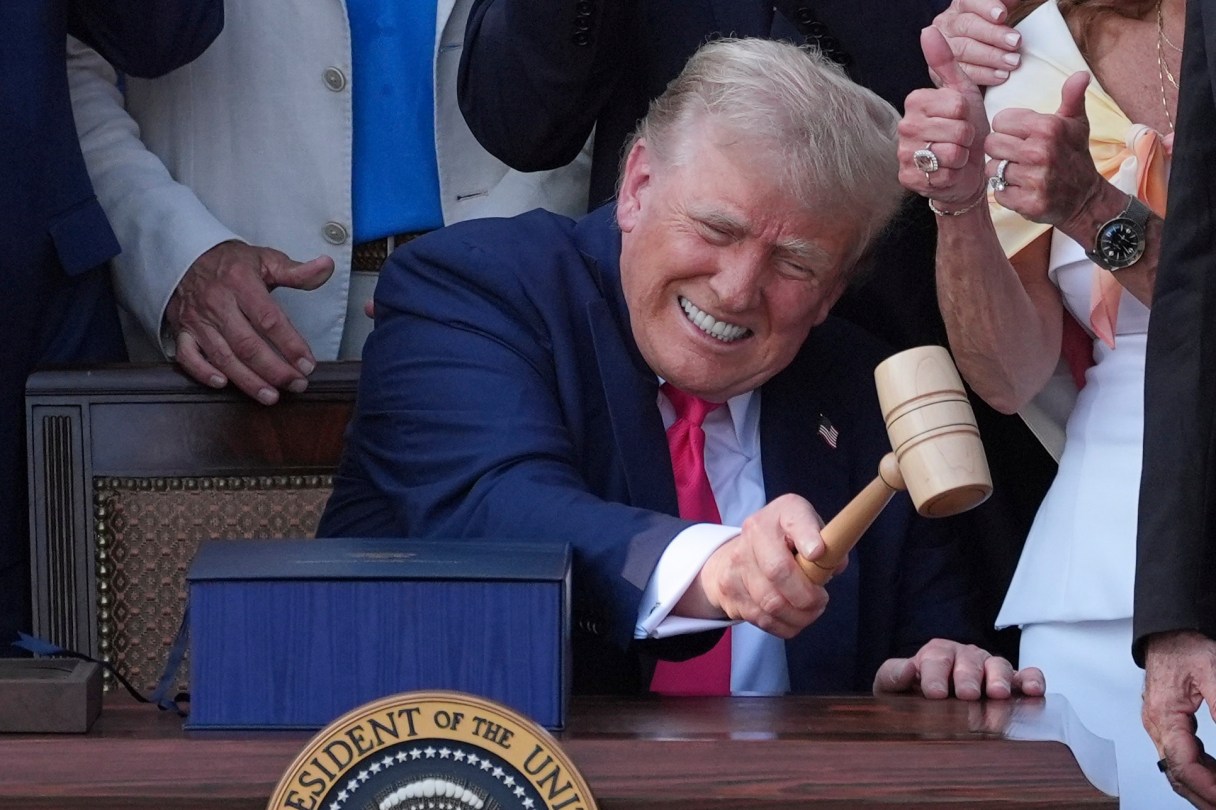
In a remarkable achievement, the One Big Beautiful Bill Act got worse with each iteration before finally being enacted. On plausible assumptions, the final version will add more than $5 trillion to deficits over the next 10 years, moving the track of public debt from unsustainable to all but unhinged. As Congress turns to its budget for next year, it must grapple realistically with this looming crisis.
As written, the measure will add about $3 trillion to the expected 10-year deficit. Include interest payments, and the cost rises to nearly $4 trillion. Assume that assorted “temporary” measures are made permanent — which seems reasonable, given that most of the bill’s cost comes from extending supposedly temporary tax cuts passed in 2017 — and the total could be as much as $6 trillion. Federal debt held by the public would climb from 100% of gross domestic product today to 130% by 2034. (After that, it just keeps going up.)
Remember when fiscal conservatives wanted to balance the budget? This plan means annual deficits of more than 7% of GDP even if the economy remains at full employment. Add a recession during the next decade, and the numbers soar off the charts. As the debt rises, the steps needed to rein it in become ever more challenging.
Complicating the task going forward, many of the bill’s provisions were designed to obfuscate its true costs. Temporary tax and spending changes were timed so that the biggest deficit increases were piled into the early part of the decade. (First, the pleasure of lower taxes and higher spending; later, in theory, the pain of higher taxes and lower spending.) For accounting purposes, the bill’s supporters went as far as to claim that it actually reduces projected deficits — relative to a new “current policy” baseline. In effect, this declared the bill’s centerpiece, extending the 2017 Tax Cuts and Jobs Act at a cost of more than $3 trillion, to be a fiscal nonevent.
The magnitude of the challenge means that tweaks alone — such as the $9.4 billion “rescissions” package the president has requested, which the Senate may vote on this week — won’t cut it. Nor will some combination of tariffs, faster growth and cracking down on “waste, fraud and abuse.” What’s required is a comprehensive review of taxes and entitlements.