
Tuesday, November 10, 2026Nov 10

This story is exclusive to subscribers.

Northwest Georgia utilities, well owners mull how to filter PFAS from water

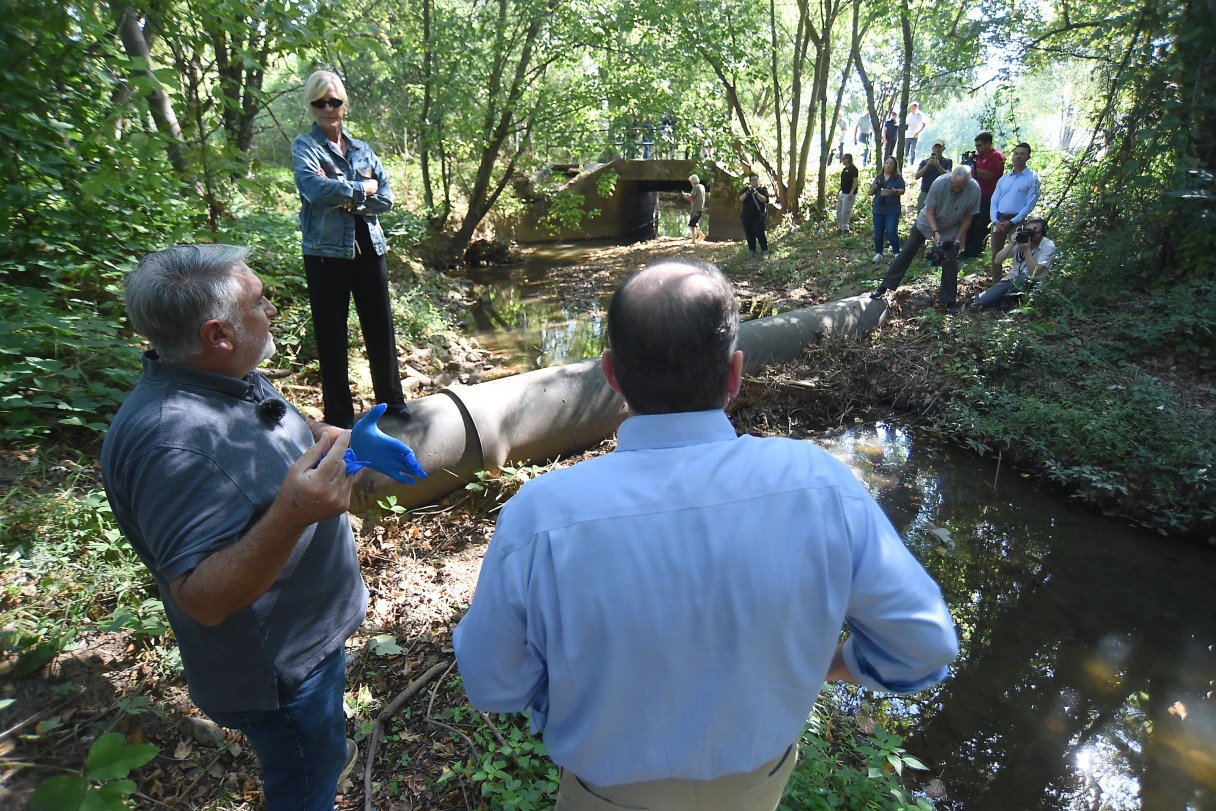
Staff photo by Matt Hamilton / Environmental activist Erin Brockovich, top, looks on as PFAS Georgia member Bob Bowcock, left, and attorney Ben Finley talk Sept. 20, 2024, while taking a water sample in a stream near Threadmill Lake in Dalton.
Staff photo by Matt Hamilton / Environmental activist Erin Brockovich, top, looks on as PFAS Georgia member Bob Bowcock, left, and attorney Ben Finley talk Sept. 20, 2024, while taking a water sample in a stream near Threadmill Lake in Dalton. Staff photo by Matt Hamilton / Environmental activist Erin Brockovich, top, looks on as PFAS Georgia member Bob Bowcock, left, and attorney Ben Finley talk Sept. 20, 2024, while taking a water sample in a stream near Threadmill Lake in Dalton.


Water expert Bob Bowcock will only drink from a groundwater well in Northwest Georgia if it’s tested for forever chemicals, a persistent group of compounds linked to ailments like cancer.

And even then, he said, the results might only be good for a day.

“In Northwest Georgia, there’s no half pregnant,” said Bowcock, who is part of a group, PFAS Georgia, suing several large chemical and flooring manufacturers. “You’ve either got it and you got it bad, or you’re currently safe.”

While residents on private wells generally face more uncertainty, public drinking water systems in the United States could soon have a deadline of 2031 to comply with federally-set limits on PFAS, short for per- and polyfluoroalkyl substances.