
WASHINGTON — President Donald Trump said Wednesday that he planned to speed the advance of artificial intelligence in the United States, opening the door for companies to develop the technology unfettered from oversight and safeguards, but added that AI needed to be free of “partisan bias.”
In a sweeping effort to put his stamp on the policies governing the fast-growing technology, Trump signed three executive orders and outlined an “AI Action Plan,” with measures to “remove red tape and onerous regulation” as well as to make it easier for companies to build infrastructure to power AI.
One executive order banned the federal government from buying AI tools it considered ideologically biased. Another order would speed up the permitting process for major AI infrastructure projects, and a third focused on promoting the export of American AI products around the world.
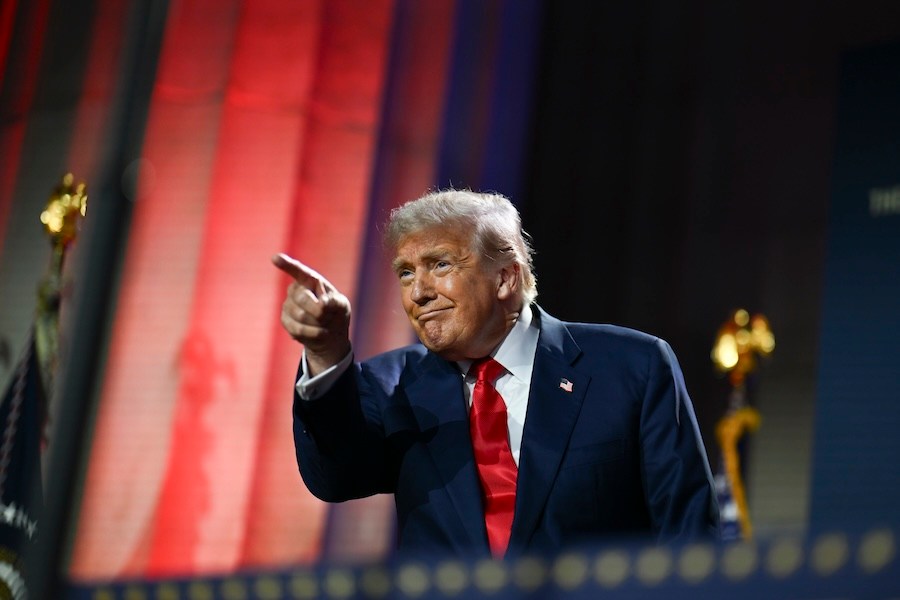
“America is the country that started the AI race,” Trump said in a Wednesday evening speech in front of administration officials and tech executives, including Jensen Huang, CEO of chipmaker Nvidia. “And as president of the United States, I’m here today to declare that America is going to win it.”
Trump’s plan signals that his administration has embraced AI and the tech industry’s arguments that it must be allowed to work with few guardrails for the United States to dominate a new era defined by the technology. It is a forceful repudiation of other governments, including the European Commission, that have approved regulations to govern the development of AI.
But it also points to how the administration wants to shape the way AI tools present information. Conservatives have accused some tech companies of developing AI models with a baked-in liberal bias. Most AI models are already trained on copious amounts of data from across the web, which informs their responses, making any shift in focus difficult.
The changes outlined Wednesday would benefit tech giants locked in a fierce contest to produce generative AI products and persuade consumers to weave the tools into their daily lives. Since OpenAI’s public release of ChatGPT in late 2022, tech companies have raced to produce their own versions of the technology, which can write humanlike texts and produce realistic images and videos.
Google, Microsoft, Meta, OpenAI and others are jockeying for access to computing power, typically from huge data centers filled with computers that can stress local resources. And the companies are facing increased competition from rivals such as Chinese startup DeepSeek, which sent shock waves around the world this year after it created a powerful AI model with far less money than many thought possible.
The fight over resources in Silicon Valley has run alongside an equally charged debate in Washington over how to confront the societal transformations that AI could bring. Critics worry that if left unchecked, the technology could be a potent tool for scammers and extremists and lay waste to the economy as more jobs are automated. News outlets and artists have sued AI companies over claims that they illegally trained their technology using copyrighted works and articles.
(The New York Times has sued OpenAI and its partner, Microsoft, claiming copyright infringement of news content related to AI systems. The companies have denied wrongdoing.)
Trump previously warned of China’s potential to outpace American progress on the technology. He has said that the federal government must support AI companies with tax incentives, more foreign investment and less focus on safety regulations that could hamper progress.
Former President Joe Biden took one major action on artificial intelligence: a 2023 executive order that mandated safety and security standards for the development and use of AI across the federal government.
But hours after his inauguration in January, Trump rolled back that order. Days later, he signed another executive order, “Removing Barriers to American Leadership in Artificial Intelligence,” which called for an acceleration of AI development by U.S. tech companies and for versions of the technology that operated without ideological bias.
The order included a mandate for administration officials to come up with “an artificial intelligence action plan,” with policy guidelines to encourage the growth of the AI industry. The administration solicited comments from companies while it considered its plan.
OpenAI called for the administration to expand its list of countries eligible to import AI technologies from the United States, a list that has been limited by controls designed to stop China from gaining access to American technology. OpenAI and Google called for greater support in building AI data centers through tax breaks and fewer barriers for foreign investment.
Last week, Nvidia said the administration had approved the sale of one of its chips, offered specifically in China, that had previously been banned.
The plan released Wednesday outlined a wide range of policy shifts, divided into moves that the administration said would speed up the development of AI, make it easier to build and power data centers and promote the interests of American companies abroad.
The federal government should impose fewer environmental regulations on the construction of new data centers and support training programs for workers needed to staff the facilities, the plan said. One of the executive orders signed Wednesday would establish a fast-tracked permitting process for data centers.
The plan also called for the government to collect information on regulations that could hinder AI innovation and “take appropriate action.” It also said it would withhold funding for AI-related projects if a state’s regulations made deploying that funding less effective.
The plan — and one of the executive orders — also calls for the government to give federal contracts to AI companies that “ensure that their systems are objective.” It said a government agency should revise guidelines for AI’s development to remove mentions of diversity, equity and inclusion; climate change; and misinformation.
“Once and for all, we are getting rid of woke,” Trump said in his speech. “The American people do not want woke Marxist lunacy in the AI models.”
The power of the federal government should be used to ensure that AI systems are built “with freedom of speech and expression in mind,” according to the plan. That echoes long-standing conservative claims that products produced by tech companies, including online platforms like Facebook and YouTube, favor left-leaning perspectives.
The government should encourage the export of American AI tools, the plan said, and called for federal agencies to help the industry sell packages of AI products abroad and work to counter China’s influence over the technology.
During his speech, Trump conducted a roll call of administration appointees and executives in attendance, including his chief of staff, Susie Wiles, and the CEO of chipmaker AMD, Lisa Su. He thanked David Sacks, his AI and crypto czar, and Sacks’ co-hosts on “All-In,” a popular podcast in Silicon Valley that helped to put on Wednesday’s event. And Trump repeatedly praised Nvidia’s Huang, who was seated in front of the stage.
The president also touched on tariff negotiations, transgender athletes and the recent passage of his domestic policy bill.
“We’re going to make this industry absolutely the top because right now it’s a beautiful baby that’s born,” he said about AI. “We have to grow that baby and let that baby thrive. We can’t stop it.”
When he was done speaking, Trump moved from the lectern to the side of the stage and a small desk, holding each executive order up after signing it. He handed the pen he used to sign one of the orders to Sacks. After wishing the crowd luck, Trump left the stage.
This article originally appeared in The New York Times.