
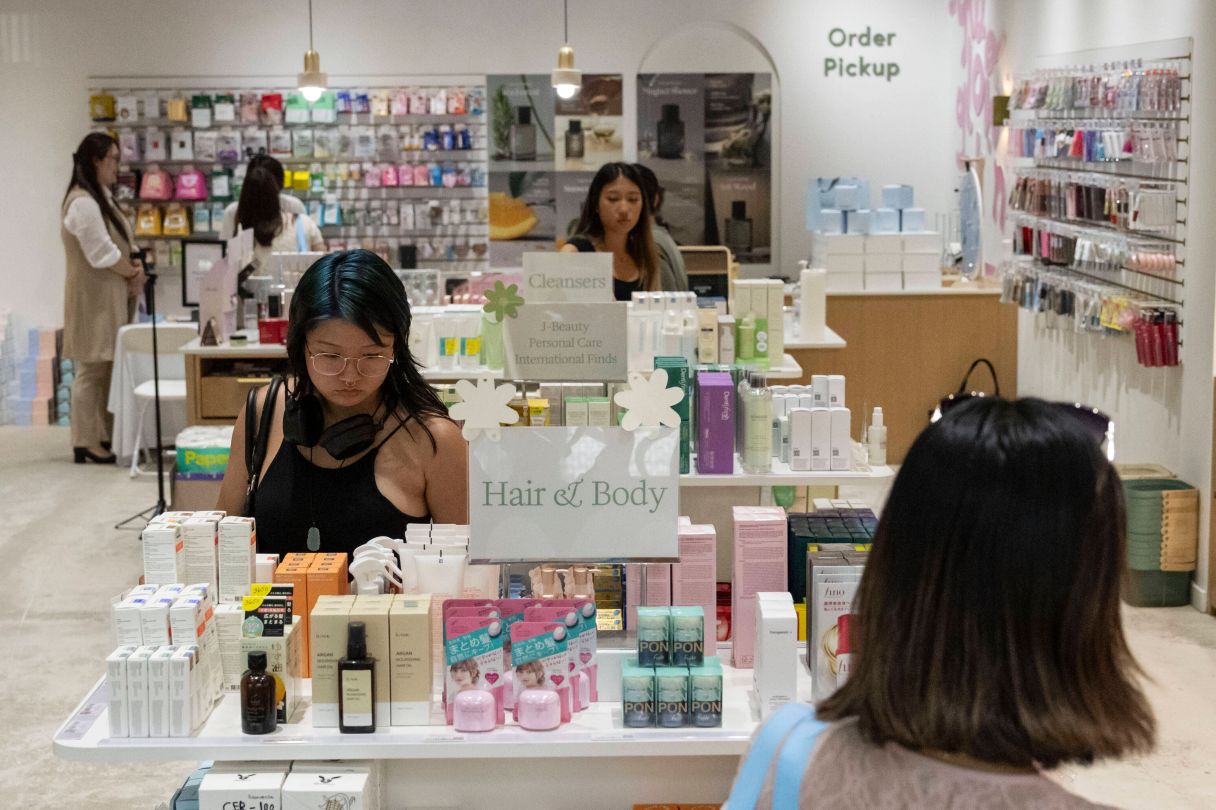
NEW YORK (AP) — When Amrita Bhasin, 24, learned that products from South Korea might be subject to a new tax when they entered the United States, she decided to stock up on the sheet masks from Korean brands like U-Need and MediHeal she uses a few times a week.
“I did a recent haul to stockpile,” she said. “I bought 50 in bulk, which should last me a few months.”
South Korea is one of the countries that hopes to secure a trade deal before the Aug. 1 date President Donald Trump set for enforcing nation-specific tariffs. A not-insignificant slice of the U.S. population has skin in the game when it comes to Seoul avoiding a 25% duty on its exports.
Asian skin care has been a booming global business for a more than a decade, with consumers in Europe, North and South America, and increasingly the Middle East, snapping up creams, serums and balms from South Korea, Japan and China.
In the United States and elsewhere, Korean cosmetics, or K-beauty for short, have dominated the trend. A craze for all-in-one “BB creams” — a combination of moisturizer, foundation and sunscreen — morphed into a fascination with 10-step rituals and ingredients like snail mucin, heartleaf and rice water.