
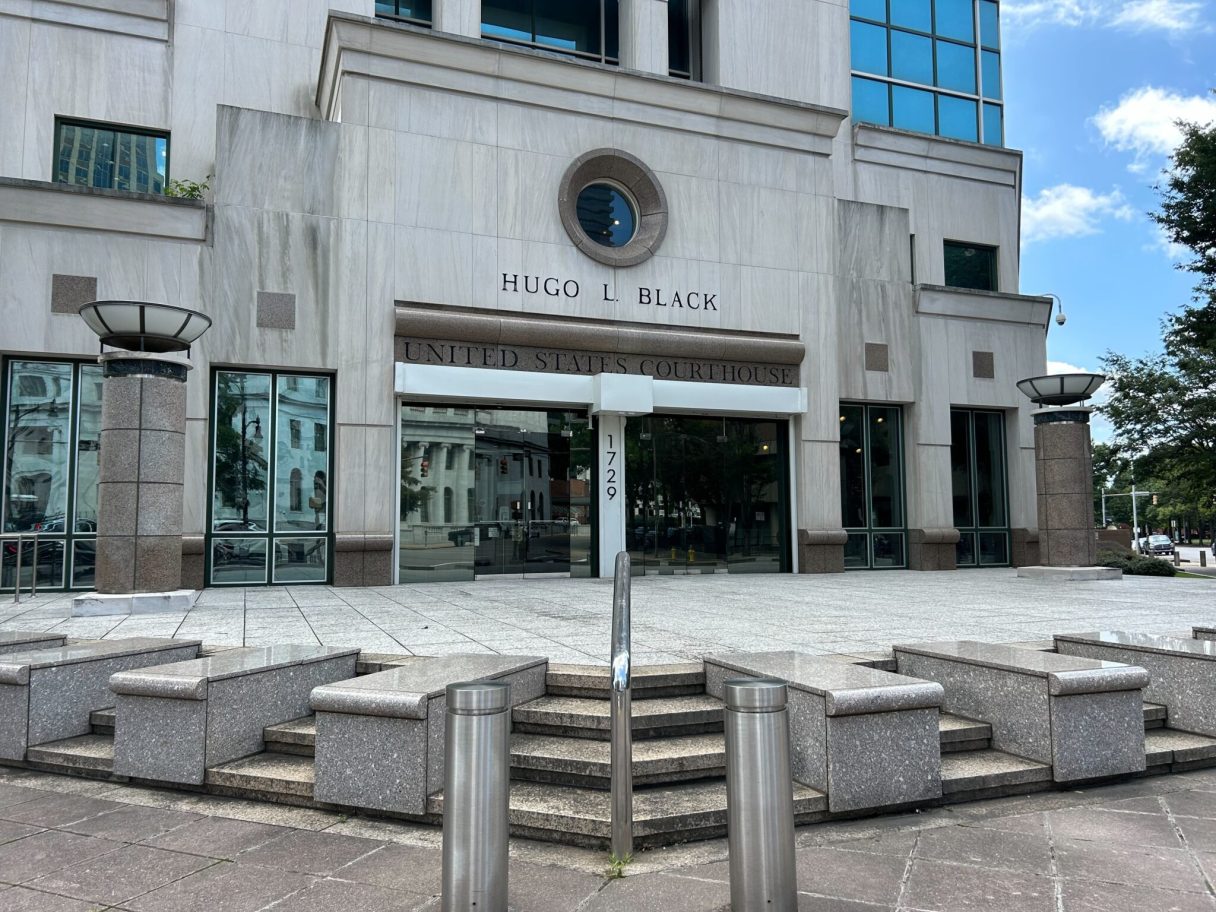
The Alabama Attorney General’s Office said Wednesday the state may forgo drawing new congressional district maps before 2030 to prevent federal oversight of future redistricting.
The state made the argument during a meeting with a three-judge federal panel and attorneys for plaintiffs who successfully challenged two congressional maps drawn by the Legislature in 2021 and 2023 that the panel said showed intentional discrimination against Black voters.
The plaintiffs asked the panel to consider preclearance under the Voting Rights Act as a possible remedy. Preclearance would require federal approval of any changes to election laws. Alabama was subject to preclearance from 1965 to 2013, when the U.S. Supreme Court struck down the relevant section of the Voting Rights Act that dictated preclearance for areas with histories of voting discrimination. But the law does allow courts to impose it as a remedy.
Less than two hours before Wednesday’s hearing, attorneys for the state filed a court document stating that while they “maintain their arguments about the necessity and constitutionality of any remedial plan,” legislative leaders “will voluntarily forgo any rights that they may have to attempt to draw an additional congressional district map as part of remedial proceedings in this case.”
“We have been talking to the state about the possibility of perhaps resolving some or all of the remedial issues in this case, and that we would like the court to give us an opportunity to continue to have those discussions if they prove fruitful,” said Deuel Ross, an attorney with the NAACP Legal Defense Fund representing the plaintiffs, during the status conference.
Jim Davis of the Alabama Attorney General’s Office said during the status conference that, though subject to appeal, the state agrees that the map drawn by a special master would be the final remedial map.
“There have been a few discussions,” Davis said to the three-judge panel. “It’s possible that it could influence the briefing, possibly even resolve some issues.”
A message seeking comment was left Wednesday with the attorney general’s office.
The three-judge panel set a June 9 deadline for parties to file a joint written report on the status of the case and the possibility of resolving outstanding issues, including a request to place Alabama back into federal preclearance.
“Either we’re going to sort of settle things and resolve this case, or we’re going to continue on with our request for preclearance in this,” Ross said in a phone interview after the status conference.
The federal court ruling found that the Alabama Legislature had ignored previous orders to create a congressional map with two districts where Black voters would have a substantial opportunity to elect their preferred candidate.
Alabama has had at least one majority-Black U.S. House district — the 7th — since 1992, but plaintiffs argued it failed to give proper representation to Black Alabamians, who make up about 27% of the state’s population but, with a single majority-Black district, only made up 14% of Alabama’s U.S. House delegation. The three-judge panel struck down the 2021 map in 2022, ruling that racially polarized voting in Alabama meant that Black Alabamians could not select their preferred leaders.
The judges ordered the state to draw a new map, a move the U.S. Supreme Court upheld in 2023. That summer, the Republican-controlled Legislature approved a map with one majority Black district and one district that was 40% Black.
The judges sharply criticized the Legislature and appointed a special master who drew a map where two of Alabama’s seven U.S. House districts — the 2nd and the 7th — have majority-Black or near-majority Black populations. This map was used in the 2024 elections, resulting in the first time in history that Alabama elected two Black U.S. Representatives simultaneously.
The court Wednesday also provided a hearing schedule for the preclearance issue if a settlement is not reached. The state would file its brief by June 16, and the plaintiffs would have until June 23 to respond. Intervening legislative defendants would have until June 27 to file a reply.
Read more at AlabamaReflector.com.