
WASHINGTON — The legitimacy of President Donald Trump’s tariffs is being questioned by U.S. courts, but the president is showing no signs of backing off his favorite tool.
On Wednesday, the tariffs that Trump imposed on foreign steel and aluminum are set to double to 50%, a move that the president has said will better protect domestic metal makers.
The increase comes as the U.S. government this week faces off with states and businesses that have sued over the president’s tariffs. Both sides will be required to submit more information as judges work toward final decisions on the legality of Trump’s steepest tariffs.
The U.S. Court of International Trade ruled last week that some of the steep tariffs that Trump had imposed were illegal, a significant setback for the president’s agenda.
But a separate court temporarily paused that decision less than 24 hours later. As judges weigh that appeal, the tariffs in question — which include the levies Trump imposed on Canada, Mexico and China for what he said was their role in the fentanyl trade, as well as the global tariffs Trump announced, and then quickly paused, in April — are expected to remain in effect until at least June 9.
On Monday, a group of businesses behind that original lawsuit urged the court to reject the government’s newest request. Lawyers for companies including VOS Selections, a wine importer, said they would face “irreparable harm” — as would “millions of consumers”— if Trump can maintain many of his tariffs while the legal fight proceeds.
A legal win by the businesses would make them eligible to be reimbursed for hefty tariffs that they have paid in recent months. But lawyers for VOS Selections said that relief may not come soon enough — especially for many businesses that are investing heavily to reorganize their supply chain or are at risk of going out of business.
“What good is a refund of the tariffs paid to a business that is bankrupt and no longer exists?” the complaint read.
A ruling against the government would strip the president of the use of a legal authority he has used to raise and lower tariffs on a whim, by declaring first fentanyl and then the U.S. trade deficit to be an “international economic emergency.” The Court of International Trade ruled that Congress had not given the president such expansive authority.
But the president has many other ways to impose tariffs. On Sunday, one of Trump’s top trade advisers insisted that the president would find methods to target other countries even if the trade court ruled against some of his levies.
“Rest assured, tariffs are not going away,” Commerce Secretary Howard Lutnick said on “Fox News Sunday.” He said the president possessed “so many other authorities” that if the court ultimately sided against the White House, Trump could still “bring on another or another or another.”
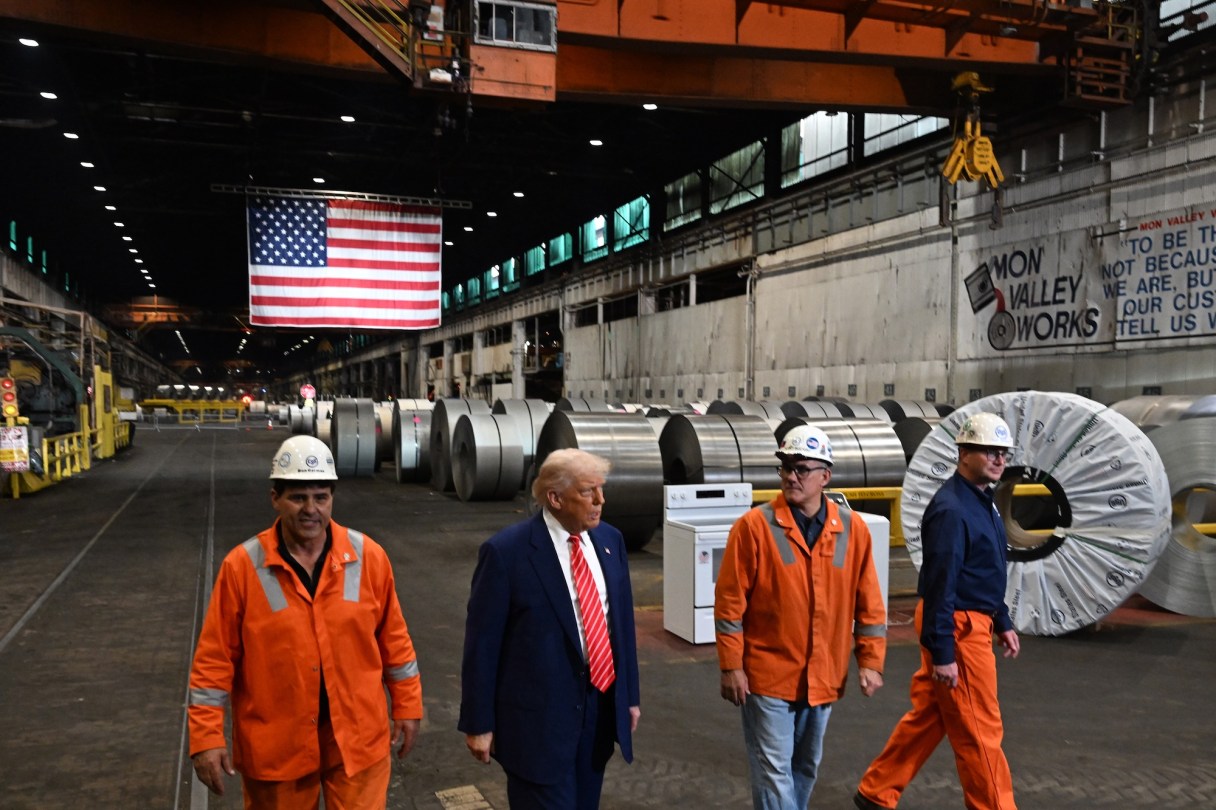
The steel and aluminum tariffs that Trump announced on a visit to a Pennsylvania steel mill Friday will draw on one of those other methods.
The steel and aluminum tariffs were issued under a legal statute related to national security, known as Section 232. To impose those types of tariffs, the president must first initiate an investigation into whether imports of a certain item pose a national security threat. If the investigation determines that they pose a threat, the president has the authority to tax those imports.
Trump has already used that authority to order tariffs on foreign cars and car parts. And his administration is carrying out investigations into many other areas, including pharmaceuticals, semiconductors, lumber, copper, airplanes, trucks and critical minerals.
Those investigations could be used to roll out more tariffs soon, regardless of the outcome of the court cases. There have been other historical investigations where no action was taken but could be, including on uranium and vanadium, used in the production of steel alloys.
Brad Setser, an economist at the Council on Foreign Relations, estimated that the Section 232 cases now in place or in process could potentially cover 40% of U.S. trade.
The president also has the trade case he started against China in his first term, which could be repurposed to quickly impose additional tariffs on Chinese goods. That case used another legal statute known as Section 301, which also requires an investigation into whether imports are hurting American businesses before tariffs or other measures are issued to help them. There are a handful of other laws that give the president the authority to impose different kinds of tariffs as well.
Setser said replicating the scale of the tariffs that the court could strike down with these other authorities would be doable.
“It will just take more time, a lot more process and won’t allow the president the same ability to raise or lower tariffs over a weekend without any real capacity for interests that would be adversely affected by tariff shifts to provide comment,” he said. “In other words, the trade war will slow down.”
Lutnick and his counterparts in government had initially told the court that an adverse ruling could upset negotiations with other nations and undercut the president’s leverage.
On Sunday, Lutnick sounded more sanguine, saying the ruling “cost us a week, maybe,” insisting that “everybody came right back to the table” and that the president would achieve his goal of striking many new trade deals with other countries.
He also said the president was not expected to extend his original 90-day pause for the global tariffs that he imposed using the emergency authority that at least one court has ruled illegal.
Administration officials also reiterated Sunday that China had violated the terms of the deal it struck with the United States in Geneva in mid-May that saw the two nations roll back trade barriers against each other. Kevin Hassett, the director of the National Economic Council, suggested on ABC that there could be a discussion as soon as this week between Trump and Chinese President Xi Jinping, though he later said that nothing was scheduled.
Scott Bessent, the Treasury secretary, said separately on CBS that talks with China had stalled. He accused Beijing of holding back its exports of rare earth minerals, which are critical for global industrial supply chains.
This article originally appeared in The New York Times.