
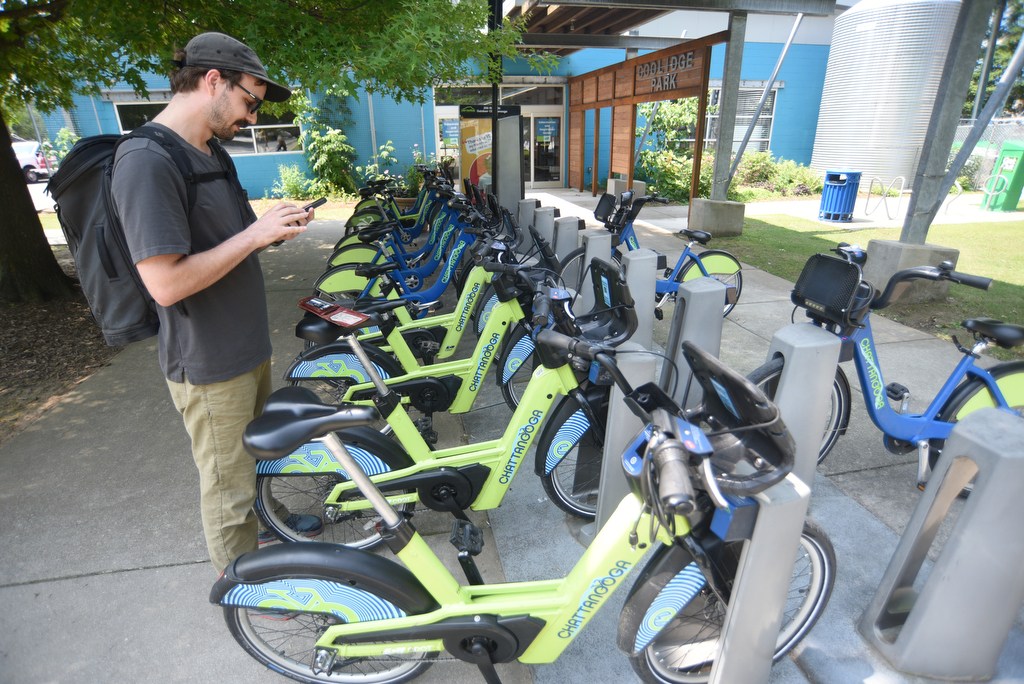

The cost of annual passes for Chattanooga’s bikeshare is about to nearly double.
Beginning June 23, passes will increase from $50 a year to $90, according to Bike Chattanooga. It’s the first rate increase since the rideshare system first came to the city in 2012.
The annual passes allow riders to go on unlimited rides up to 60 minutes each.
“We understand that no one loves to hear about price changes,” an email alerting riders to the change said. “This adjustment will help us maintain the system you rely on, expand our fleet and continue providing the reliable, convenient service that keeps you moving.”
The rideshare will also change how it charges riders for single rides on its fleet of bicycles, e-bikes and electric scooters.
Chattanooga bikeshare upping annual prices, charging single rides by minute
(READ MORE: Stop signs to make 14th Street bikeway, a Main Street alternative, safer)
Now, riders have to purchase at minimum a one-day pass for $10, which gives them unlimited 60-minute rides for 24 hours. There’s also a $20 option for a three-day pass.
After June 23, riders without annual passes will pay for rides according to how long they are.
Each ride will start at $1 to unlock the bike. Then, it’s 20 cents per minute on regular bicycles, 30 cents for e-bikes and 35 cents per minute for electric scooters.
Annual passholders will be able to rent the scooters at a slightly reduced rate of 25 cents a minute.
“Whether you’re running errands or cruising the riverfront, you can now hop on a bike or scooter and return it to any station when you’re done,” the email said, “no need to keep track of the clock or dock hourly.”
A TRAILBLAZER
In 2012, Chattanooga’s bikeshare system was a trailblazer, Philip Pugliese said.
It was installed before New York City had a bikeshare, or Chicago or San Francisco, he said.
Pugliese was working as a bike coordinator with the then-new Outdoor Chattanooga when the city received federal money to help reduce air pollution. A regional plan had identified a need for more bike and pedestrian infrastructure, Pugliese said, so bike lanes were added but weren’t being used much.
(READ MORE: Poll finds support among Tennessee voters for adding bike lanes to roads)
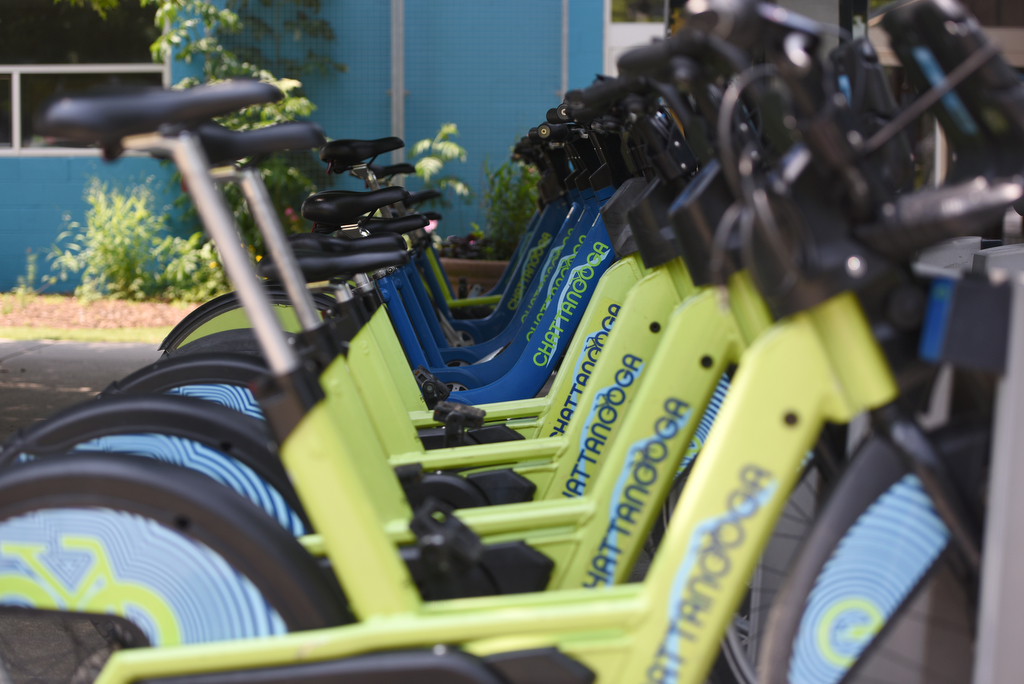
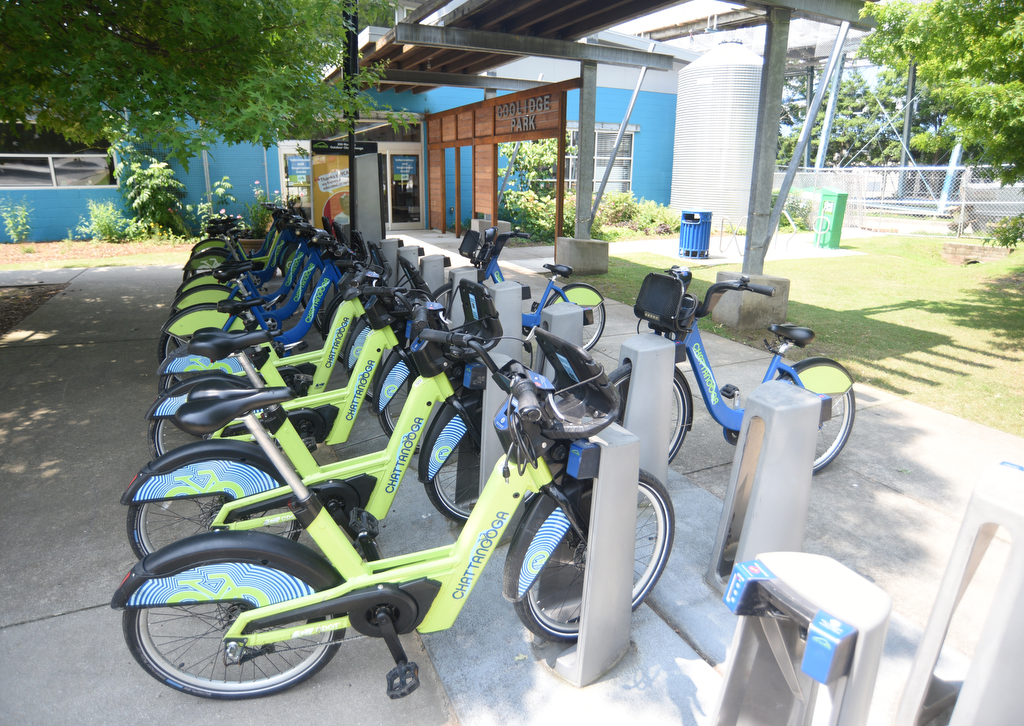
The system began with 300 bikes at 30 stations, Pugliese said. Now, there are 43 docks, mostly serving downtown, the Southside, the Tennessee Riverwalk and parts of St. Elmo, North Chattanooga and Highland Park.
The bikes were intended to expand access to Chattanooga’s buses, Pugliese said, and give people an alternative to driving and parking downtown.
“It really comes down to using the right tool for the right trip,” Pugliese said. “If you’re only going a handful of blocks, does it make sense to take a 4,000 pound automobile?”
Even for people who use their own bicycles to get around, the shared bikes are a good option for days when weather or plans may change, Pugliese said.
More than a half million rides were logged on the system in its first decade.
A $1 million grant from the state is funding an additional five stations along Dodson Avenue, which will expand the system into East Chattanooga.
RIGHTSIZING
Jon Jon Wesolowski said he’s probably the bikeshare system’s biggest fan.
He’s an annual passholder and said he will continue to pay the higher rate. It’s still cheaper than what it would likely cost to maintain a bicycle for a year, he said by phone, and the increase seems like a “right-sizing” adjustment after riders have been potentially underpaying for the service for years.
“I find it to be the cheapest, most convenient way to get around the urban core,” Wesolowski said. “I think the main thing that keeps it from being more popular, rather than price, is probably just bike pathways and access.”
(READ MORE: Chattanooga box brings bikes closer to those who need them)
He said he would like to see a day pass plan remain an option, since it makes it easier to plan a trip.
Living in Highland Park, Wesolowski is about a five-minute walk to the station at Tatum Park, the easternmost dock aside from ones on the Riverwalk.
He said he chooses the bikeshare over his own bicycle for trips during which he wants to be flexible.
“It just takes a step of planning out of the night,” Wesolowski said.
The dock-based system, where riders must return bikes to a system with an open slot, does mean riders are limited in where they can go, he said. But it’s also easier to maintain and keeps the bikes from cluttering sidewalks or being thrown in the river, he added.
“People who don’t use it probably have a much better opinion of bike riders if you know they’re not leaving a mess everywhere,” Wesolowski said.
Contact Ellen Gerst at egerst@timesfreepress.com or 423-757-6319.