
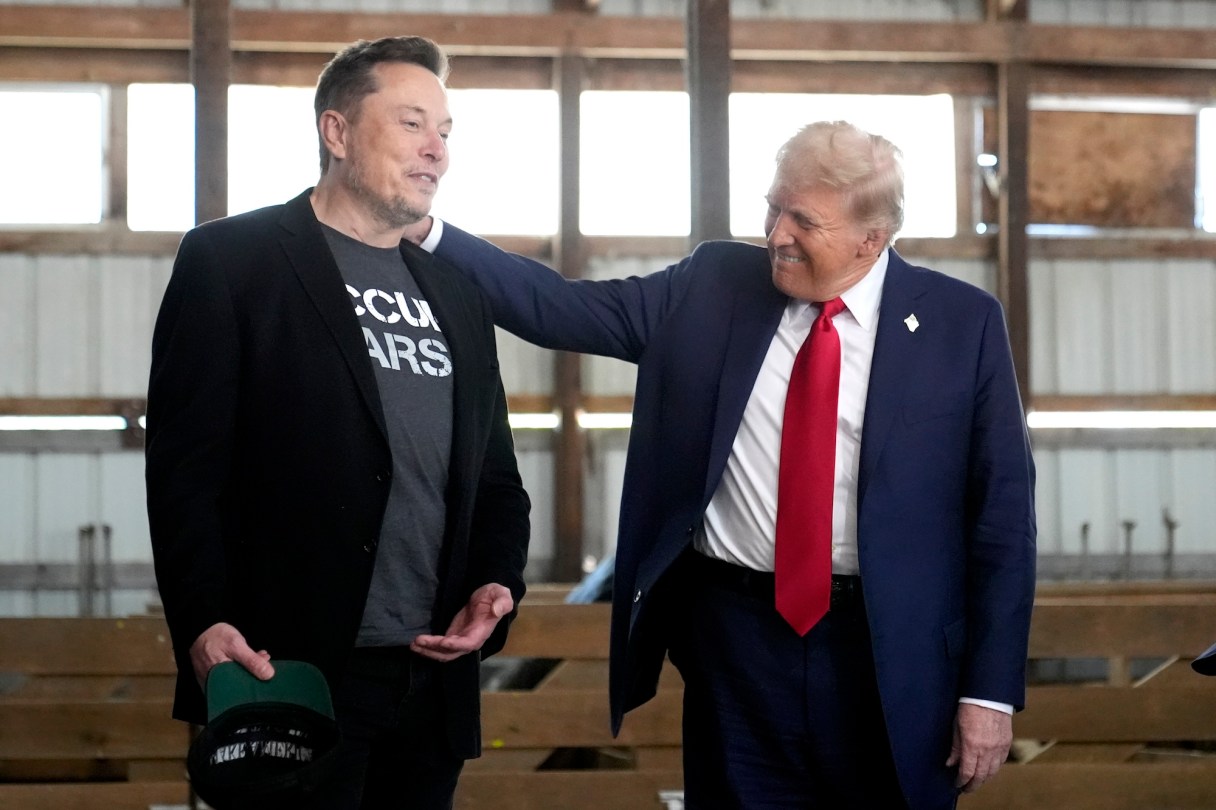
The popcorn emoji is out in force as the world’s richest person feuds with its most powerful leader. Even Thierry Breton, the European regulator who was a frequent target of Elon Musk’s ire, is at it. Still, as entertaining as the billionaire’s spat with President Donald Trump may be, it also carries costly lessons for a $630 billion space economy dominated by Musk’s Space Exploration Technologies Corp. — such is the danger of codependence between de facto monopolies and increasingly protectionist states.
This danger wasn’t high on the agenda at the peak of Trump’s bromance with Musk, when the president-elect described SpaceX’s reusable rocket revolution in the way a Renaissance monarch might have praised a successful colonial expedition — with a mix of national pride, geopolitical influence and financial potential: “I called Elon. I said, ‘Elon, was that (landing maneuver) you?’ He said, ‘Yes, it was.’ I said, ‘… Can Russia do it?’ ‘No.’ ‘Can China do it?’ ‘No.’ ‘Can the United States do it, other than you?’ ‘No, nobody can do that.’ ‘That’s why I love you, Elon.'”
Since then, the love has turned to stardust as the contradictions inherent in Musk’s $350 billion space empire spill over. The hypocrisy of a billionaire pitching himself as “dark MAGA” and taking a chainsaw to government spending while SpaceX (and Tesla Inc.) benefits from $22 billion worth of government contracts is exacerbating the clash of egos.
Meanwhile, Musk’s casual threat — quickly withdrawn — to halt the Dragon capsule upon which NASA relies to ferry astronauts echoed the geopolitical blackmail exerted on the battlefield in Ukraine, where the billionaire has in the past halted attacks against Russia via SpaceX unit Starlink. These are high-stakes threats with huge societal costs.
We are no longer in the realm of enterprising conquistadors but conflicted taxpayer-backed trade empires. Even if Musk deserves credit for his part in SpaceX’s domination in both rocket launches and satellite communications, with 80% market share in the former and over 8,000 Starlink satellites in orbit, the feud’s weaponization of space suggests innovation has taken a backseat to favoritism.