Hamburgers, hot dogs, plenty of red sodas on ice: That was chef Lana Lagomarsini’s Juneteenth menu for years as she celebrated with her cousins in Harlem. But over time, her celebrations evolved, especially when it came to food.
For the past four years, along with chefs Nana Araba Wilmot and Deborah Jean, she’s hosted a Juneteenth cookout in Brooklyn for a couple hundred guests. Its atmosphere is familiar: A DJ plays music, guests mingle. But the menu, a mix of contributions from all three chefs, tells a story that starts in West Africa and winds through the Caribbean and the Americas before stopping in New York City.
Juneteenth commemorates June 19, 1865, when the last enslaved African Americans, in Galveston, Texas, were told they were freed, about 2 1/2 years after the Emancipation Proclamation was issued. The holiday became a national focal point in 2020 amid protests spurred by the killing of George Floyd in Minneapolis and was declared a national holiday in 2021.
Now, the traditional foods of the holiday, like barbecue and red food and drink, meant to symbolize the blood of enslaved ancestors, are sharing space with dishes that represent the diverse histories and regional differences of Black American cooking. In the hands of some chefs and home cooks, the Juneteenth table continues to grow, reflecting its celebrants’ histories and backgrounds.
“I want to make dishes that represent my ancestors, for sure, and what I’ve learned as a chef,” Lagomarsini said.
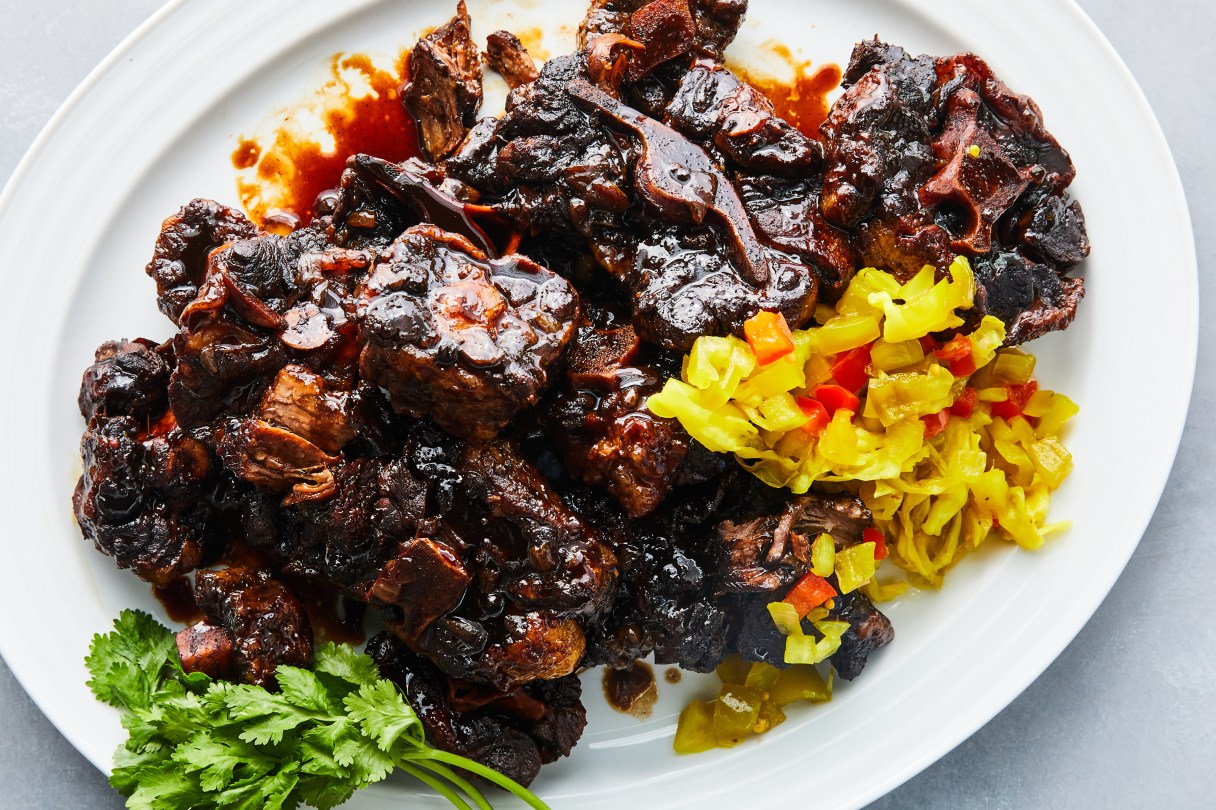
This year, she’s making her oxtails, braised with tamarind paste and guava, ingredients that speak to her time spent in the Caribbean. A green tomato chow chow highlights her ties to the American South and grilled vegetables with a sassafras chimichurri add a North American accent to a South American sauce that she learned while working in Patagonia. Red drinks will still have a place at the table, in the form of a sparkling hibiscus punch.
For some, like Tonya Abari, the holiday presents an opportunity to both honor past generations and teach future ones. Abari, a home cook, didn’t grow up celebrating the holiday. In fact, she wasn’t even introduced to it until she was in her 20s, visiting Houston with friends.
“Initially I felt really embarrassed,” she said. “How did my schools growing up and the college I went to not tell me about this holiday?”
She began looking into the holiday for herself, even writing a children’s book, “Let’s Celebrate Juneteenth.” Now, she shapes her holiday around her 3- and 10-year-old daughters, serving a mix of foods she and her Nigerian American husband hold dear. Their table includes jollof rice, tea cakes and magenta-colored hibiscus tea. Last year, they made ice cream sandwiches with red velvet cake.
Her Juneteenth also starts early.
“We do a ‘noon-teenth’ celebration,” she said, “because the kids are usually in bed by the time fireworks happen.”
Warren Luckett, the founder and managing partner of Black Restaurant Week, who grew up celebrating the holiday in Houston — Juneteenth legally became a Texas holiday in 1980 — now incorporates nontraditional dishes into his spreads. For him, Juneteenth looked like family barbecues or going to Martin Luther King Boulevard and “seeing Black cowboys, or playing dominoes.”
His Juneteenth table still includes the boiled crawfish, beef brisket, watermelon and sausages of his family’s celebrations, but it also presents a way “to celebrate the culinary contributions of Black people across the African diaspora,” so he brings in vegan, Caribbean and West African dishes.
Luckett said he hoped that more and more people would honor the holiday, but with a spirit of remembrance. “While we want the country to celebrate,” he said, “we want to make sure people know the history.”
For Abari, that knowledge was a gift.
“I was able to release the shame and guilt around not knowing and focus on making sure my kids know,” she said, adding that readers have begun sending photos of their celebrations and spreads.
“Learning that history can be like a homecoming,” Abari said, “but you’re coming home to who you are.”
__
RECIPES:
Tamarind Glazed Oxtails
Inspired by her time working at a restaurant on the island of St. John in the Virgin Islands, this recipe from chef Lana Lagomarsini pairs unctuous braised oxtails with the tart flavor of tamarind to create this hearty, luxurious braise. “We would pick tamarind fruit right off of the tree behind the restaurant and I fell in love with its flavor,” the chef remembers. It can be paired with Lagomarsini’s punchy chow chow recipe, and is also perfect atop a bed of rice and peas, or fungi, a Caribbean cornmeal and okra side dish. Any addition, really, makes this meal feel abundant and celebratory.
Recipe from Lana Lagomarsini
Adapted by Korsha Wilson
Yield: 6 to 8 servings
Total time: 6 hours
Ingredients:
7 pounds oxtails ( 1- to 2-inch pieces)
Salt and freshly ground black pepper
1 tablespoon neutral oil
2 large yellow onions, roughly chopped
1 (3-inch) piece fresh ginger
1 head garlic, halved lengthwise
1 whole seasoning pepper, aji dulce or seeded habanero pepper (see tip)
2 dried bay leaves
1 tablespoon black peppercorns
2 cups guava wine (or 1 cup dry white wine and 1/2 cup guava paste)
1 (14- 18 ounces) jar tamarind concentrate
2 tablespoons beef stock concentrate, or 2 beef bouillon cubes
1/2 cup lightly packed brown sugar
1/2 cup molasses, plus more as needed
2 tablespoons apple cider vinegar, plus more as needed
2 to 3 shakes Worcestershire sauce
Chopped peanuts and cilantro sprigs, for serving (optional)
Chow Chow (homemade or store-bought), for serving
Preparation:
1. In two large bowls, rinse oxtails in several changes of cool water. Drain, transfer to paper towel-lined sheet pans and pat dry. Season oxtails liberally with salt and pepper. Let sit 20 minutes to absorb seasonings.
2. Heat oil in a large Dutch oven or other 8-quart braising pot over medium-high heat Working in batches, sear the oxtails until a rich deep brown on both cut sides, 6 minutes per batch. Once each batch is done browning, transfer to the sheet pans (discard the paper towels first).
3. Reduce the heat to medium and add the onions, ginger, and garlic to the pot and season with salt. Cook, stirring occasionally and scraping up the browned bits, until onions are softened, about 5 minutes. Add seasoning pepper, bay leaves and peppercorns. Cook, stirring, for a minute, then stir in the guava wine, tamarind concentrate, beef stock concentrate and enough water (3 to 3 1/2 cups) to mostly submerge the oxtails. Return oxtails to the pot and increase the heat to high; once simmering, reduce the heat to simmer gently, mostly covered, until fall-off-the-bone tender, 3 to 3 1/2 hours.
4. Using tongs, remove oxtails from the cooking liquid to a large bowl; set aside. Using a ladle, skim off as much fat from the surface of the cooking liquid as possible. Strain the cooking liquid into a second large pot and stir in brown sugar, molasses, vinegar and Worcestershire sauce. Simmer over medium until syrupy and reduced by at least a third (or half), 15 to 20 minutes. As the sauce reduces, skim off any fat or scum periodically.
5. Taste and adjust the seasonings with additional brown sugar, vinegar, Worcestershire and salt (the sauce should taste rich, tangy and balanced). Return oxtails to the pot and heat through. Serve with cilantro sprigs and chow chow alongside.
TIPS: Seasoning peppers (also known as ají dulce) look similar to habaneros but offer all of the flavor with little of the habanero’s heat. They’re widely used across Latin America and the Caribbean. Oxtails can often be found (or special ordered) from butchers and are widely available at Latin American and Caribbean meat markets.
Chow Chow
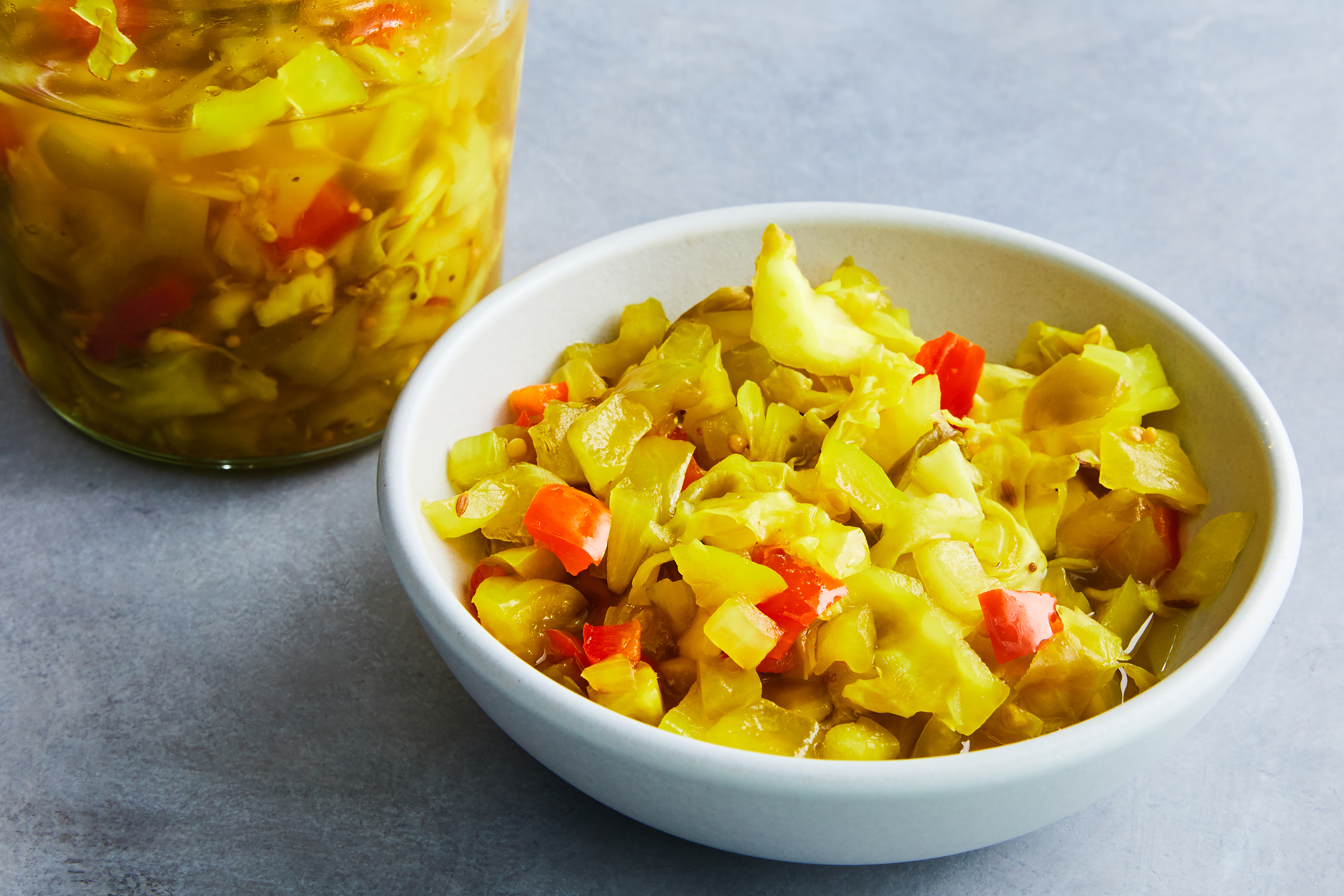
Conceptualized by chef Lana Lagomarsini as a topping for her tamarind glazed oxtails, this chow chow is a punchy, textural showstopper that adds a vinegary backnote and brightness to anything you add it to. This recipe makes quite a bit of chow chow meaning you’ll have plenty left over to add to salads or as a topping for burgers or sandwiches. If you’d like it a little hotter, add an additional seasoning pepper or habanero.
Recipe from Lana Lagomarsini
Adapted by Korsha Wilson
Yield: 10 cups, 5 (12-ounce) jars or 2 (1-quart) jars
Total time: 1 hour, plus 2 hours’ cooling
Ingredients:
3 medium green tomatoes, chopped (about 4 cups), see tip
1 medium sweet onion, chopped
1 green bell pepper, chopped
1 red bell pepper, chopped
1/2 medium green cabbage, or 1 small green cabbage, thinly sliced
1 seasoning pepper or habanero, cut in half
1/4 cup kosher salt, such as Diamond Crystal
1 1/2 cups apple cider vinegar
1 cup sugar
1 1/2 teaspoons yellow mustard seeds
1/2 teaspoon celery seed
1/2 teaspoon turmeric
1 teaspoon cumin seeds
Preparation:
1. In a very large bowl, combine the green tomatoes, onion, bell peppers, cabbage and spicy pepper. Add the salt and toss to combine. Cover and refrigerate least 2 hours (or up to 6 hours) to release liquids.
2. Drain vegetable mixture in a colander, and rinse thoroughly. Allow to drain well again.
3. Transfer the vegetable mixture to a Dutch oven or other large heavy pot. Add the vinegar, sugar, mustard seeds, celery seed, turmeric and cumin. Stir to combine.
4. Bring to a boil over high heat, stirring occasionally, then reduce heat to medium-low and simmer until the vegetables entirely submerge in the liquid and soften slightly, about 10 minutes.
5. Remove from heat and ladle the hot mixture into freshly washed and dried wide-mouth canning jars, topping off the jars with any remaining liquid in the pot. If you’d like to keep the chow chow longer, close the jar lids tightly now; as they cool to room temperature, they’ll seal shut for longer-term storage. (If not, leave the chow chow jars unlidded as they cool — they’ll cool faster this way.) Store the chow chow in the fridge for up to 2 months (see tip).
TIPS: If you can’t find green tomatoes at the farmers’ market or supermarket (or from a backyard garden), firm, under-ripe red tomatoes are an acceptable substitute. For maximum freshness, be sure that the pickling liquid always covers the vegetables, and use a clean spoon to remove chow chow from the jar.
This article originally appeared in The New York Times.