
(Editor’s note: Last in a series)
Chattanooga’s Mountain City Club ended 1891 with a spectacular holiday gala entertaining its members as well as those of the Cobweb and Moccasin clubs. The joint celebration was designed as a “Christmas Gift from the Society People to the Orphans’ Home and the Free Kindergartens.”
That event was so successful that the Governing Board of Mountain City Club decided to offer a weekly Thursday “reception giving ladies free access to the club quarters on the first, second and third floors from 8 to 12 p.m.” Music for dancing would be available in the ballroom after 9 p.m., offering time “for those desiring to trip the light fantastic.” Four of the club’s younger group secured music and made all the necessary arrangements. According to the Chattanooga Daily Times, on Jan. 4, 1892, members were delighted by this opportunity to show off their beautiful “home” and entertain lady friends.
With all the entertainment coming at the club, it seemed fitting that the next day’s Times reported that Chattanooga’s “favorite barber,” whose previous shop had been destroyed by fire, was relocating with his entire staff to the Mountain City building. Within days, Charles Hartwig, well-known merchant and tailor who had been conducting business next to the opera house box office (at Sixth and Market streets), publicized that he too had taken “handsome quarters” at the Mountain City Club (at Seventh and Cherry streets) and would have “more room to attend to his constantly increasing patronage.”
In June 1892, Charles Elliott, former manager of the Park Hotel in Chickamauga, Georgia, was employed by the Governing Board as the club manager and caterer, assisted by his “French chef de cuisine.” The first meal, a “table d’hote dinner,” would be served from 12 to 2 p.m. on Sunday, June 12, at a price of 25 cents. The kitchen had been upgraded “without consideration of expense,” and the board felt the new services would be “hailed with delight.” One of Elliott’s first decisions, approved by the membership, was to add an “annex” restaurant and a reception room for ladies who were relatives or friends of members.
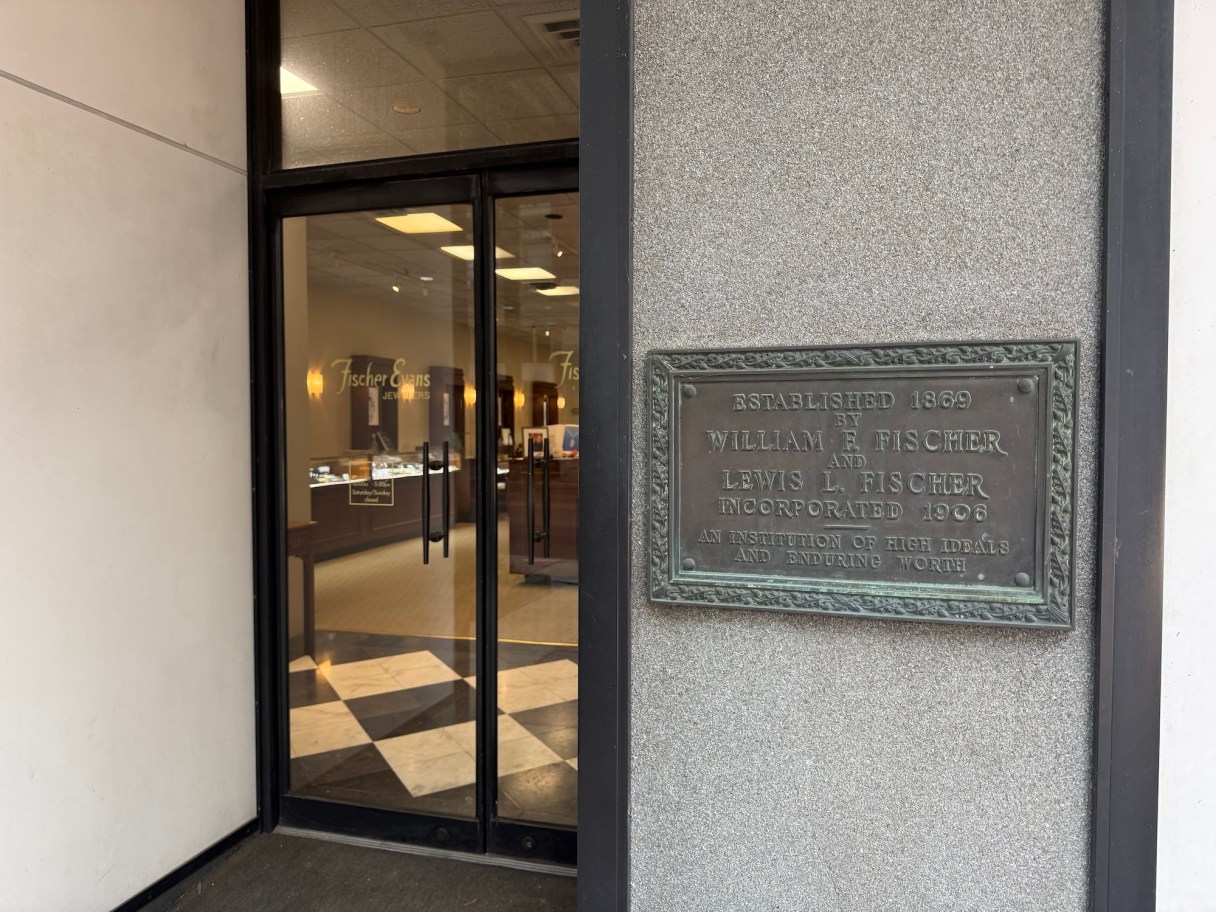
The annual banquet later that fall featured speeches from Milton O. Ochs, Hugh Whiteside, Will Hardin and Don Alexander. The formal programming ended with the announcement of 1892-1893 elected officers. The new team featured a combination of founding leaders and the newly elected. Lewis L. Fischer, president; George D. Lancaster, vice-president; F.S. Hyde, secretary; and Preston Hoskins, treasurer, would be aided by Governing Board members Frederick Wiehl, Charles A. Lyerly, A.J. “Jack” Gahagan, W.D. Kelly, Frank Rees, George S. Tucker and J.B. Whitehead.
The membership toasted its officers with a “popping of the corks” and “merry making into the wee hours.” The new leadership included younger members from the recently shuttered Moccasin Club with the expectation that “the Moccasin membership will soon be included in the large list of Mountain City members,” following the former members of the Cobweb Club who had “joined hands” with the Mountain City Club earlier that summer. President Fischer predicted that the “amalgamation” of the two other clubs placed Mountain City among the “largest clubs in point of membership” in the South.
Social events at the club topped all Chattanooga lists during the next two years. Indeed, 1892 ended with a ballroom dance and dinner hosted by the “Mountain City men,” chaired by Mr. and Mrs. John T. Lupton with “dance figures” led by Clem S. Henry.
On Feb. 4, 1894, the Times highlighted a scheduled Knickerbocker Bal Poudre (Powdered Ball) to be hosted at the club on Valentine’s Day. The story began with the jest, “It seems that Lent will have no effect in diminishing social functions either in number or magnitude … . [One] of the largest social events of the season is set during that period of ‘sackcloth and ashes.'” Not only would the rooms be “handsomely decorated,” but the dining area would host a “magnificent collation to the swell crowd, resplendent in powdered hair and elegant costumes,” inspired by French Revolutionary history. The story included a teasing line about somewhat risqué “tight knickerbockers.”
The Mountain City Club had been founded as a meeting place for prominent members of Chattanooga society, and within five years it had become the premier site for social and charity events. The organization’s early years are a memorable part of Chattanooga’s history.
Linda Moss Mines is the Chattanooga and Hamilton County historian. For more on local history, visit Chattahistoricalassoc.org.