
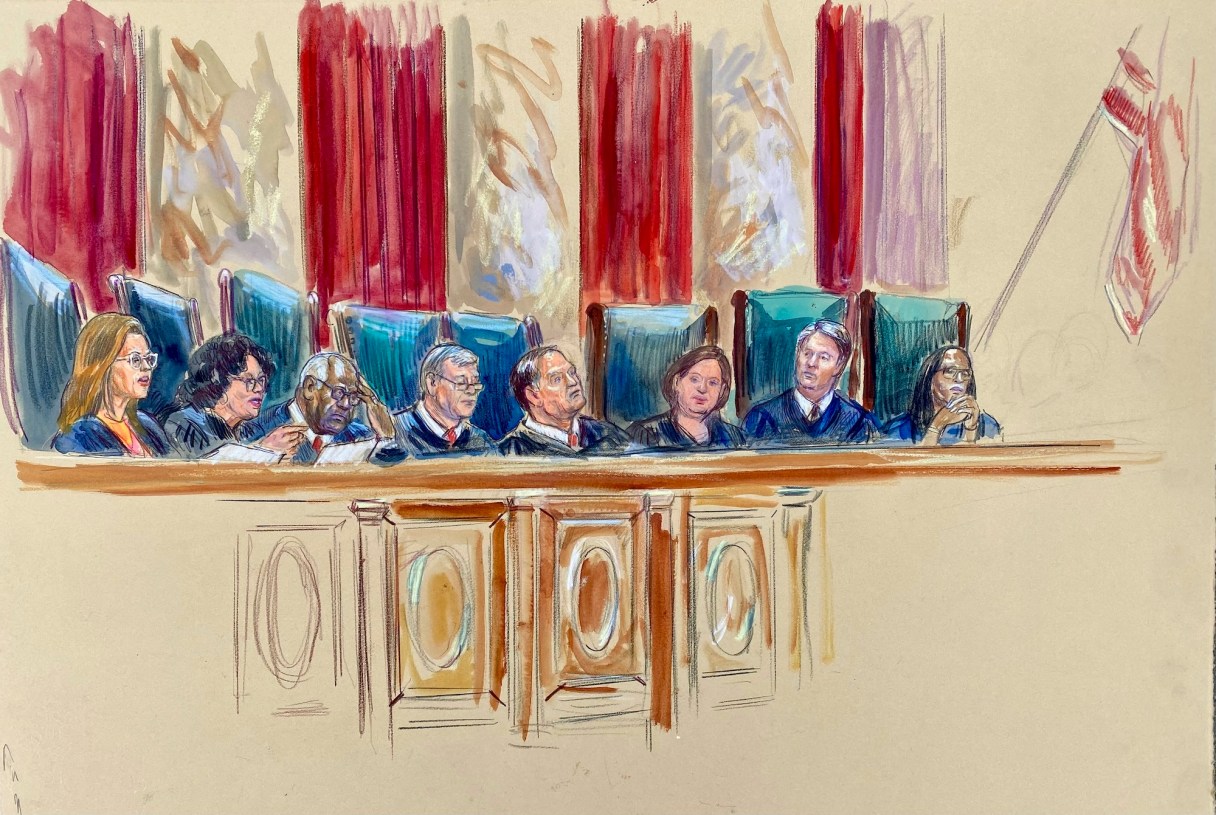
The Supreme Court on Friday dealt a grievous blow to separation of powers by holding that federal courts cannot issue nationwide injunctions to halt unconstitutional actions by the president and the federal government. At a time when President Trump is asserting unprecedented powers, the court made it far more difficult to restrain his unconstitutional actions.
The case, Trump v. CASA, involved the president’s executive order ending birthright citizenship. The first sentence of the 14th Amendment provides that “all persons born or naturalized in the United States, and subject to the jurisdiction thereof, are citizens of the United States and of the State wherein they reside.”
Trump’s executive order directly contradicted this precedent and our national understanding of citizenship by decreeing that only those born here to citizens or to residents with green cards are citizens, too. Immediately, several federal courts issued nationwide injunctions to stop this from going into effect.
But the Supreme Court, in a 6-3 ruling split along ideological lines, said that federal courts lack the power to issue such orders. Justice Amy Coney Barrett, writing for the conservative justices, declared that such universal injunctions “likely exceed the equitable authority that Congress has granted to federal courts.” Justice Clarence Thomas, in a concurring opinion, put this succinctly: “Today puts an end to the ‘increasingly common’ practice of federal courts issuing universal injunctions.”