
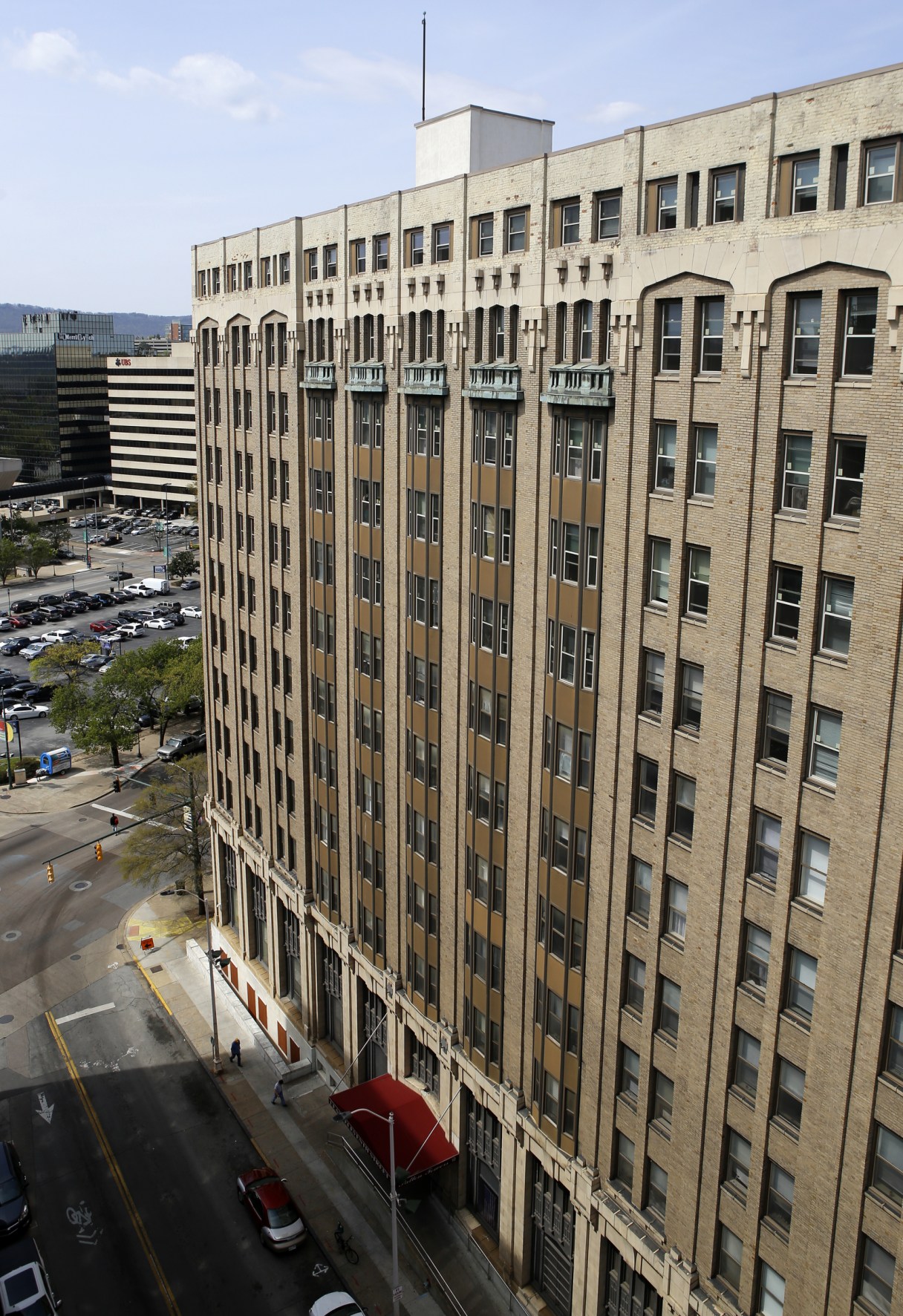
(Editor’s note: First of two parts)
On April 4, 1906, Z. Cartter Patten, John T. Lupton and Ross Faxon announced that the Stone Fort Land Company would construct a major hotel in Chattanooga. The release coincided with news of a new wave of projects designed to promote the city as exploding with business opportunities and providing an excellent magnet for tourism. In addition to the hotel, the announcement referenced the Central station, the James “Skyscraper” and the increased flow of power from the “Hale’s Bar” electric power company. The Chattanooga Daily Times declared the city was beginning the new year with “a rush” forward.
The new fireproof hotel was designed to include 200+ rooms with substantial amenities including private baths in each room, several eateries, a bar, an expansive hotel lobby and dedicated electric and power plants. The project began as a consortium of investors, including the three local entrepreneurs and “several outside parties.” S.M. Chambliss, legal adviser for investors, shared that “they felt satisfied that there was not a better city in the South from a hotel man’s point of view and that there was nothing of greater benefit to Chattanooga.” Local leaders heaped praise on Patten, Lupton and Faxon, although Faxon would step aside shortly afterward due to substantial financial losses from the April 18 San Francisco earthquake.
By August 1906, construction permits were finalized. Plans for the 12-story Hotel Patten were carried in more than a thousand newspapers across the country. Patten and Lupton received “many felicitations on the beginning of the work.” Cartter Patten observed that the news stories alone provided “thousands of dollars as an advertisement, both for the city and the hotel.” The building permit signed that day – listing $500,000 with a possible $600,000 final cost – carried the highest dollar value in Chattanooga history. City Hall employees flocked to view the ceremony.
Associated Press newspapers later carried an interesting story about the announcement. When an AP news bulletin was sent to one city, it was routinely routed to every office on the circuit. After Chattanooga’s AP operator released the information about the planned hotel teletyping a projected $600,000 cost, the line was interrupted by a “cut out” from the Knoxville AP operator, who asked the operator if he had mistyped and meant $60,000. The Chattanooga operator responded that a “$600,000 proposition was a small thing for Chattanooga,” and asked him to open the wires. Knoxville’s response was “GEE!” The wires hummed with the news.