
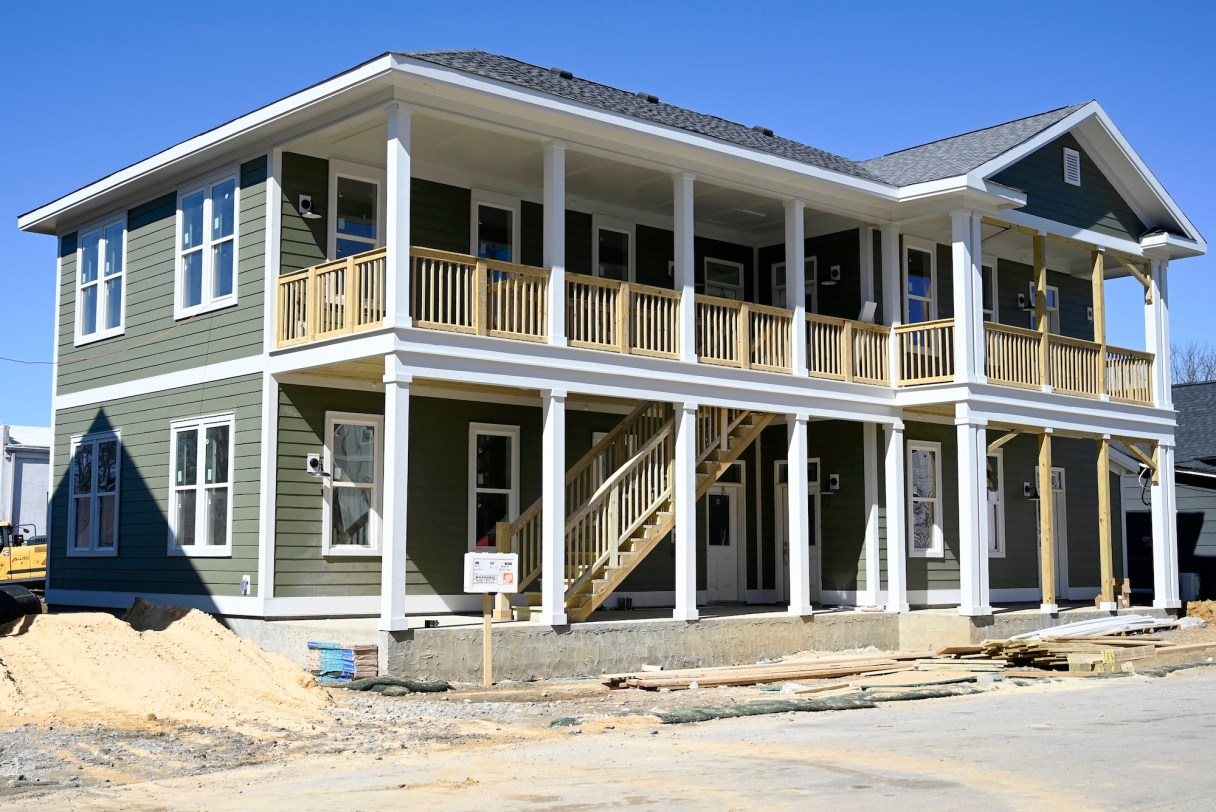
For 25 years, Chattanooga Neighborhood Enterprise (CNE) has been a vital force in preserving and providing affordable housing for working families, strengthening communities through its nonprofit development efforts. This week marks a transition in CNE’s leadership, as Martina Guilfoil hands over the reins to Christopher Thompson, who steps in at a pivotal moment for housing in our city.
Like in many cities across the U.S., Chattanooga’s rising home costs and rents have outpaced income growth, which has outpriced working families and leaving many struggling to find an affordable place to live. The impact of these trends on our community demands decisive action, and the challenge for CNE’s new leadership is clear: adapt with financial sustainability and expanded affordable housing solutions.
Chattanooga’s approach to affordable housing must change. As the city grows into a leading mid-sized urban center, both local government and housing organizations must evolve. The old model — relying on operating support from the city to fund staffing rather than the production of housing — is no longer viable. Nonprofits must embrace financial discipline and leverage diverse funding sources. Accountability is paramount: funding must now be tied to housing production and preservation, not administrative overhead.
The city of Chattanooga has remained a committed partner in affordable housing, investing more than $15 million into CNE’s initiatives over the past decade. In 2024 alone, Chattanooga provided $1.9 million in funding for CNE’s Lyerly Street and Mill Town projects and granted tax abatements to incentivize development. However, with limited municipal resources, funding must be allocated more strategically. The city has taken steps to unlock new resources, including publicly owned land and tax incentives, but these alone are not enough. Successful affordable housing developers must tap into federal, state, and philanthropic funding and generate revenue through developer fees to sustain their operations.
Over the last three years, the city has invested $9.5 million in CNE and its programs — more than double the $4.2 million allocated in the previous three years. The city has not cut funding; rather, it has restructured its support to ensure that investments directly result in housing production. Blank checks are no longer an option. Every dollar must contribute to tangible housing solutions.