

As Preserve Chattanooga celebrates its 50th anniversary, the organization is helping the public learn more about the city’s architecturally and culturally significant buildings through a handful of self-guided walking tours in different areas of downtown Chattanooga.
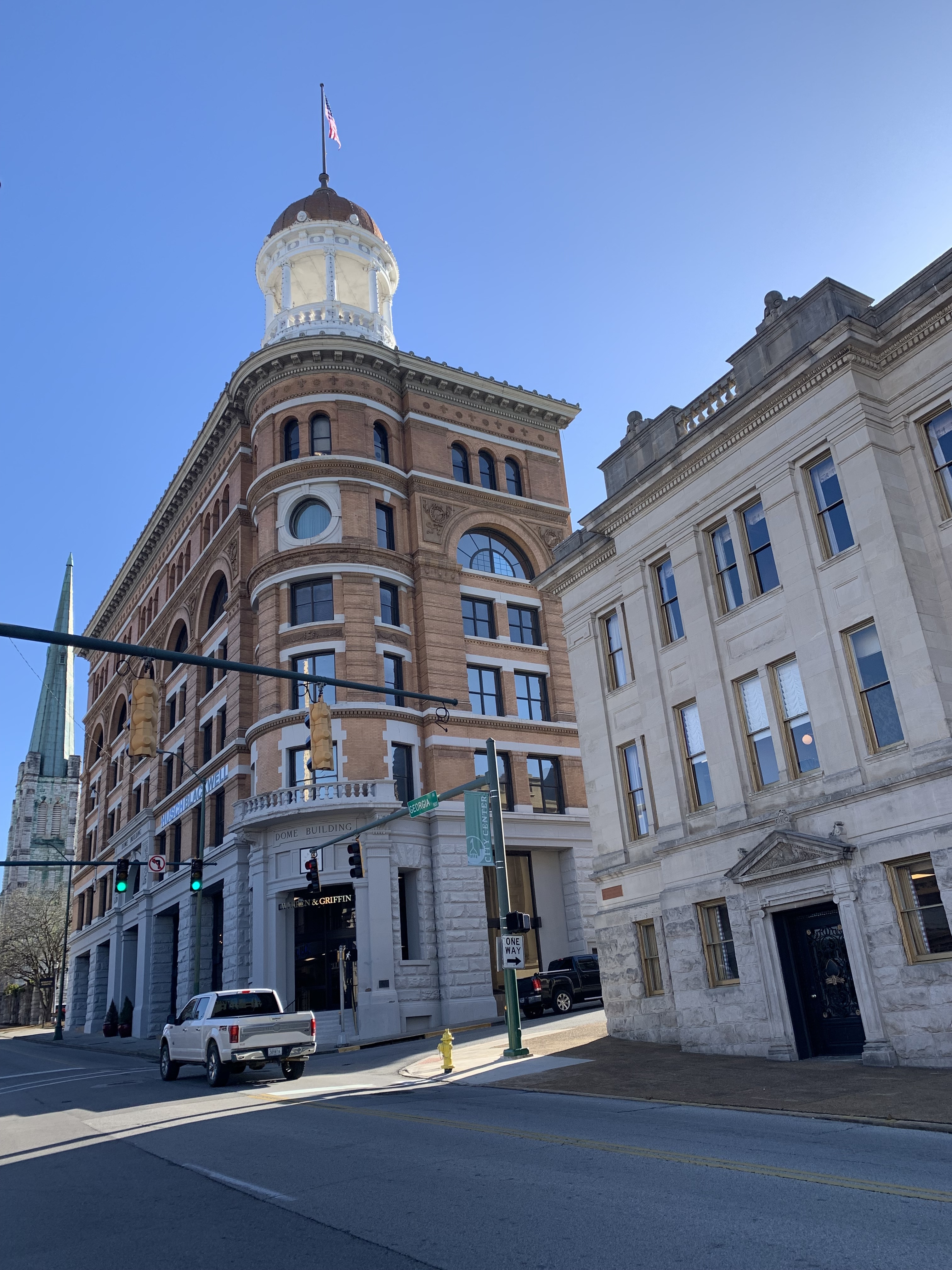
The tours showcase the benefits of the work of the organization, previously known as Landmarks Chattanooga and then Cornerstones, which preserves the city’s architectural integrity through preservation easements that protect for perpetuity the facades of local landmarks such as the Dome Building, the Tivoli Theatre and Terminal Station, now the Choo Choo.
Funded by a grant from the Chattanooga Tourism Co., the walking tours were created last year by historic preservationist Katie Owens. Her background includes a graduate degree from the University of Georgia in historic and cultural preservation, focusing on the built environment as a tool for memory.
“People associate the word ‘storyteller’ with an old dude on a porch and a rocking chair, and while that’s very valid, there’s a lot of ways to communicate stories and ideas,” Owens says, adding that she’s passionate about sharing the stories behind the area’s architecture and happy to do the research so people can easily access the information by simply picking up their phone and following the map.
Books and primary documents in the local history section of the Chattanooga Public Library and resources such as the Historic American Buildings Survey informed Owens on the details of the city’s significant buildings, she says.
The tours are broken down into five easily walkable geographic areas: the downtown historic district, the Southside, Stone Fort, Martin Luther King Boulevard and Patten Parkway, and University of Tennessee at Chattanooga and McCallie Avenue.
“We do hope to add some more at some point — maybe even some driving tours for places where walking isn’t quite as easy to do,” Preserve Chattanooga Executive Director Todd Morgan says.
Rather than remaining static over time, the existing tours are also intended to grow and be added to as more information is learned about various buildings, he adds.
Photo Gallery
Take a walk through history with Preserve Chattanooga’s self-guided architectural walking tours
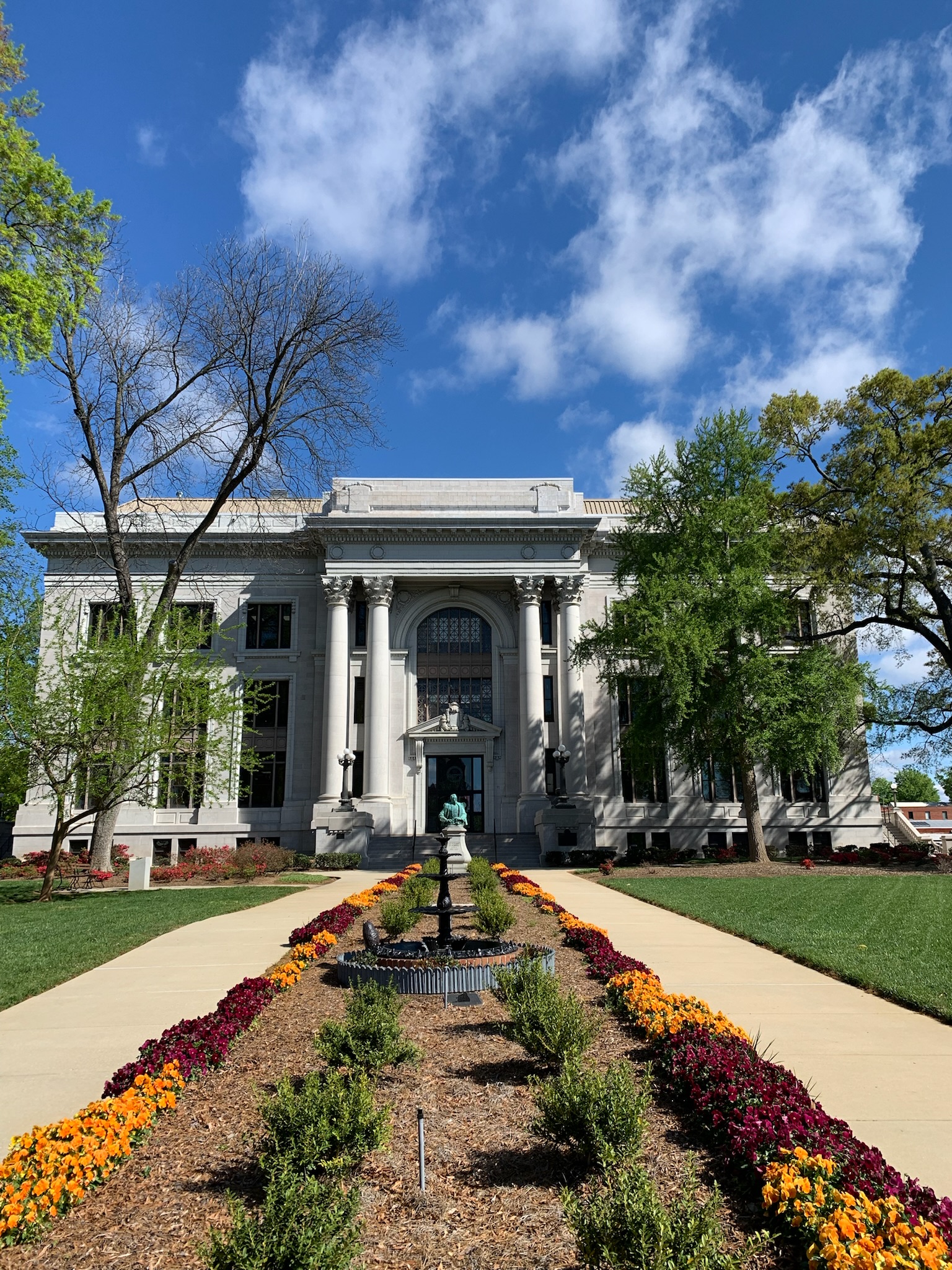
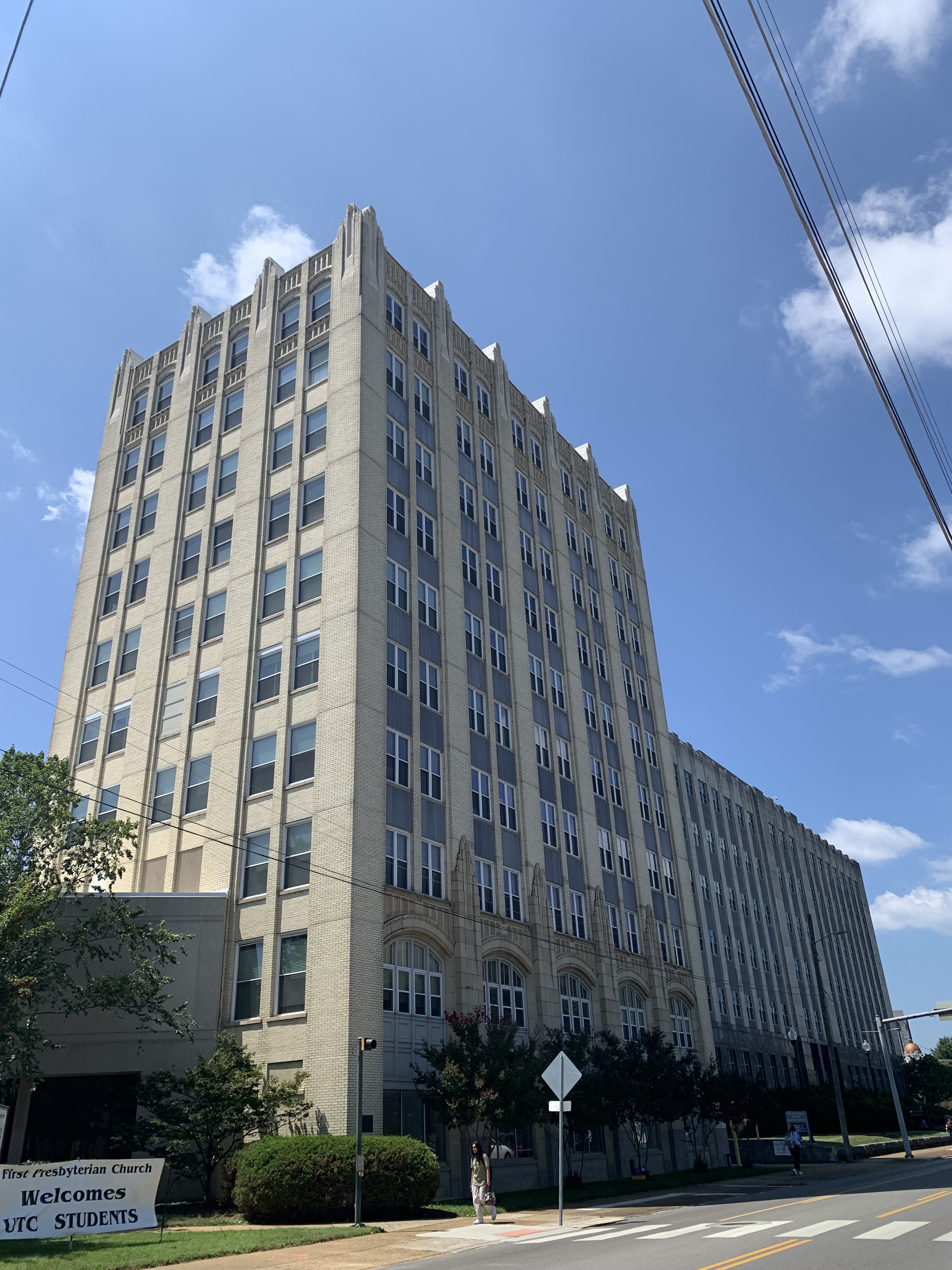
While not created by Owens as part of the project, a map of all buildings designed by renowned Chattanooga architect R.H. Hunt can also be found alongside the walking tours on the website.
Many of the tours’ building descriptions tell a deeper story about what was going on in the city at the time the buildings were constructed. For instance, the postmodern Pioneer Building constructed in 1962 is described as symbolic of the city’s renewed faith in its downtown business district following an economic downturn in the 1950s.
Research for the downtown historic district tour, which focuses on banks and commercial buildings designed by well-known architects for prominent businesses, was framed differently than research on the buildings along Martin Luther King Boulevard or in the Southside, on which information is less readily available and focused more on everyday experience, such as who owned the businesses or served the community in those spaces over the years, Owens says.
“I personally think a two-story, really common brick building, if it had an active community space in it, has a story that’s equally important to tell as a nine-story bank building,” she says.
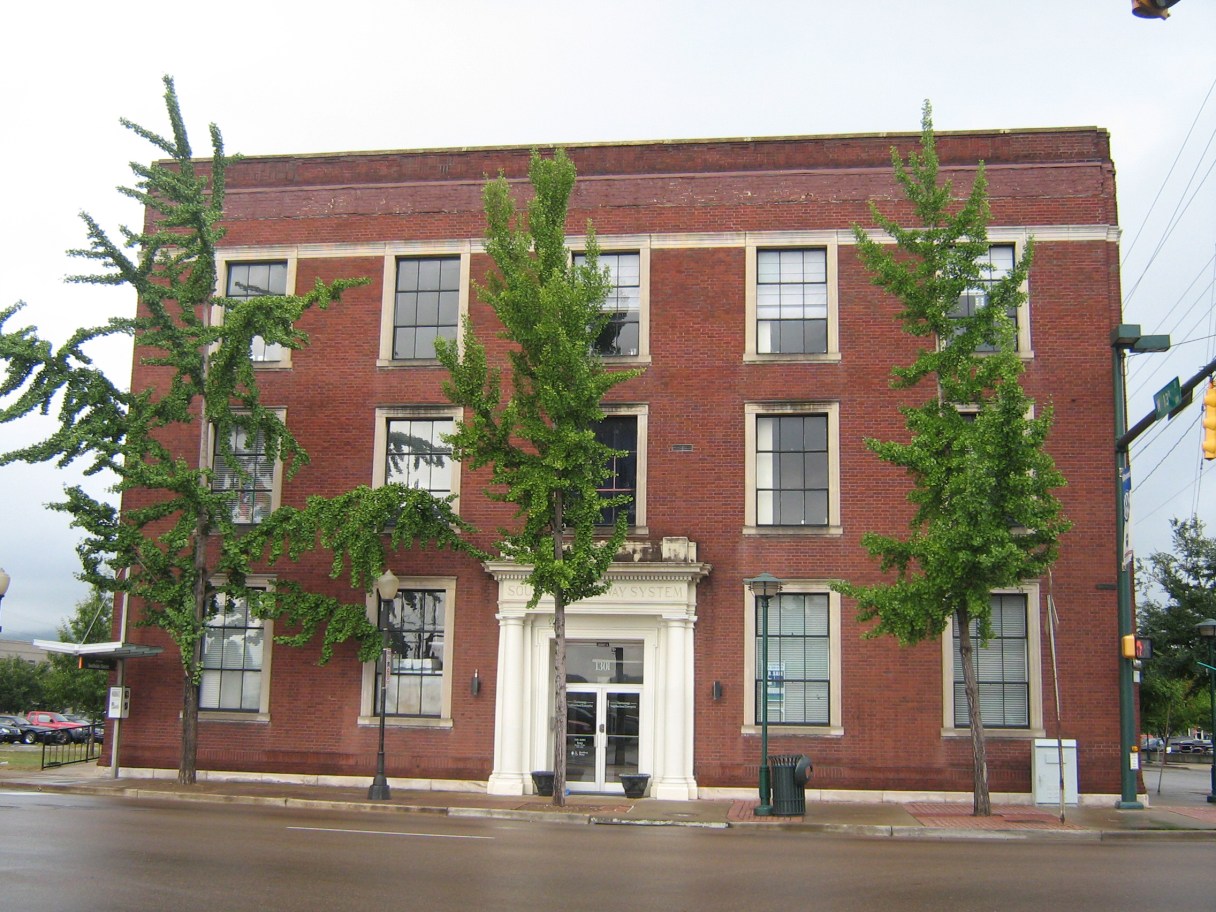
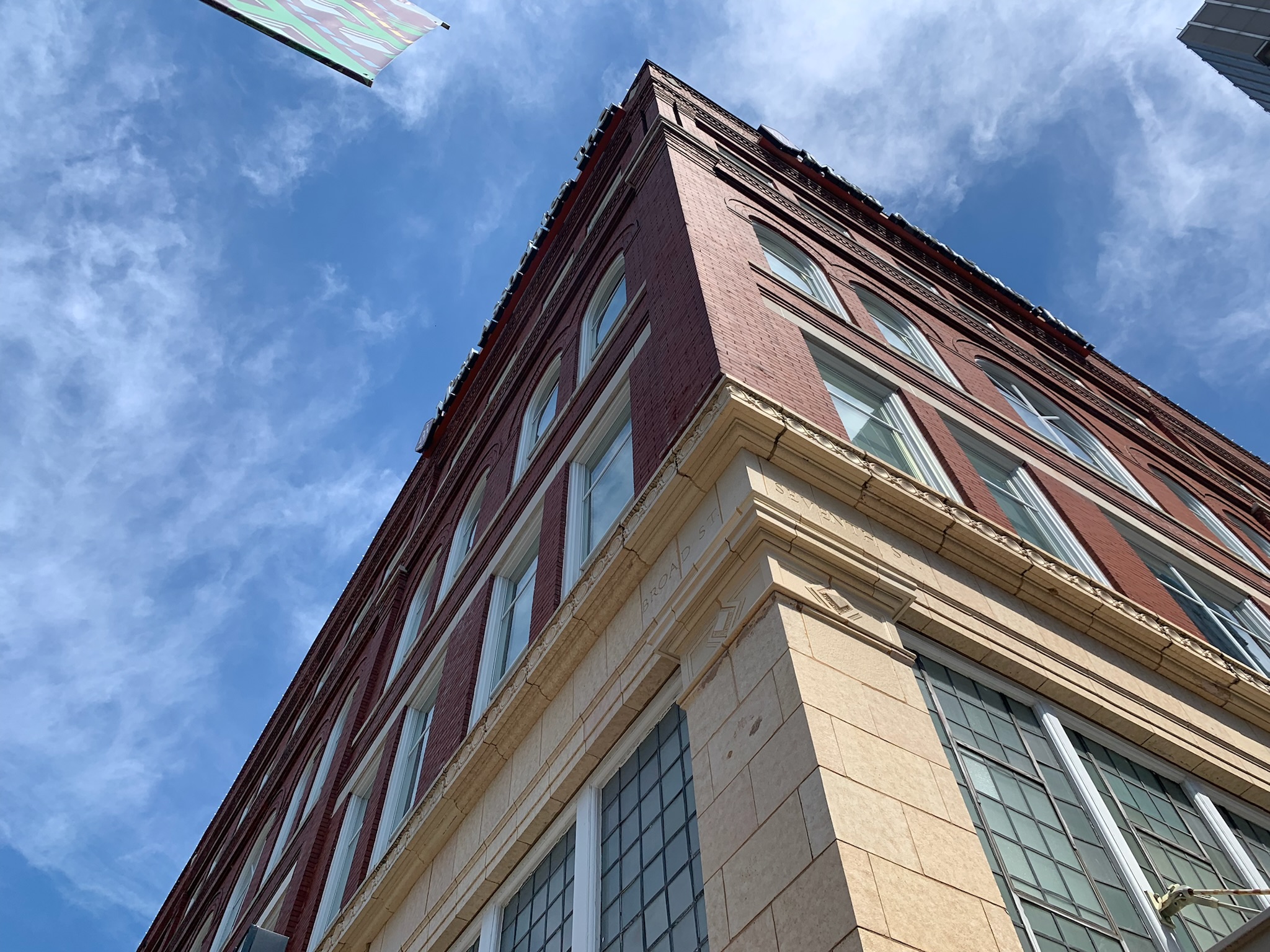
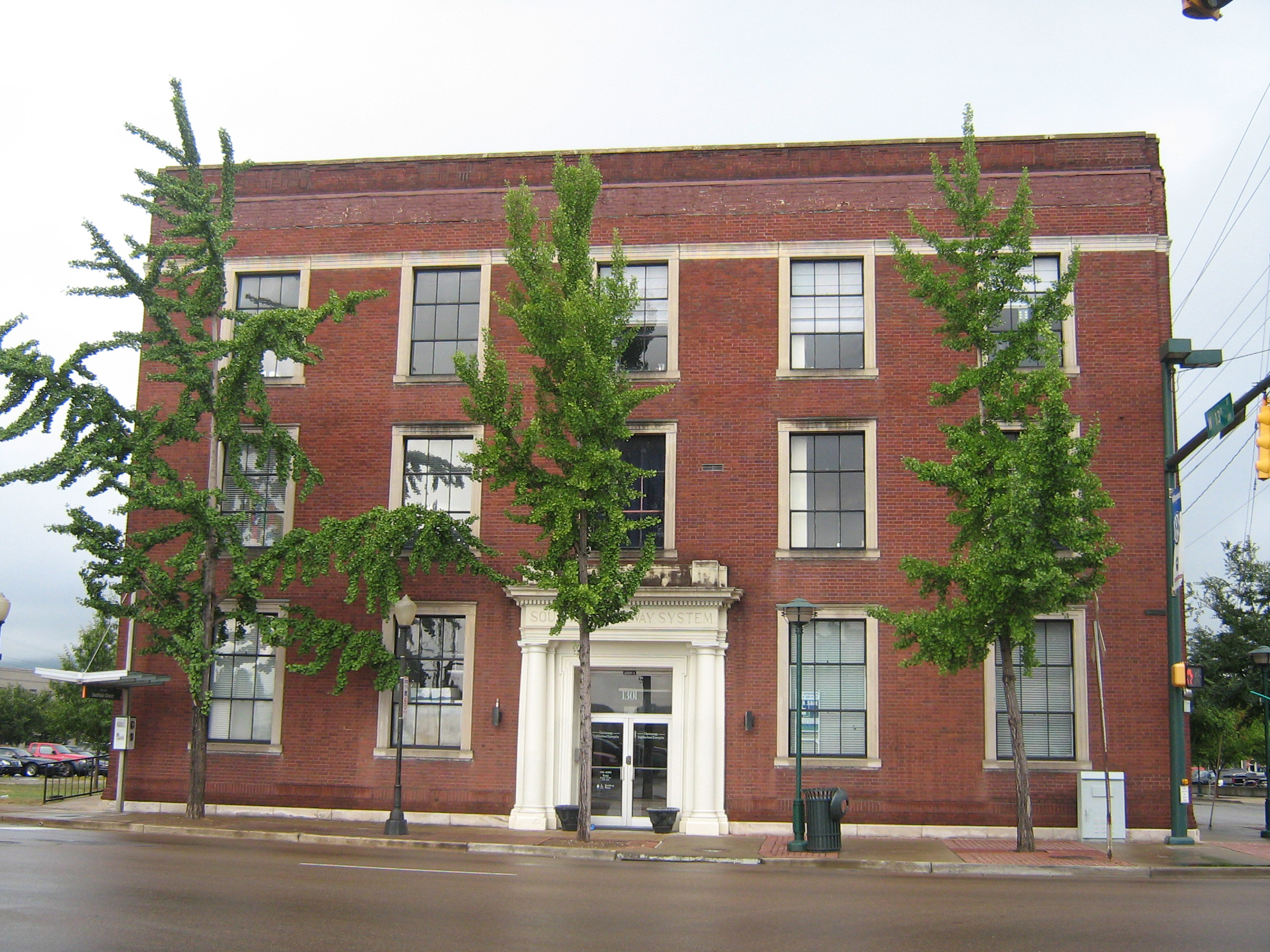
The Southern Railway building, located at 1301 Market St. across from the former St. John’s Restaurant, is among the more minimal, everyday buildings on the tour and one of Owens’ favorites in Chattanooga.
“I like it because it was a space for the workers,” she says of the brick, three-story building, which served as temporary housing for railroad workers since it was located right on the rail line. “It shows the significance of the railroad in our community that this building was placed right at the center.”
Find the tours on Preserve Chattanooga’s website at preservechattanooga.com/tours.
Did You Know?
The Old Stone Church Tower (former First Methodist Church) on McCallie Avenue featured stone from the old Beck quarry, which was located near the current site of the Chattanooga Golf & Country Club’s clubhouse. The Walnut Street Bridge’s stone piers also came from the same quarry.
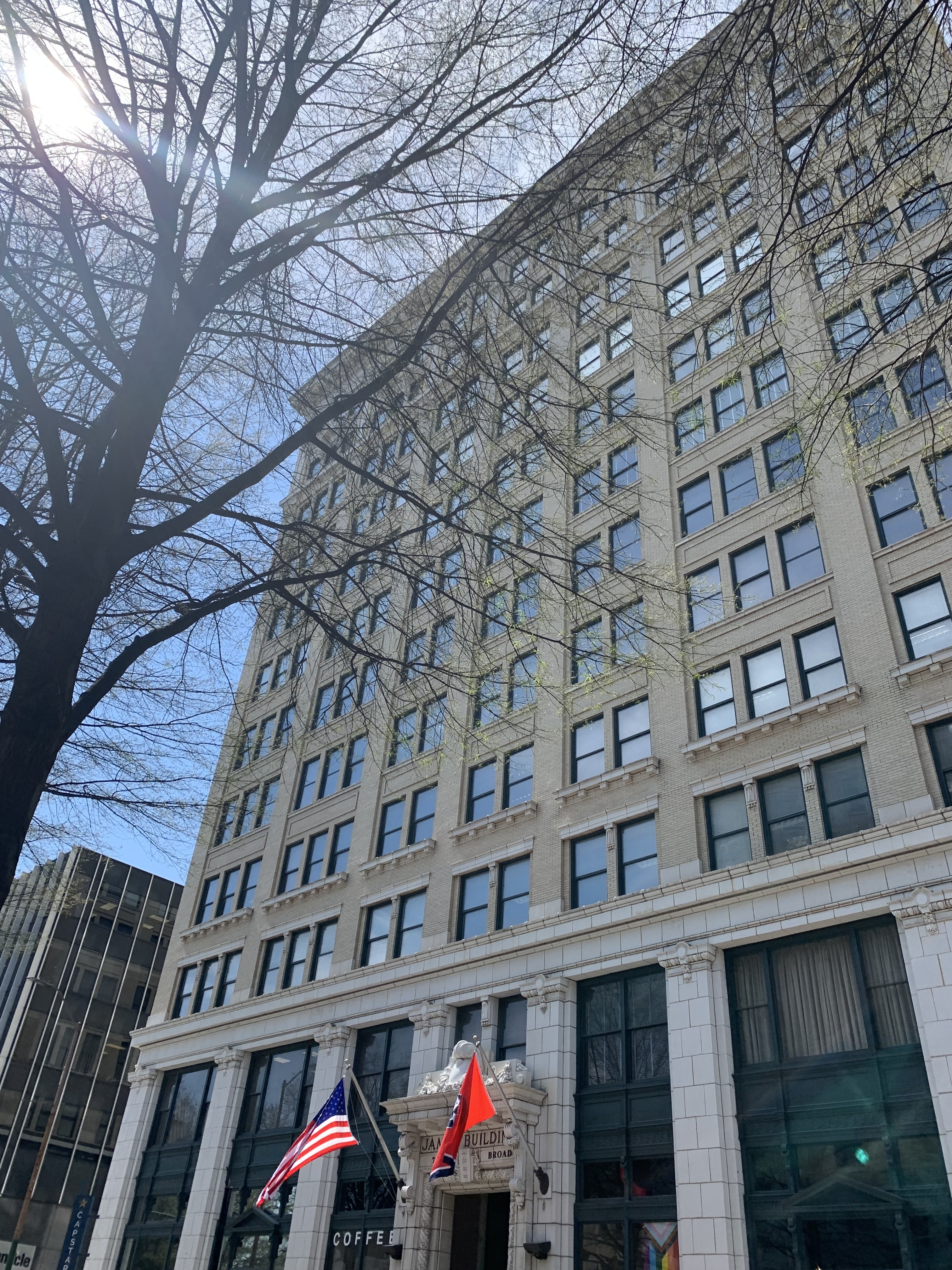
At 12 stories, the James Building was Chattanooga’s first skyscraper.
The former Baggage Depot at 12 W. 13th St., now home to burger restaurant Urban Stack, is the oldest building still standing in downtown Chattanooga.
Author Cormac McCarthy mentions Miller Brothers Department Store, once located in the Miller Building, in his book “Suttree.” He called it a “perfumed and air-conditioned sanctuary.” The building was also home to East Tennessee’s first escalators, which were installed in 1947.
Find These Details Hiding in Plain Sight:
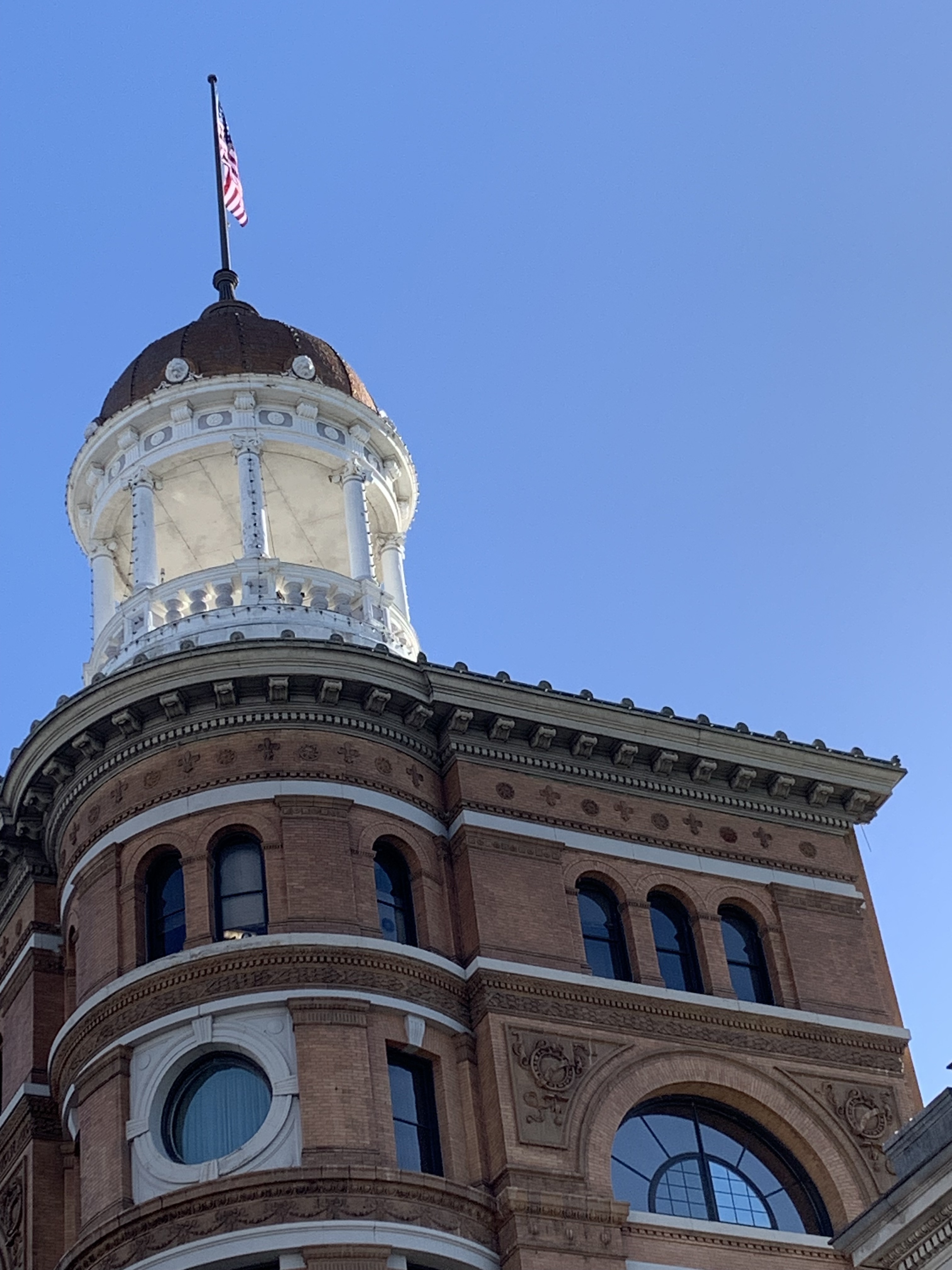
Look closely and you’ll see lions’ heads peering from the edges of the gold-painted copula of the Dome Building on Georgia Avenue, which originally housed the Chattanooga Times.
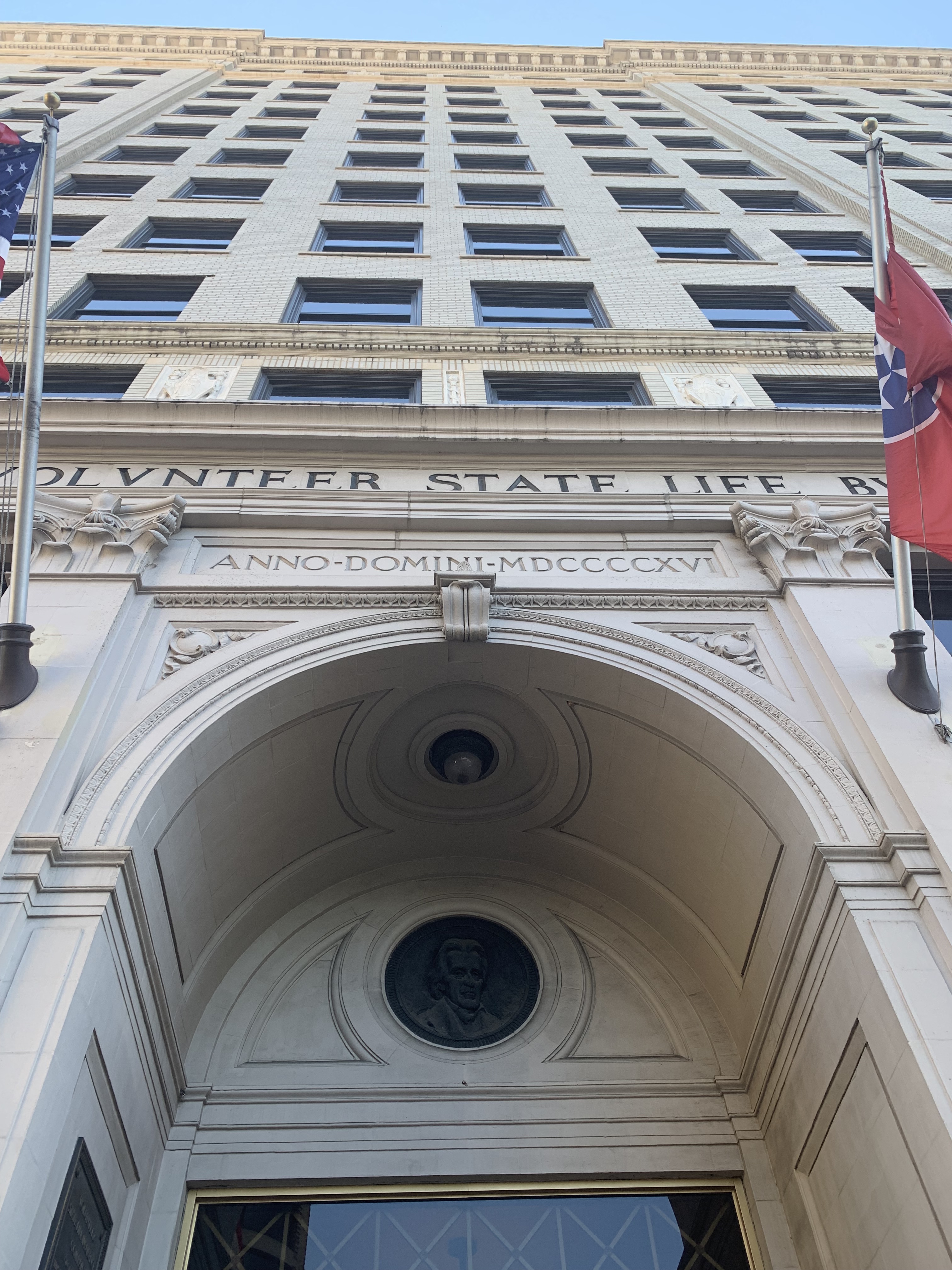
A few blocks down Georgia Avenue, another building feature that’s easy to miss is the bronze tablet of Andrew Jackson located just below the archway at the entrance to the Volunteer Building, which is now home to the law firm Miller & Martin and Mindy B’s Deli, among other businesses. It originally housed Volunteer Life Insurance, which considered the depiction of Jackson to be a visual symbol of the company’s motto of “Strength, Stability and Integrity,” according to the tour’s description of the building.