
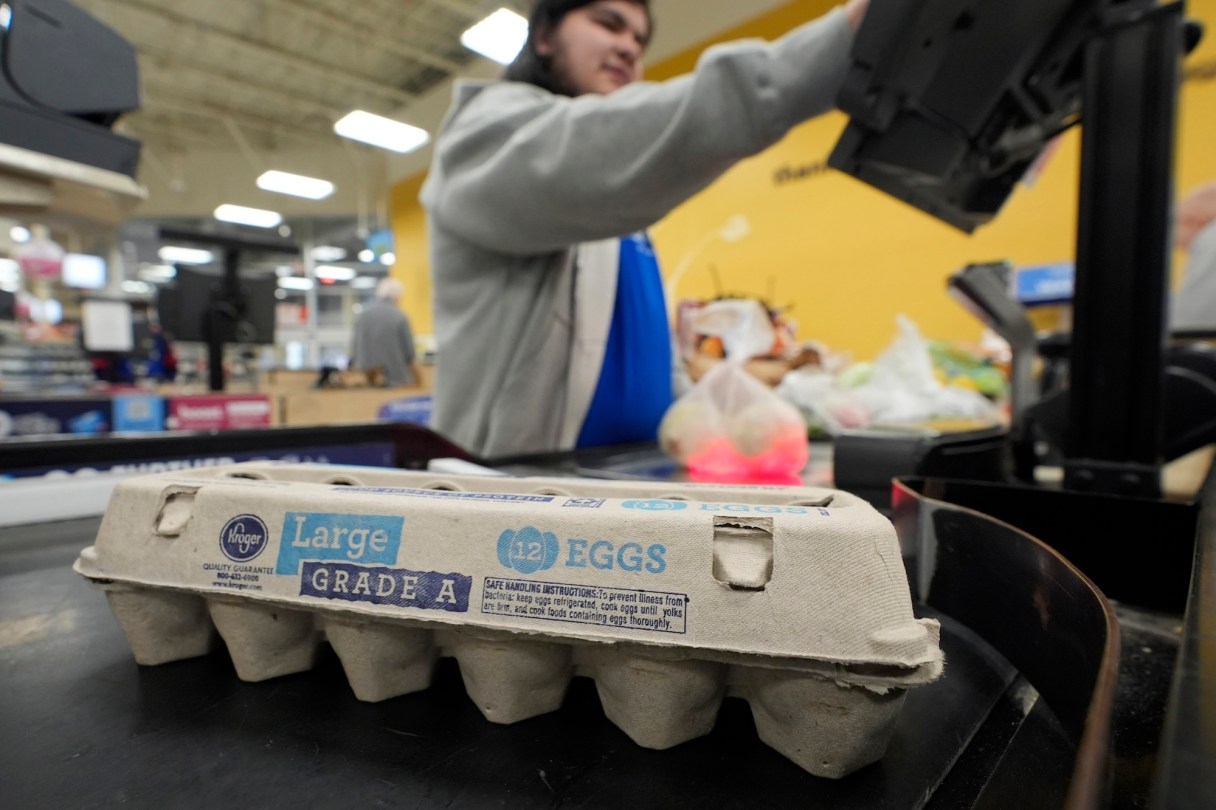
LITTLE ROCK, Ark. (AP) — The number of states imposing sales taxes on groceries has shrunk over the years, and the number may decrease further in the coming months as lawmakers hear complaints about high prices for eggs and other household staples.
Arkansas Gov. Sarah Huckabee Sanders on Tuesday unveiled the details of her proposal to eradicate the remaining 1/8th of a cent sales tax the state levies on groceries. Lawmakers in Tennessee, Mississippi and Alabama and are also calling for grocery-tax reductions.
The efforts come as states face uncertainty about their budgets because of cuts in Medicaid and other federal programs being eyed by Republicans in Washington. But supporters of the tax cuts are citing headlines about soaring egg prices as the reason they are needed now.
“We’re getting rid of Arkansas’ most regressive tax and giving a helping hand to those who need it the most,” Sanders, a Republican, said at a news conference to discuss the proposal.
The number of states taxing groceries has decreased in recent years, with laws eliminating the state levy taking effect in Oklahoma and Kansas over the last year. A law eliminating Virginia’s tax on groceries took effect in 2023. A law eliminating Illinois’ 1% grocery tax is set to take effect next year.