
Shortly before the last election, Scott Bessent, now President Donald Trump’s Treasury secretary, assured The Financial Times that Trump had no interest in reducing international trade and that his threats to impose sweeping, 20% tariffs on foreign goods were simply a “maximalist” negotiating position to be watered down during trade talks, Bessent said.
A few weeks later, CNN’s Kaitlan Collins asked Howard Lutnick, now Trump’s commerce secretary, whether Robert F. Kennedy Jr. could become secretary of health and human services. “Of course not,” said Lutnick, treating the question as if it were absurd.
During the transition, Sen. Thom Tillis, R-N.C., acted indignant when Democrats asked Pam Bondi, now Trump’s attorney general, if she and the president-elect might consider blanket pardons for Jan. 6 insurrectionists. “I was the last member out of the Senate on Jan. 6,” Tillis said. “I walked past a lot of law enforcement officers who were injured. I find it hard to believe that the president of the United States, or you, would look at facts that were used to convict the violent people on Jan. 6 and say it was just an intemperate moment.”
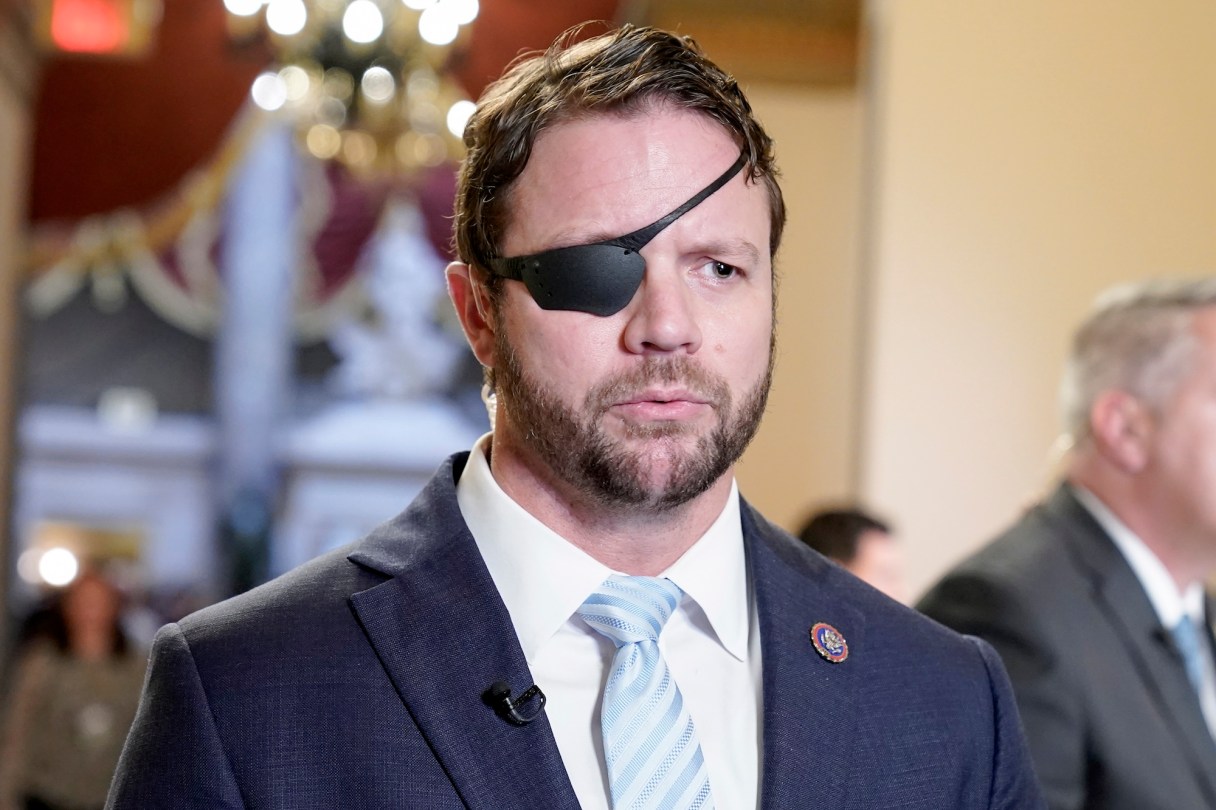
Just last month, Rep. Dan Crenshaw of Texas, who is both a Trump apologist and a supporter of Ukraine, insisted that when Trump trashes Ukraine’s president, Volodymyr Zelenskyy, it’s actually a sign of affection. “Trump tends to talk that way to his friends,” Crenshaw said. “He tends to talk nicer to his enemies. So if he’s talking to you that way, it still means you’re his friend.”
Some of these men may have been deliberately dishonest, but I suspect there’s also a degree of self-deception at work here. In the four years Trump was out of office, an eerie amnesia about his erratic rule settled over the country, allowing people to project onto him hopes that were utterly untethered from reality. You might call this phenomenon, to appropriate a phrase, Trump Derangement Syndrome.