
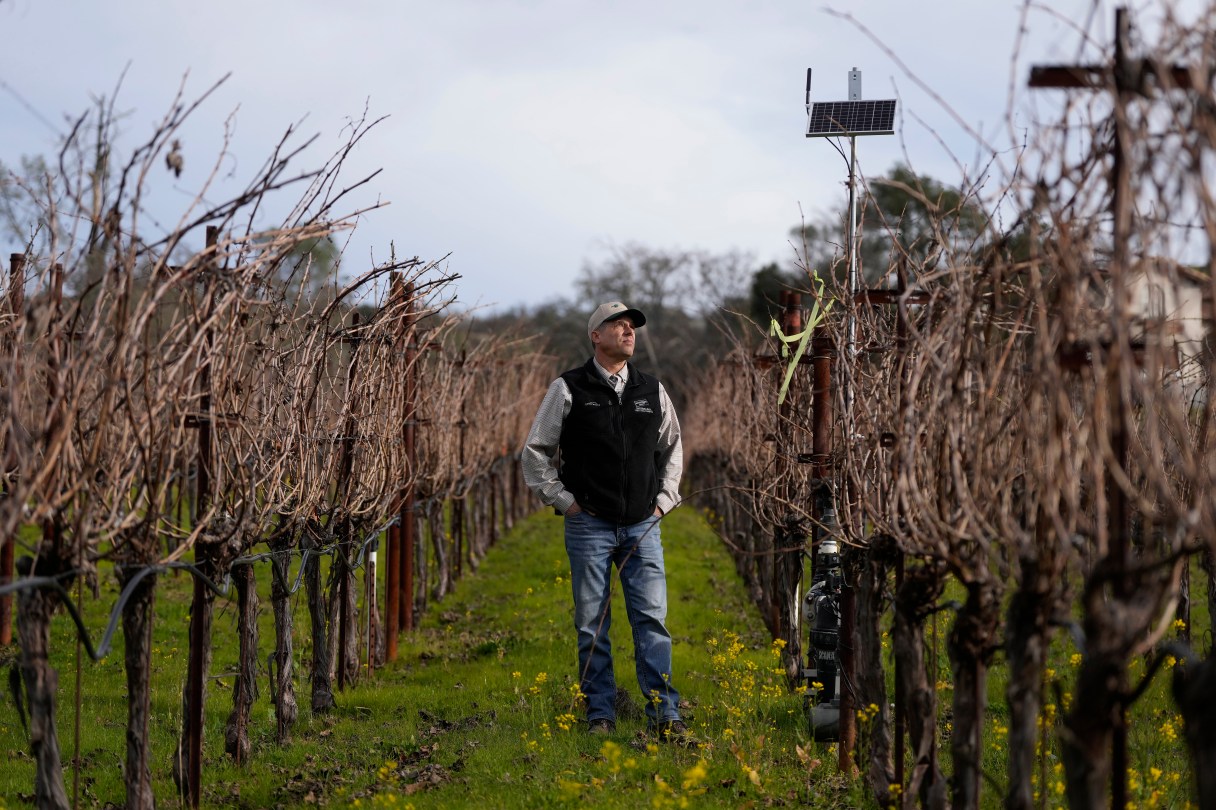
LOS ANGELES (AP) — When artificial intelligence-backed tractors became available to vineyards, Tom Gamble wanted to be an early adopter. He knew there would be a learning curve, but Gamble decided the technology was worth figuring out.
The third-generation farmer bought one autonomous tractor. He plans on deploying its self-driving feature this spring and is currently using the tractor’s AI sensor to map his Napa Valley vineyard. As it learns each row, the tractor will know where to go once it is used autonomously. The AI within the machine will then process the data it collects and help Gamble make better-informed decisions about his crops — what he calls “precision farming.”
“It’s not going to completely replace the human element of putting your boot into the vineyard, and that’s one of my favorite things to do,” he said. “But it’s going to be able to allow you to work more smartly, more intelligently and in the end, make better decisions under less fatigue.”
Gamble said he anticipates using the tech as much as possible because of “economic, air quality and regulatory imperatives.” Autonomous tractors, he said, could help lower his fuel use and cut back on pollution.