
The selection committee for the NCAA Division I men’s basketball tournament will have some juggling to do before the 68-team bracket comes out Sunday night to keep March Madness from looking like an extension of the Southeastern Conference’s regular season.
With the country’s deepest league in line to place from 12 to 14 teams in the tournament, some long-held guidelines drawn to help set the matchups will have to give way, bringing the possibility that conference rivals could face each other as early as the second round or the Sweet 16.
“We will move it to try to ensure they don’t play each other too frequently,” the chair of the committee, North Carolina athletic director Bubba Cunningham, said Wednesday in a call to preview Selection Sunday. “But it is a reality of where we are today.”
The reality is shaped thanks in part to a flurry of realignment that has left college sports with four megaconferences. Three of those will gobble up nearly half of the spots in the tournament. The record for a conference was set in 2011, when the Big East placed 11 teams in the bracket.
Some projections have the 16-team SEC earning up to 14 spots, the 18-team Big Ten getting as many as 10 and the 16-team Big 12 earning up to eight. Of those 32 projected spots, seven could go to teams that were in different conferences as recently as 2023.
There will be some big-picture repercussions from all this realignment. In a notable development earlier this week, Big 12 commissioner Brett Yormark got on board with an idea to expand the tournament to 76 teams in a move that would favor the power conferences, which are currently down to four: the Big 12, Big Ten, SEC and the 18-team Atlantic Coast Conference.
More urgently, though, having so many teams from so few conferences will force the 12 members of the selection committee, who are holed up in a conference room in Indiana this week, to make some nontraditional decisions.
The NCAA bracketing principles frown on teams that have played three times in a season from meeting before the Elite Eight. Likewise, they urge the committee to avoid potential pairings between teams that have played twice coming before the Sweet 16. But in a tweak that was put in for this season, the principles note that those rules “can be relaxed if a league has nine or more teams in the tournament.”
Cunningham said the committee’s biggest priority will be getting the seedings right, an exercise that could make it more difficult to avoid these early matchups.
“We really try to keep everybody on the same seed line” they’ve earned, he said. “We don’t want to move them to a different seed line, because that really does impact the tournament. But it’ll be a little bit trickier this year.”
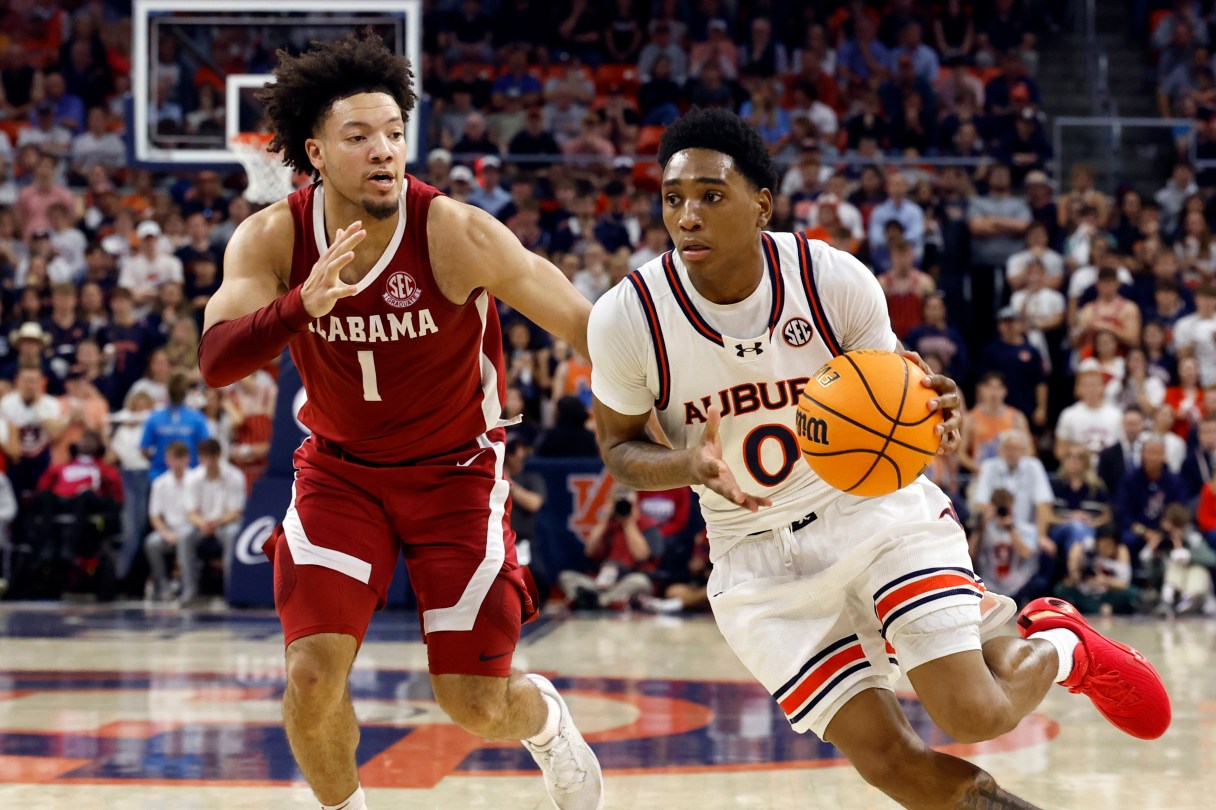
The SEC’s dominance is showing up not only in the sheer volume of teams but also where they land. Auburn is a lock for a No. 1 seed, with Florida considered a slight favorite to edge out Tennessee and Alabama for another one of those four slots.
Among the biggest questions is whether the top overall seed in the tournament will go to Auburn or Duke, which this week supplanted the Tigers at No. 1 in the AP Top 25. The irony there is that Duke is one of only three teams from the ACC projected to make the field of 68, which would mark the hoops powerhouse league’s lowest total in 25 years.