
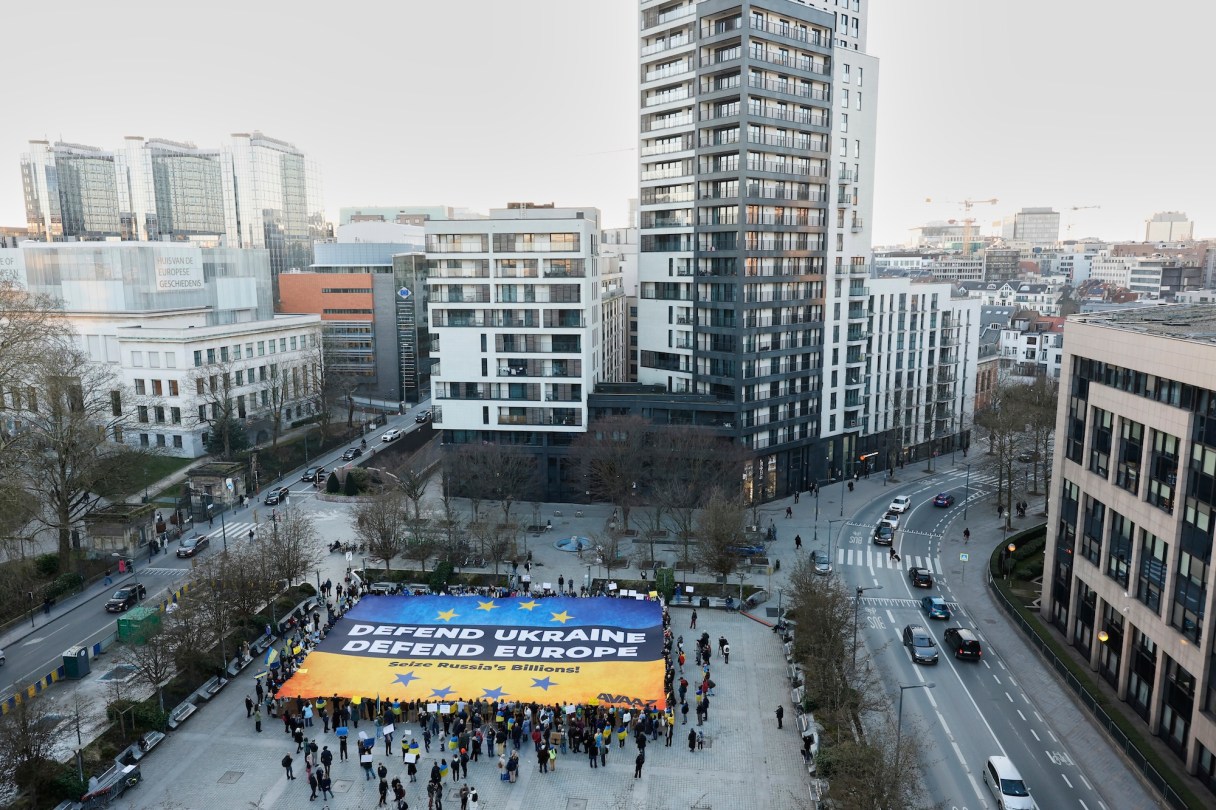
FRANKFURT, Germany (AP) — With U.S. support for Ukraine in doubt, Kyiv’s European allies are weighing whether to seize $300 billion in frozen Russian assets and use the money to compensate Ukraine, support its military and help rebuild shattered homes and towns.
For now, the assets are still on ice, with opponents of seizure warning that the move could violate international law and destabilize financial markets.
Here are key things to know about the debate surrounding the Kremlin assets that were frozen shortly after Russia’s full-scale invasion in early 2022:
What are the assets and where are they?
Originally, the money was in short-term government bonds held as reserves for the Russian central bank. By now, most of the bonds have have matured and turned into cash piling up in custodian banks. Some 210 billion euros are in European Union member states, with the biggest chunk, some 183 billion euros, at Euroclear, a Belgian clearinghouse for financial transactions. Other amounts are at financial institutions in Great Britain, Japan, France, Canada, Switzerland, Australia and Singapore.