
Imagine you’re a senior manager for a company. You and other members of your corporate braintrust, working in different locations, hop on a group text to discuss strategic plans about your chief competitor, but you mistakenly add to the group a business reporter with whom you’ve spoken in the past. That reporter then blows the cover on your company’s secret planning in a widely read exposé.
Do you keep your job after this inadvertent yet brutal mistake? We all know the answer to that.
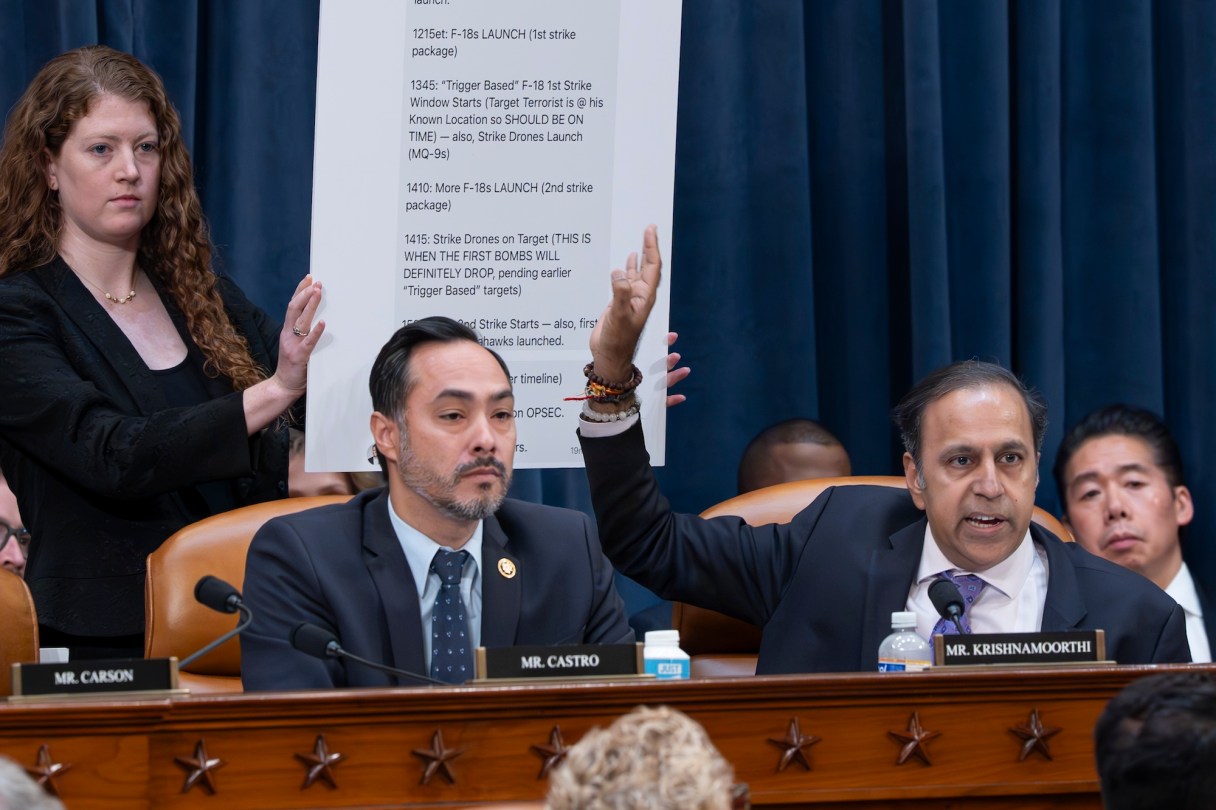
The country just saw a similar scenario play out in a far higher-stakes setting, with the accidental inclusion of the editor-in-chief of The Atlantic in a discussion over messaging app Signal between many of President Donald Trump’s top administration officials. The Atlantic’s Jeffrey Goldberg said he was privy to information on an impending attack on Houthi insurgents in Yemen, including timing, specific targets including individuals, weapons systems being deployed, sequencing of planned events and even the identity of a heretofore-unknown CIA operative who was to be CIA Director John Ratcliffe’s liaison for the operation.
For his part, Defense Secretary Pete Hegseth responded, “Nobody was texting war plans.” Goldberg’s description of what was discussed amounts to what any reasonable person would conclude were “war plans,” so one of these men isn’t telling the truth. The Senate Intelligence Committee has the means to find out — and should.
The U.S. attacks that began March 15 on the Iran-backed Houthis, who repeatedly have fired at American and other nations’ ships in the Red Sea, weren’t derailed by the breach, Trump said Tuesday. He described the inclusion of Goldberg on the Signal chat, which the White House confirmed, as a “glitch.” The president said national security adviser Mike Waltz, who apparently was the one to mistakenly loop in Goldberg, was “a good man” who had “learned a lesson.”