
(Editor’s note: First of three parts)
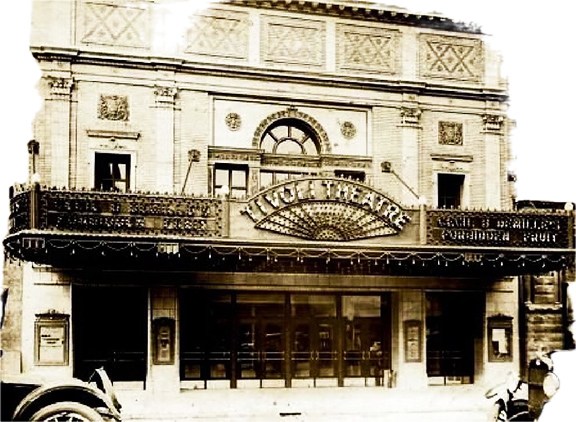
On New Year’s Day 1921, the Chattanooga Daily Times headlined a story on “aircastles” soon materializing on the city’s landscape: the Soldiers & Sailors Memorial Auditorium, the Centenary M.E. church at McCallie Avenue and Lindsay Street, the Pilgrim Congregational Church on Oak Street, the Ridgedale school, and the “proposed Shriners’ mosque” on lower Market. But topping the list of future community treasures was the Tivoli Theater, “not quite completed.” The “magnificent palace of amusement” was nearing completion at a cost “close on to a million dollars.” Indeed, “Nineteen and Twenty-One will be a memorable year … the year that gave Chattanooga a powerful influence for culture … a better conception of art and music, the inspiration and learning of the classics, the moral courage of the strong, the text book of geniuses — the Tivoli Theater.”
Within a month, a deed was recorded transferring the Tivoli Theater property to the Hamilton Trust and Savings Bank to act as trustee for the Tennessee Enterprises Corporation, which had assumed a debt to the S.A. Lynch Enterprises Corporation in “the sum of $225,000 for money this day borrowed.”
The following day, Saturday, Feb. 9, the first detailed list of scheduled performances and “photoplays to twinkle in the Tivoli firmament” appeared in the Chattanooga News. Billed as “the highest form of entertainment resulting from the coordination of sound, color and motif … blending optical delights with the haunting charm of perfectly rendered music,” Chattanooga would soon set the standard for Southern cities and culture-loving residents.
Among the first productions scheduled for silent-film viewing were: William C. DeMille’s masterpiece, “Midsummer Madness”; Charlie Chaplin’s crowing achievement, “The Kid”; “Passion,” a German production based on the life of Madame du Barry; Vincent Ibanez’s literary triumph, “The Four Horsemen of the Apocalypse”; Douglas Fairbanks in “The Nut”; Mary Pickford’s “The Love Light”; and a special adaptation of “The Last of the Mohicans,” based on James Fenimore Cooper’s classic story set during the French and Indian War.