
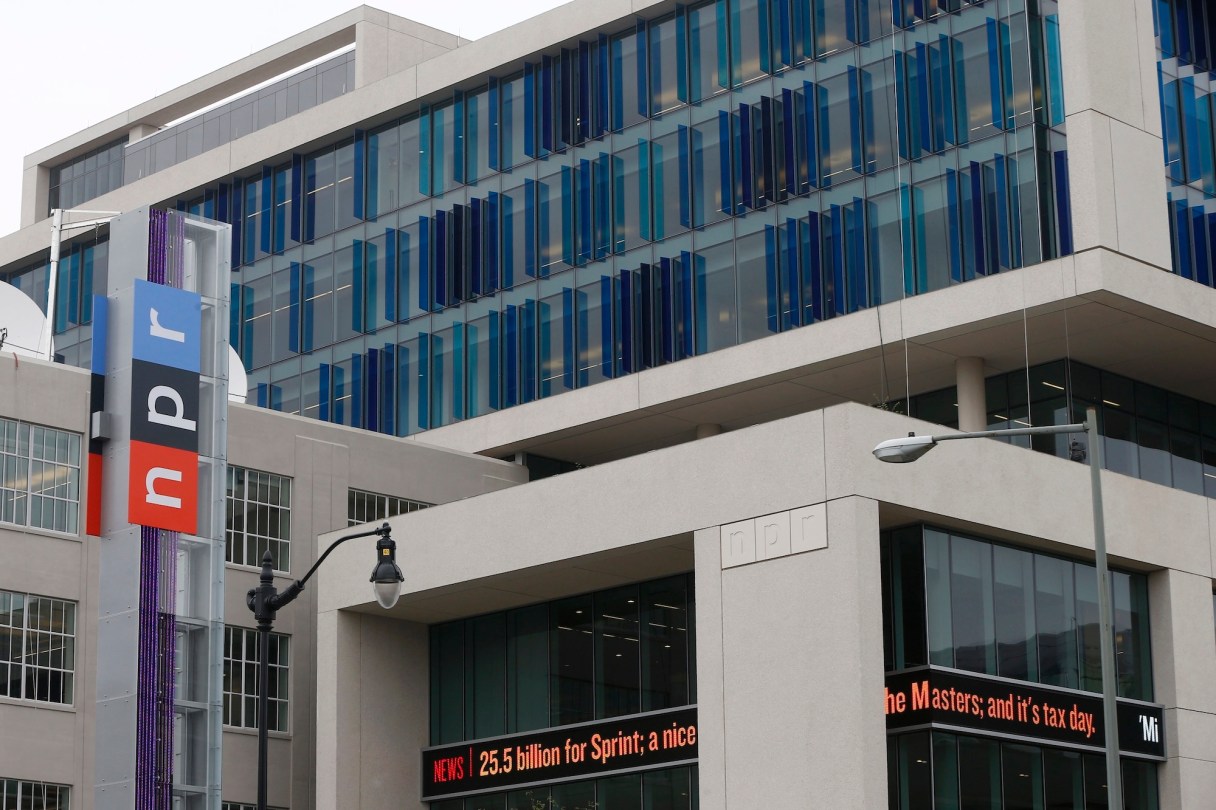
The nation’s public broadcasting system — decades-long home to Big Bird, Ken Burns documentaries and “All Things Considered” — faces the biggest crisis in its nearly 60-year history with President Donald Trump’s order to slash federal subsidies.
A court fight seems inevitable, with the heads of PBS, NPR and the Corporation for Public Broadcasting all suggesting Friday that Trump’s order is illegal.
“We will vigorously defend our right to provide essential news, information and life-saving services to the American public,” said Katherine Maher, NPR’s president and CEO. “We will challenge this executive order using all means available.” Her counterpart at PBS, Paula Kerger, said Trump’s order was blatantly unlawful.
The public broadcasting system dates back to the late 1960s, devised as an educational and public service-oriented alternative to commercial broadcasters available at the time. In his order, Trump said the system has become politically biased and time has passed it by.
“Today the media landscape is filled with abundant, diverse and innovative news options,” the president said in his order, issued just before midnight Thursday. “Government funding of news media in this environment is not only outdated and unnecessary, but corrosive to the appearance of journalistic independence.”