
This story was originally published by the Nashville Banner. Sign up for their newsletter at nashvillebanner.com/newsletters.
Around 10 p.m. on Saturday, a Nashville woman was stopped by the Tennessee Highway Patrol on her way home from work.
She was turning into her apartment complex off Bell Road when troopers pulled her over outside of the leasing office. She called her daughter, who recounted this story to the Nashville Banner.
The state trooper did not cite her with any crime or traffic violation, but handed her over to federal immigration enforcement who were following in unmarked vehicles.
“We were up refreshing and waiting for the bookings to update to see if she was in the database,” said Andrea, her 25-year-old daughter who spoke to the Banner under the condition of withholding her full name.
Throughout the night, Andrea and other loved ones scoured U.S. Immigration and Customs Enforcement and Davidson County Sheriff’s Office websites to see if an arrest record would show up for her mother. Finally, around 7 a.m. Sunday, a county employee told her that her mother was not in jail.
“They told us that all of the people who were arrested for the night had been processed in the system, so she was not there,” Andrea recalled. “So basically they didn’t know where she was, and they advised us to call hospitals and talk to the sheriff’s department and maybe file a missing person’s report.”
“We ended up calling the sheriff, and they told us that she was detained by ICE from the moment she was stopped,” Andrea said.
(READ MORE: ICE, state troopers detain dozens of people in South Nashville)
Her mother had been one of around 150 people stopped by THP on South Nashville state roads overnight Saturday into Sunday morning, with ICE in tow. The federal agents detained dozens of Hispanic Nashvillians in an unprecedented immigration sweep. These stops have continued in the days since, resulting in at least 84 arrests, according to information provided by ICE officials Tuesday.
In the days since the traffic stops began, many, including local officials, have called into question the methodology. For her part, Andrea said she has to wonder if her mother’s traffic stop was racially motivated.
“You could spot her from a mile away and be like, ‘Yeah, that’s a Hispanic woman,'” Andrea said, adding that THP appeared to be “shooting fish in a barrel” by pulling over people who appeared Hispanic.
Asked about the profiling claim, a THP spokesperson told the Banner on Tuesday that they could not provide details on the specific stop without identifying information, but that “all stops were made after observations of traffic violations pursuant to Tennessee law,” and that the office was “not aware of any stops made outside of those standards.”
Before the scope of the operation was known and protests broke out at a Nashville ICE field office, Andrea went to the office off Brick Church Pike to find her mother Sunday morning, but did not receive confirmation until around noon, when her mom was listed in the ICE Detainee Locator System, an online database.
The first contact she had with her mother came via detainees who were released from the same facility and who texted Andrea on her mother’s phone — the only number she could remember in the facility — to say that she was OK.
When they finally spoke on the phone, her mother was about to be bussed to Louisiana as ICE shipped an unknown number — but at least dozens — of Nashville residents to out of state facilities.
As a citizen, Andrea said she does not fear for her own safety in the context of the operation, but that this week’s raids undermine the Trump administration’s proclaimed “dangerous criminal” narrative around deportations, by targeting people like her mother, a middle-aged chef who “doesn’t cause any problems.”
“I feel like everyone was just lulled into a false sense of security at first, because it was ‘just felons,’ or something like that,” Andrea said.
“(My mom) just goes to work and she comes home, and she goes walking, and she reads her books, and she minds her business,” she added. “So she was under the impression that she would be OK, and then it happened.”
As she described her mother, Andrea’s heartbreak crept out from behind her otherwise stoic demeanor. She was a helpful community member, quick to give a neighbor a ride to a doctor’s appointment. She was generous, donating extra food from her former catering business to people in need. She was close to her daughter, going shopping, hiking and having weekly Tuesday visits.
Asked why she only spoke of her mother in the past tense, Andrea began to cry, explaining that she was already grieving her mother.
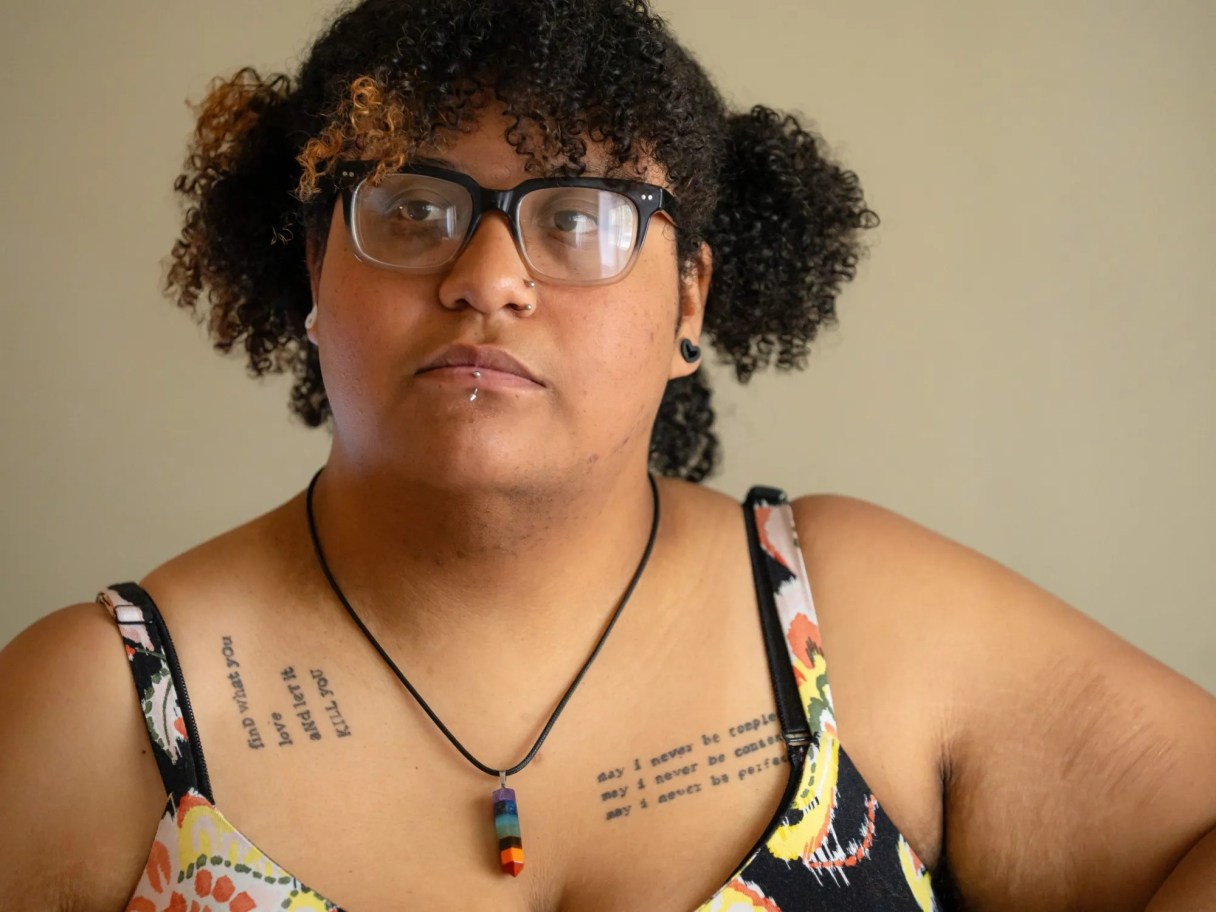
“I hope that she can stay, but there’s not a lot in me telling me that she will,” Andrea said, sitting in her mother’s now vacant South Nashville apartment, wearing a matching floral sundress that the pair bought recently.
(READ MORE: For Tennessee charities, helping immigrants carries new legal risks)
Beyond the immediate, tangible impacts on their families, Andrea said the detainment of every resident rattles the entire community.
Reading from a spiral bound notebook with hand-written notes, Andrea shared statements from her mother’s friends and relatives who describe the situation as “feeling like she was abducted” because of the lack of communication, with one family member comparing it to Nazi Germany.
“One person affects an entire web of people, an entire community,” Andrea said. “You take one person and it destroys the web.”
‘FEAR INCREASES’
Several people told the Banner on Tuesday that the immigration enforcement actions over recent days have fundamentally changed their plans for the future, and have made going about their daily lives a frightening experience.
A shopkeeper on Nolensville Pike said that customers and business owners alike were “terrified.” She estimated that there were about 40% fewer shoppers than usual since the detentions, and those who did come into her shop said they were scared and planned to go straight home.
“All Hispanic people are afraid, myself included,” she said.
Though she is here legally under temporary protected status, she worries that her status could be revoked at any time. If operations like these continue, she said she would return to her country of origin.
When Donald Trump was elected this time around, she knew things were going to be difficult and sold two of her three businesses as a precaution.
“If I’m deported, who will run them?” she asked. “My clients are almost all Hispanic and have less money now — there’s less work under Trump. And they go out less. … Each day the fear increases with this aggression against Hispanic people.”
Another woman sat on a bench in a park nearby, watching her 3-year-old son play in the grass with her husband.
“It’s just so sad,” she said.
She said her daughter’s boyfriend was detained over the weekend and is now in Louisiana. He has an appointment in immigration court May 28, she said. She hopes he’ll be able to attend and doesn’t know what will happen with his immigration case if he misses it because he’s in detention. Meanwhile, her daughter doesn’t know how she will pay the rent this month because he usually pays half.
The woman in the park has an active immigration case but can’t afford a lawyer to help with it. Before Trump came to office, she said, she wanted to build a life here with her daughter and young son, who is a U.S. citizen. But now, all she wants to do is go back to her home country. She doesn’t have the money to do that either.
Another mother sat in a wheelchair a few feet away, watching her two sons play soccer. She said she hoped to stay in the U.S.
“I just want the time that Donald Trump is in office to be finished … Before Trump, we never saw the local government not want to let kids go to school,” she said, referring to proposed state legislation that ultimately did not pass, that would have allowed public schools to deny education to children based on their immigration status.
“Which I would not like,” said her 11-year-old son who was born outside of the U.S., drawing close to his mother.
“I could go to school, because I’m an American,” said her 8-year-old, who was born here. “But if my parents are deported, I’m going with them no matter what.”
SUPPORTING EACH OTHER
Since her mother was arrested, Andrea has helmed the family’s legal and logistical response, coordinating with her mother, community organizations and an immigration attorney from the Tennessee Immigrant & Refugee Rights Coalition, which called in the middle of the interview.
In Louisiana, her mother is similarly trying to help, even from inside the detention center, coordinating with others extracted from Nashville to give updates to families and immigrant rights organizations, sharing allotted phone time when needed and even helping to cover other people’s commissary expenses.
“I think they’re all trying their best to support each other throughout, so that’s a good thing,” Andrea said.
Back in Nashville, she said the community is similarly banding together, noting multiple mutual aid funds to help detainees cover the cost of lawyers and her own family raising $2,400 through social media to help with her mother’s case.
“The community itself is helping each other. Because this is the time that we need each other the most,” Andrea said. “We’re all getting in contact with each other, checking on each other, seeing what each other needs.”
In return, Andrea wants to help other families prepare for possible detainment, encouraging them to make plans for the worst case scenario by creating a plan for if someone is detained but wants to return to their home country rather than face deportation or a plan to give a trusted friend or relative access to documents needed to fight the case if they intend to stay in America.
“This community raised me. This community brought me up,” Andrea said. “There’s no other community that I’d rather be a part of than the Latin community, because they support each other and they care about each other.”
This article first appeared on Nashville Banner and is republished here under a Creative Commons Attribution-NoDerivatives 4.0 International License.