
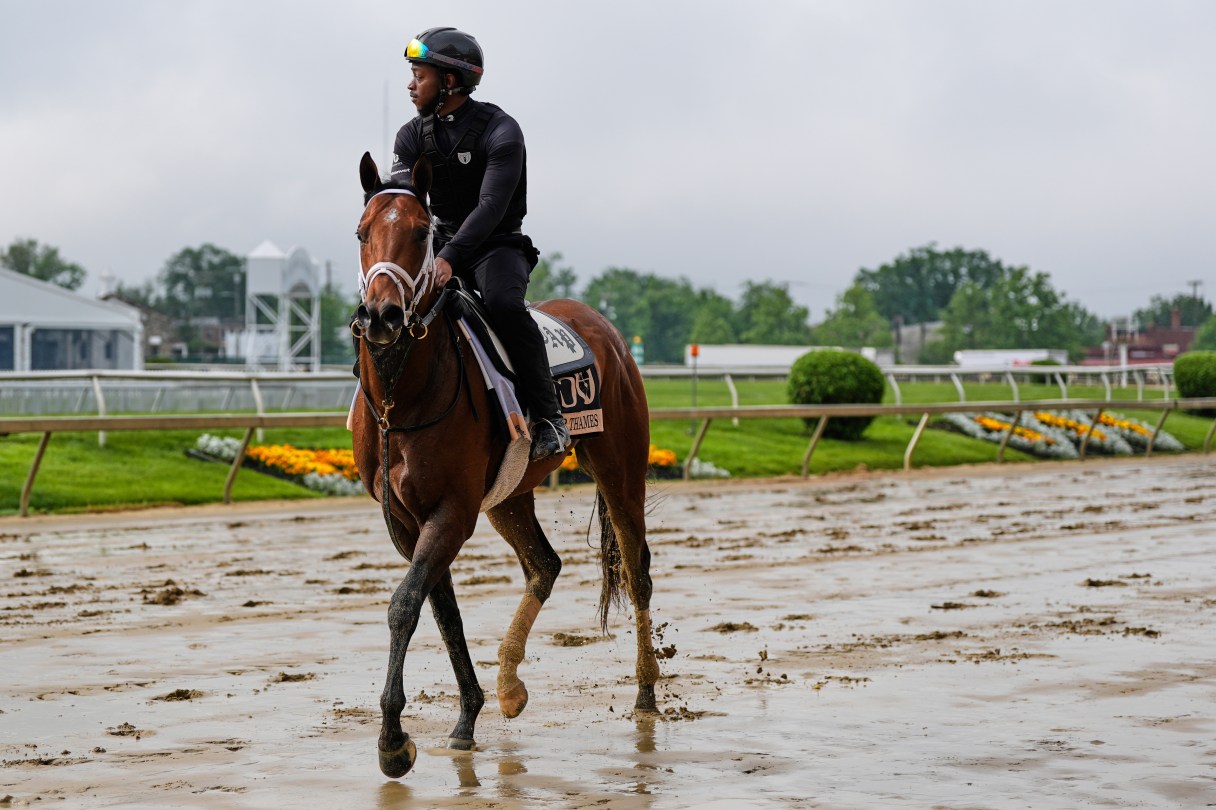
BALTIMORE — Sovereignty is not running out of that starting gate in the Preakness Stakes on Saturday, two weeks after winning the Kentucky Derby, yet he is still the talk of Pimlico Race Course this week.
That’s because the horse’s owners and trainer Bill Mott opted to skip the 150th edition of the Preakness Stakes — and with it, a chance at the Triple Crown — because of the short turnaround. It is the second time in four years the Kentucky Derby winner is not taking part for that reason and the fifth time in seven years overall Baltimore’s big race goes on with no Triple Crown on the line.
The trend has reignited the debate about what, if anything needs to change about the Triple Crown, with ideas ranging from putting more space between the Kentucky Derby, Preakness Stakes and Belmont Stakes, to adding incentives to run in all three, to changing the order of the races altogether. Like starters in baseball throwing fewer pitches, elite horses now typically get much longer time between races, and the situation has put tradition and modernization of the sport head to head.
The two-week turnaround now feels to many around the sport like an antiquated schedule when longer gaps are now the norm with an eye toward horse wear and tear and better performance. Thoroughbreds used to be trained and run at a much quicker interval.
“It’s a question that has more than one side to it,” said Steve Asmussen, who has won more races than any other trainer in North America. “I love how hard it is to do, which makes it so special. And then would it be making it easier? Does it dilute it? That’s a great question. And I think that it’ll continue to be debated.”