
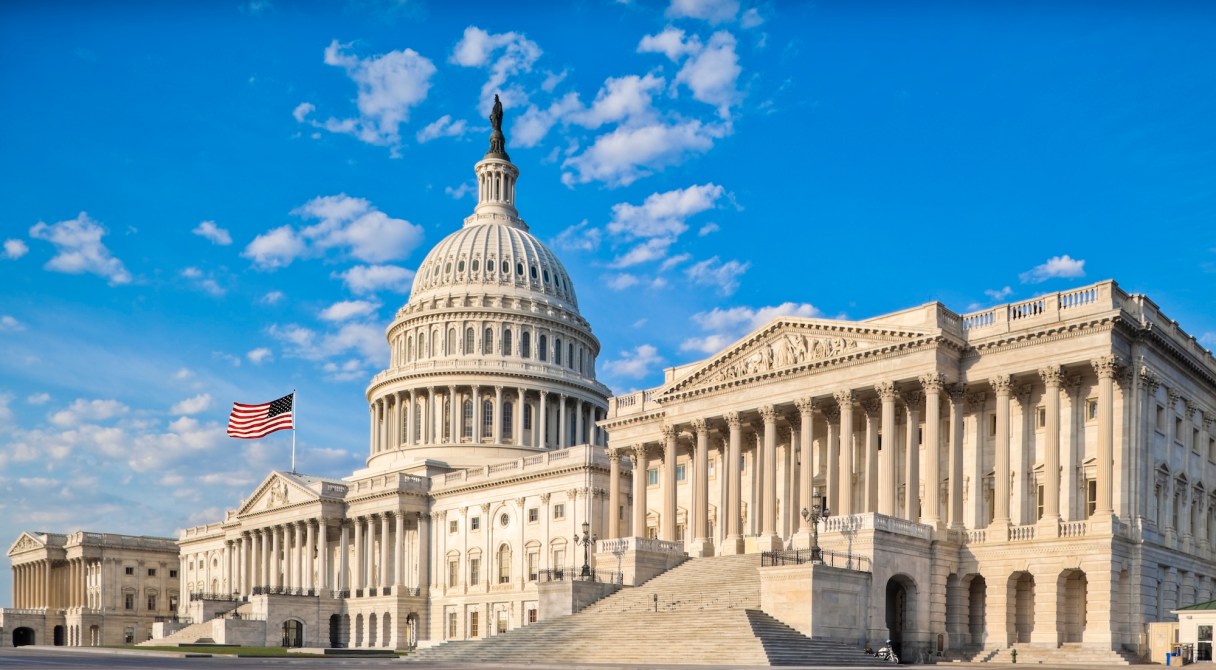
Pretty much on a daily basis now, I find myself muttering or shouting, “If only Congress wasn’t broken,” or something to that effect.
I’m happy to acknowledge our problems have many causes. Still, here’s my answer to the question “What is one thing you would do to solve — or just improve — American politics and America’s mounting list of crises?”: Fix Congress.
This is not a partisan point because the problem has been worsening for decades. But we might as well deal with the problem right now. And right now Congress is controlled by Republicans, and they are controlled by the president. Whatever you think of Donald Trump’s various executive orders — I think it’s been a mix of the good, the bad and the ugly — the simple fact is that presidents aren’t supposed to govern or legislate by diktat.
Love Trump’s Bernie Sanders-style executive order to lower the price of drugs? Fine, you should know that it probably won’t pass muster in the courts. But even if it does, what is done by executive order can be undone by executive order. If you want price controls or any of his executive fatwas to become the law of the land, they need to be made laws. And only Congress can do that.
Except Congress can’t, or won’t.
Reporters run around covering the orders like Trump has actually done the thing he’s said he’s done, giving him the headline he craves and fomenting panic among his foes. If and when judges block him, he gets a fresh issue: “Rogue” judges are standing in his way. For his fans, the issue becomes judges exceeding their authority, not judges preventing Trump from exceeding his. And for fans and foes alike, judges are cast as partisan actors, eroding trust in the judiciary.
Broadly speaking, judges aren’t supposed to be a check on the executive on most issues. That, too, is Congress’ job via the power of the purse. It’s also the only branch that can fire a president.
The proliferation of nationwide judicial injunctions against the executive is a problem. It’s been getting worse for decades. But why? Because presidents increasingly try to legislate via executive order — because Congress lets them.
Pick almost any issue. Trade? The Constitution gives Congress sole authority to regulate trade. But over the last century, Congress has more or less transferred that authority to the executive branch. Immigration? Making hay with the complexities of the issue helps both parties politically, and solving it through reform of the immigration laws is hard and painful. Better to do nothing. The national debt? Congress has successfully followed its own budget process only four times in the last half a century, the last instance was in 1997. And only once — in 1977 — did it manage that on time. Congress instead relies on a slew of ugly stopgaps, continuing resolutions and omnibus bills that put spending on autopilot.
Congress is where politics is supposed to happen. The House and the Senate were designed to force consensus across a vast nation with diverse interests. When Congress is working properly, that’s an ugly and difficult process. It involves fact-finding through adversarial hearings, horse-trading and compromise. But the process and the end product have democratic legitimacy. The result earns buy-in from stakeholders and voters because the political fights are public and lengthy, requiring representatives and senators to explain and defend their positions.
The abdication of Congress’ role as the arena where political fights happen has turned the House and the Senate into a stew of de facto pundits and lobbyists of the executive branch, which steadily aggrandizes to itself authority not found in the Constitution.
In short, when in doubt, blame Congress.