
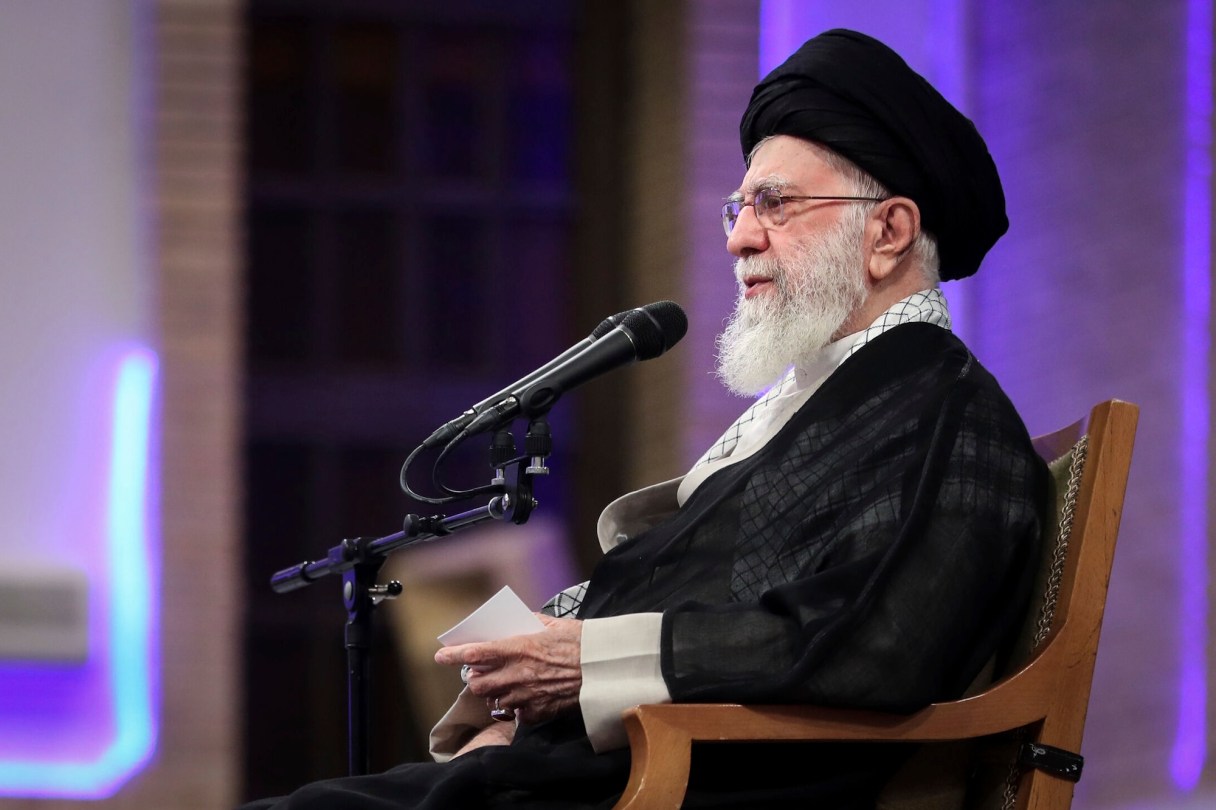
TEHRAN, Iran (AP) — Iran’s supreme leader on Tuesday pushed back against U.S. criticism of the country’s nuclear program, saying that Tehran won’t seek permission from anyone to enrich uranium and calling American statements “nonsense.”
“They say, ‘We won’t allow Iran to enrich uranium.’ That’s way out of line,” Ayatollah Ali Khamenei said during a memorial for late President Ebrahim Raisi, who died in a helicopter crash last year. “No one in Iran is waiting for their permission. The Islamic Republic has its own policies and direction — and it will stick to them.”
Khamenei’s remarks came as indirect talks between Iran and the U.S. reportedly continue, though he expressed doubt about their outcome.
“Yes, indirect negotiations were held during Raisi’s time too, just like now,” he said. “But they didn’t go anywhere — and we don’t expect much from the current ones either. Who knows what will happen.”
His comments reflect Tehran’s growing frustration with the stalled nuclear discussions, as well as the broader tensions that have defined U.S.-Iran relations in recent years.