
Monday, November 16, 2026Nov 16

Here’s what Meta argued to fend off monopoly claims in landmark trial

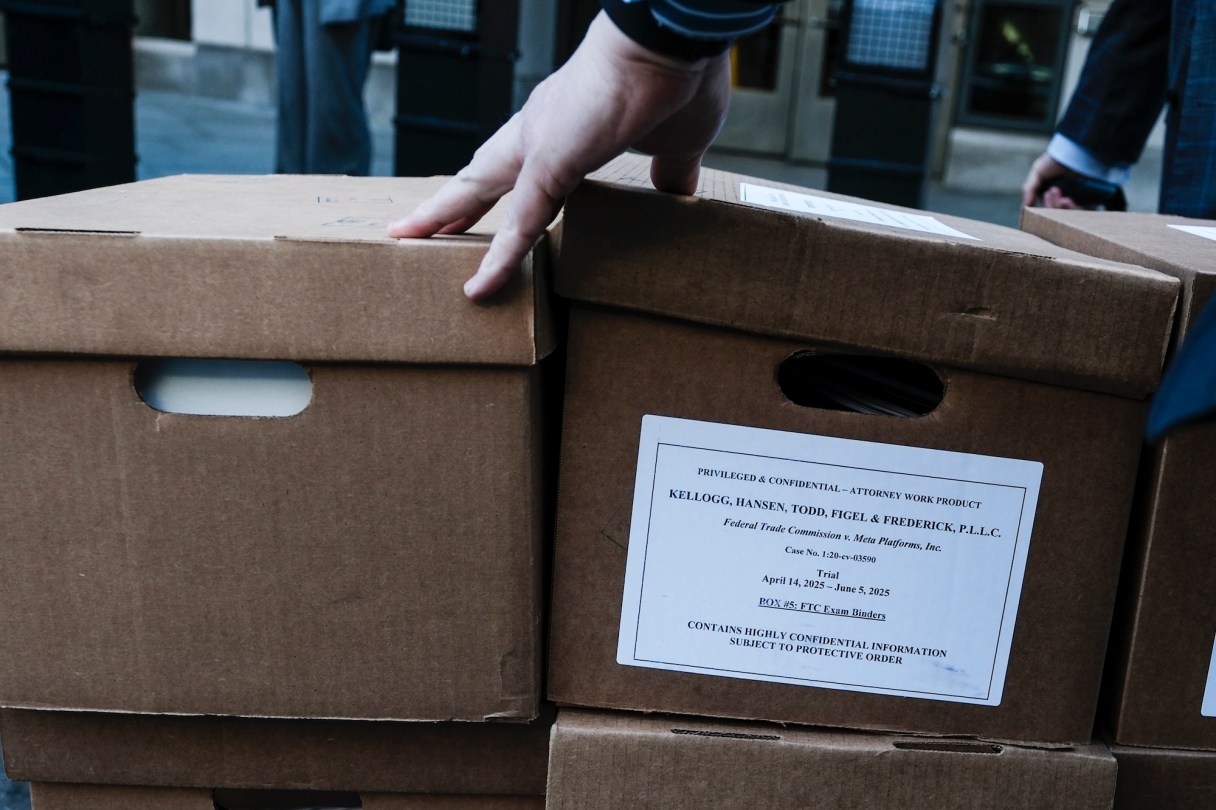
FILE — Workers handle boxes of documents related to the landmark Meta antitrust trial outside the federal courthouse in Washington, April 16, 2025. The Federal Trade Commission has accused the social media company, which was previously known as Facebook, of acquiring Instagram and WhatsApp when they were tiny start-ups in a “buy-or-bury strategy” to snuff out competition. (Michael A. McCoy/The New York Times)

Meta rested its case Wednesday in an antitrust trial in which the U.S. government has accused the company of illegally snuffing out nascent competition by purchasing Instagram and WhatsApp.

Meta’s lawyers spent roughly four days trying to convince Judge James E. Boasberg of U.S. District Court for the District of Columbia that the government’s case, which claims that the company had overpaid for the rival apps in a “buy or bury” strategy, was faulty.

Meta mounted its defense in Federal Trade Commission v. Meta Platforms by calling a handful of experts in economics and marketing, as well as current and former employees. They testified that the company formerly known as Facebook still faced plenty of competition and that its acquisitions of Instagram and WhatsApp had ultimately benefited those apps.

Here are Meta’s main arguments.

Meta faces hefty competition.