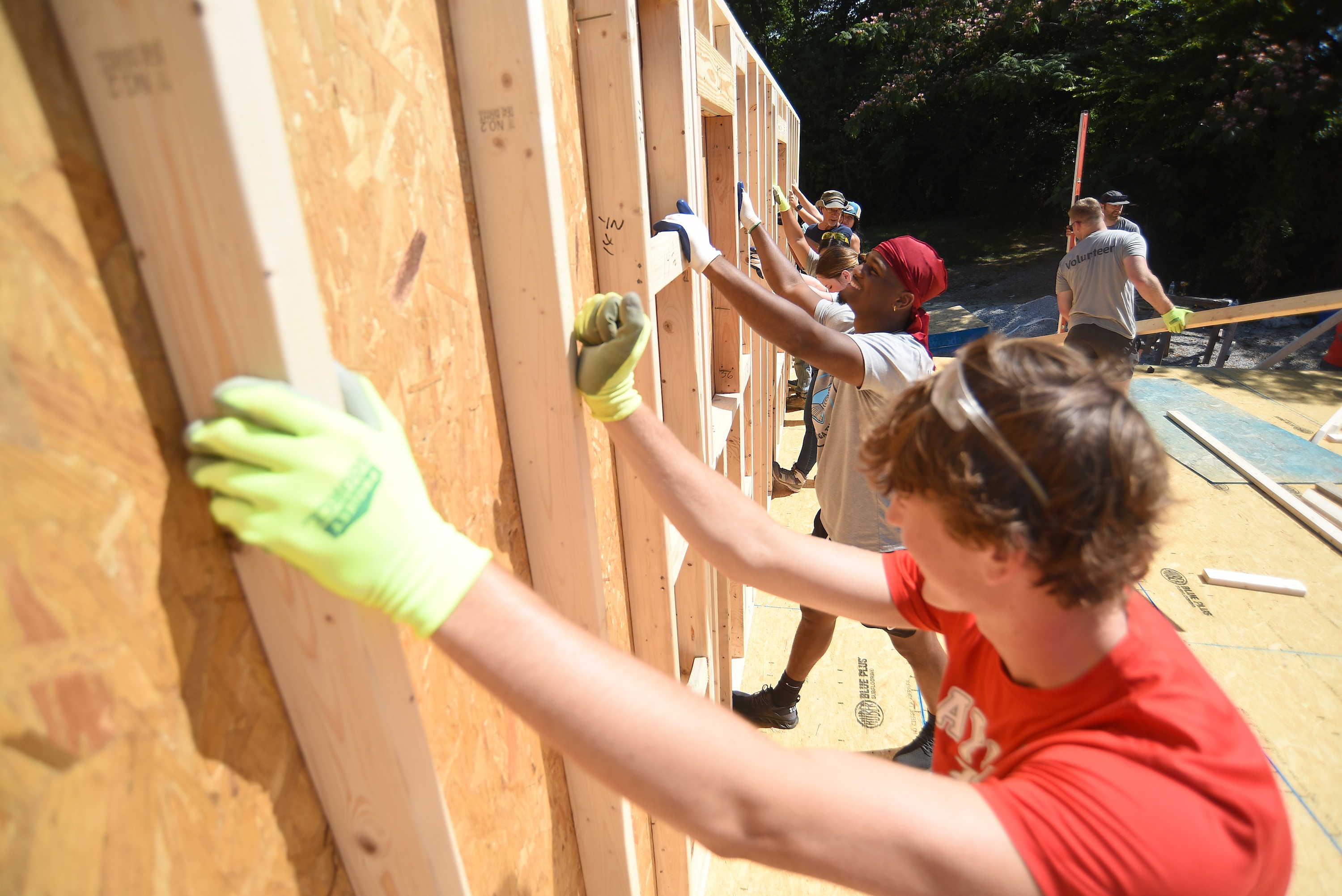

With rising home prices, high interest rates and a hot market, it’s not easy to buy a first home in Chattanooga.
In Tennessee, the average first-time home buyer is 36, according to data from SoFi.
Nationally, the average age has risen to 38, according to the National Association of Realtors, up from 33 in 2020.
(READ MORE: Chattanooga home sales, prices rise last year despite national slowdown)
“The U.S. housing market is split into two groups: first-time buyers struggling to enter the market and current homeowners buying with cash,” said Jessica Lautz, an economist with the Realtors association, in a 2024 report. “First-time buyers face high home prices, high mortgage interest rates and limited inventory, making them a decade older with significantly higher incomes than previous generations of buyers.”
A program opening applications this week in Chattanooga aims to help people with lower incomes and a need for housing to finance and buy their first home.
The Future Homeowners program, as it’s known, targets people making between 40% and 80% of the area’s median income, said Jens Christensen, chief executive of Habitat for Humanity of Greater Chattanooga.
That’s roughly between $28,000 and $56,000 for a two-person household, according to federal guidelines. Around 44% of Chattanooga households earn less than $56,000 annually, a city analysis found.
“The idea of this program is to help partner with families that otherwise could not enjoy ownership,” Christensen said in an interview, “so that they can actually not just have a decent place to live, but also begin to build wealth … you know, the American dream, so to speak.”
Technically, using federal guidelines, a “first-time” buyer is someone who hasn’t owned a home within three years. That means it includes people who may have owned a house with a spouse and then got divorced.
To qualify, applicants have to prove they have a pressing need for housing, like being doubled up with another family in a too-small home or being overburdened by housing costs including rent. More than 27,000 Chattanooga households earning under 80% of the median income are considered burdened, according to a city housing plan.
Housing cost burden, meaning paying more than 30% of income toward housing costs, is the most common housing problem in the city, according to the plan.
(READ MORE: Rents in Chattanooga area have jumped in the past decade. So have evictions)
Applicants also have to be willing to attend classes on budgeting and homeownership through Habitat and to put in “sweat equity” on their home, which may mean actually doing some construction, Christensen said. Then they have to prove they will be able to pay the mortgage, which Habitat sets at 30% of their income with zero interest for 30 years.
Promoting homeownership also means that residents are more invested in their neighborhoods, Christensen said. When houses go up for sale now, it’s likely they could be bought by out-of-state investors who want to rent them out to make a profit, he said. Around 20% of homes in Chattanooga are now owned by institutional investors, according to an analysis from the advocacy group CALEB.
“What you see is not someone buying it to be their residence,” Christensen said.
Christensen said he expects the program will accept 11 or 12 families this round, and he hopes it can become a semiannual application.
“If we have more applications that qualify than we can accommodate, we will then go to need, and we will focus on the greatest need first,” he said, adding that need is assessed based on current living conditions and income.
This time around, some families may have the option to move into townhomes Habitat is building on Shallowford Road, Christensen said. Before, the program was limited to detached homes. Those homes are in a good school zone and near jobs and amenities at Hamilton Place, he said.
Applications for the program open June 1 and close June 14.
‘WANTS THE BARGAIN’
Homebuyers, and home loans, are like fingerprints, said Connie Fox, a mortgage banker with Builtwell Bank. No two are the same.
“In most cases, everybody wants the bargain,” she said by phone.
About half of the prospective buyers Fox works with are looking for their first home, she said. That varies with interest rates, she said.
“A lot of times when the interest rates get higher, a lot of people just decide to stay where they are,” Fox said.
First-time buyers often qualify for federal programs meant to boost homeownership, Fox said, and that qualification often relies on a person’s income-to-debt ratio. You’re generally favored if your income is higher than your debt.
Fox said one of the most common mistakes prospective buyers can make is not checking their credit or taking a full inventory of their debt before trying to get preapproved for a loan.
“That’s shocking,” she said. “That’s shocking, really, for someone not to know about their credit, but it happens.”
If you’re looking to buy your first home soon, Fox said her biggest recommendation is to start building credit — for years, not months.
Contact Ellen Gerst at egerst@timesfreepress.com or 423-757-6319.