
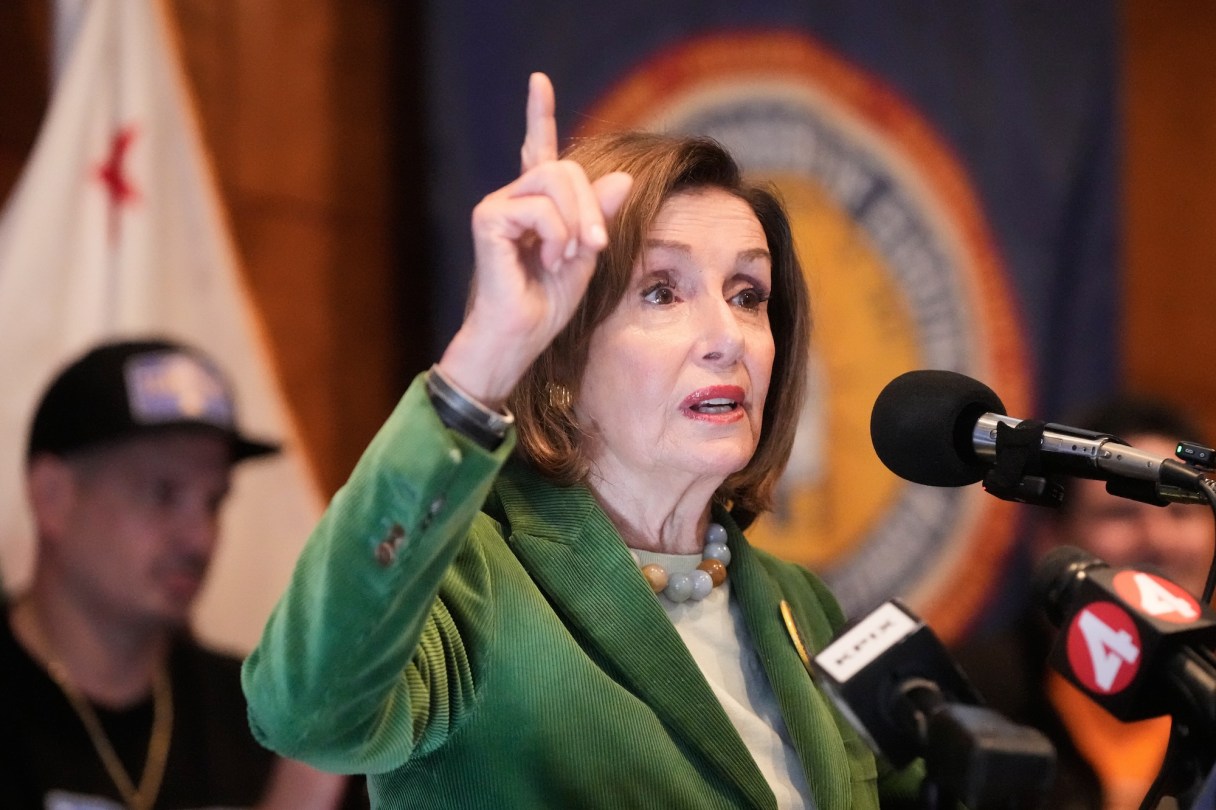
More than almost anyone else in Washington, Nancy Pelosi earned the right to consider herself indispensable. As speaker of the House — the first woman to hold that title — she was masterful at holding a fractious and heterogenous Democratic coalition together. Without her, we probably wouldn’t have the Affordable Care Act. She regularly showed excellent judgment, including on the Iraq War, which she was one of few leading Democrats to vote against. During Donald Trump’s first term, she proved skilled at getting under his skin, regularly goading him to lash out like a petulant child.
Yet Pelosi was correct to step aside from her leadership role in 2022 to make way for a new generation, even if Hakeem Jeffries, her successor, hasn’t been nearly as impressive as she was. And she’s right to retire now, setting an example for a party with a serious gerontocracy problem.
The most obvious example of that problem, of course, was Joe Biden’s catastrophic decision to run for reelection at the age of 81. But the trouble goes far deeper. Democrats used to be the party of youthful vigor: think John F. Kennedy, Bill Clinton and Barack Obama. Even Lyndon Johnson, no one’s idea of a fresh-faced tyro, was a mere 55 years old when he was sworn in in 1963. In recent years, the party got much older, and as it did, it became more stagnant.
There are more than 50 House Democrats who are 70 or older (including Pelosi, who is 85), compared with just over 30 Republicans. Since the beginning of the year, three Democratic members have died in office, padding Republicans’ minuscule majority. When Trump put Washington under a virtual military occupation, Eleanor Holmes Norton, the city’s sole delegate to the House, was nowhere to be seen. As The New York Times has reported, Norton, 88, struggles to do her job and sometimes appears not to recognize people she’s known for years. Nevertheless, she’s insisting on running for re-election.
Age is not a perfect proxy for being in touch with the zeitgeist; perhaps no politician is more widely beloved by young people than 84-year-old Bernie Sanders. But as we saw in this week’s New York mayoral election, younger candidates have distinct advantages in reaching the emerging electorate, for reasons that go far beyond identity politics.